Jammu and Kashmir Travel Guide: Where to Go and How to Reach
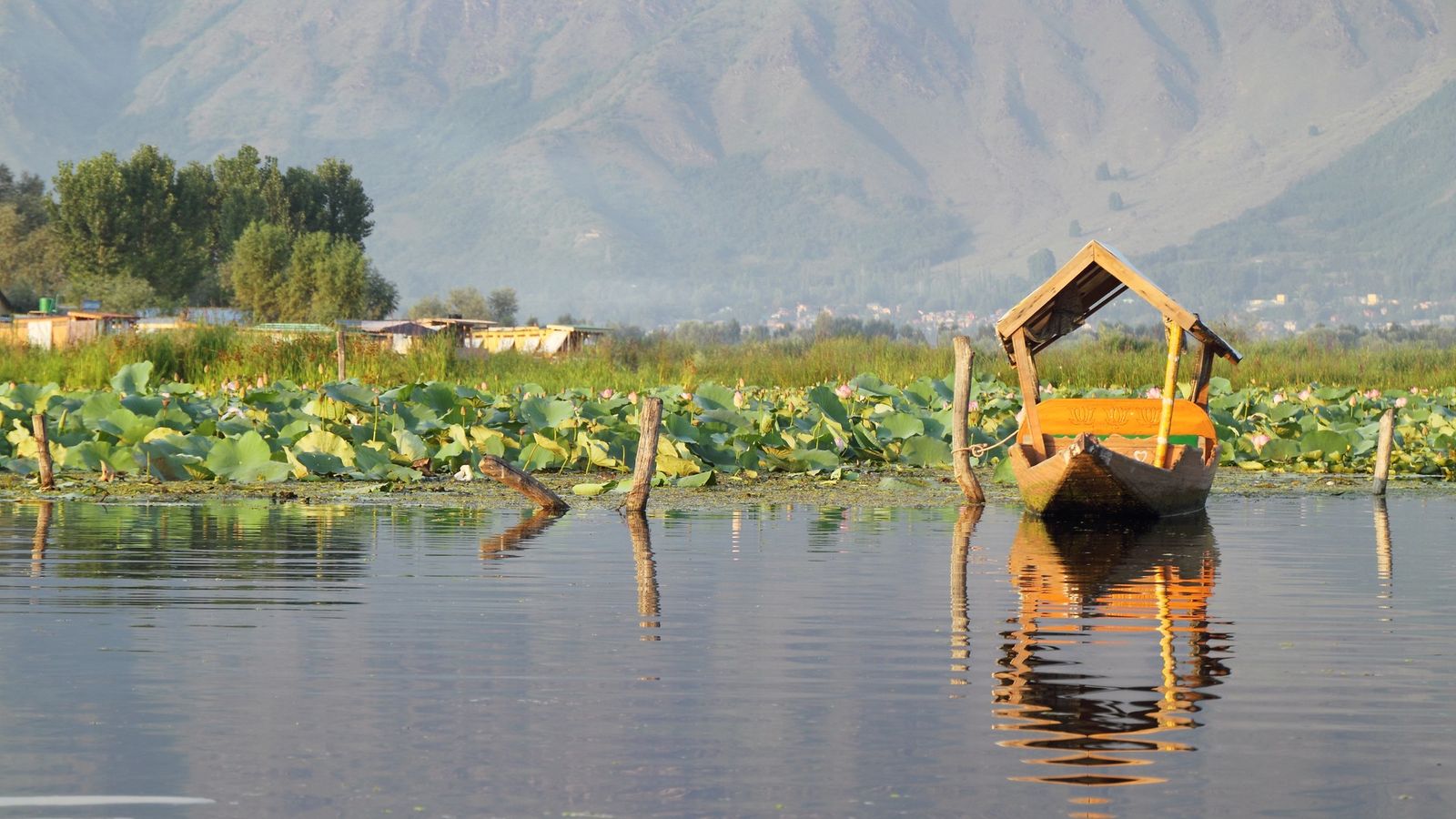
Photo: Fulvio Spada from Torino, Italy, CC BY-SA 2.0 (cropped), via Wikimedia Commons

Jammu and Kashmir has two halves. Jammu, in the south, is warm plains and Shivalik foothills, with temple towns and the climb to Vaishno Devi. The Kashmir valley, across the Pir Panjal range, is lakes, meadows, Mughal gardens and deep snow in winter. It is a union territory; Ladakh, to the east, is now separate (Ladakh).
Two capitals, two climates, and since 2026 one train between them.
Where to go
- Srinagar: Dal and Nigeen lakes, houseboats and shikaras, the old city, and the Mughal gardens of Nishat, Shalimar and Chashme Shahi. The tulip garden blooms in spring.
- Gulmarg: a high meadow for skiing in winter and walks in summer. Check whether the Gondola cable car is running before you plan a day around it.
- Pahalgam: the Lidder river valley, with the Betaab and Aru valleys close by. Some side meadows, Baisaran among them, have been closed since 2025; ask locally what is open.
- Sonamarg: meadows and glacier views on the road towards Zoji La and Ladakh.
- Vaishno Devi: the cave shrine in the Trikuta hills, reached by a long uphill path from Katra, one of India's busiest pilgrimages.
- Jammu city: the Raghunath temple, Bahu Fort above the Tawi, and the Amar Mahal palace museum.
- Patnitop: a pine ridge off the Jammu–Srinagar highway, for short walks and snow in winter.
- Amarnath: the high cave shrine of Shiva, open only for the summer yatra and only with a registered permit.
Districts
Jammu and Kashmir has 20 districts in two divisions of ten. The Jammu division covers the plains, the Shivalik hills and the Chenab valley; the Kashmir division covers the valley and the mountains around it. Leh and Kargil left in 2019, when Ladakh became a separate union territory.
- Jammu division: Jammu, Samba, Kathua, Udhampur, Reasi, Rajouri, Poonch, Doda, Kishtwar and Ramban.
- Kashmir division: Srinagar, Budgam, Ganderbal, Anantnag, Kulgam, Pulwama, Shopian, Baramulla, Kupwara and Bandipora.
Srinagar is the summer capital and Jammu the winter capital. The government moves between them twice a year, a custom called the Darbar Move, which was restored in 2025.
Festivals
- Tulip season, Srinagar (late March and April): the tulip garden below the Zabarwan hills opens for a few weeks.
- Baisakhi (13 or 14 April): the harvest festival, with fairs along the rivers in the Jammu region.
- Mela Kheer Bhawani, Tulmulla (May or June): Kashmiri Pandits gather at the spring shrine of the goddess Ragnya.
- Amarnath Yatra (July and August): in 2026 it ran from 3 July to 28 August, by the Pahalgam and Baltal routes.
- Navratri at Vaishno Devi (March or April, and September or October): the shrine's busiest weeks.
Regional calendars can shift these dates by a day; check before you go.
Food to try
- Rogan josh: lamb in a deep red gravy, coloured with Kashmiri chilli rather than heat.
- Gushtaba: soft pounded-mutton balls in a yoghurt gravy, the last course of a wazwan, the many-course Kashmiri feast.
- Yakhni: mutton or lotus stem in a mild yoghurt gravy scented with fennel and cardamom.
- Kahwa and noon chai: green tea with saffron and almonds, and a pink, salted tea drunk with bread.
- Haakh: collard greens cooked simply in mustard oil, eaten with rice every day.
- Kalari: a fresh cheese from the Jammu hills, pan-fried until crisp and often served in a kulcha.
Stories from Jammu and Kashmir
Plan your visit
| Best season | April to October for the Kashmir valley: tulips in April, meadows from June to September, autumn colour in October. December to February for snow and skiing at Gulmarg. October to March for Jammu, which is very hot in May and June. |
|---|---|
| How to reach | Srinagar and Jammu airports have direct flights from Delhi and other cities. Jammu Tawi is the main railway junction. Since May 2026, direct Vande Bharat trains run from Jammu Tawi to Srinagar via Shri Mata Vaishno Devi Katra and Banihal in under five hours. By road, the NH44 highway links Jammu and Srinagar. |
| Getting around | Taxis from Srinagar for Gulmarg, Pahalgam and Sonamarg; local service providers and checks apply in the valleys. The highway can close for days after snow or landslides, but the railway runs through it. |
| Where to stay | Houseboats on Dal or Nigeen lake, or the Rajbagh and Boulevard areas of Srinagar; Pahalgam town; Gulmarg; Katra for Vaishno Devi; central Jammu near Raghunath Bazaar. |
| How long to spend | Five to seven days for Srinagar, Gulmarg, Pahalgam and Sonamarg; two or three days for Jammu and Vaishno Devi. |
| Permits | No general tourist permit is needed for the main valley. The Amarnath Yatra needs a date- and route-specific permit through jksasb.nic.in or designated banks, a health certificate and an RFID card. Some tourist spots have been closed by order since 2025; check the current list with the district administration before you go. |
Questions people ask
Is it safe to visit Kashmir now?
The main circuit of Srinagar, Gulmarg, Pahalgam town and Sonamarg is open to visitors in 2026, with heavy security. Some side valleys and offbeat spots remain closed by order. Check the current list locally, and foreign visitors should read their own government's travel advice before booking.
Can I take a train from Jammu to Srinagar?
Yes. Since 2 May 2026, direct Vande Bharat trains run between Jammu Tawi and Srinagar, stopping at Katra and Banihal, in about four hours fifty minutes. Book early; the trains often run full.
What is the best time to visit Kashmir?
April to October for gardens, lakes and meadows. Come in December to February for snow at Gulmarg, but expect cold and some road closures.
How many days do I need for Kashmir?
Five to seven days covers Srinagar with day trips or short stays at Gulmarg, Pahalgam and Sonamarg. Add two or three days for Jammu and Vaishno Devi.
Do I need to register for the Amarnath Yatra?
Yes. Every pilgrim needs a permit for a fixed date and route, issued online or through designated bank branches, plus a Compulsory Health Certificate and an RFID card collected in Jammu or Kashmir. Registration usually opens in April.
Written by Muthu, editor of Aura of India. Sources: Official Portal, UT of Jammu and Kashmir: Districts, Press Information Bureau: Jammu Tawi–Srinagar Vande Bharat regular services from 2 May 2026, Shri Amarnathji Shrine Board: Yatra 2026 registration and notices. Last verified: 13 October 2026.
Your turn: Have you taken the new train from Jammu to Srinagar? How did the crossing of the Chenab bridge feel?
Comments
Post a Comment
Comments are always welcome, that will help us to motivate ourselves and improve our services. Thanks!!