Rajasthan Travel Guide: Where to Go, When to Visit, How to Reach
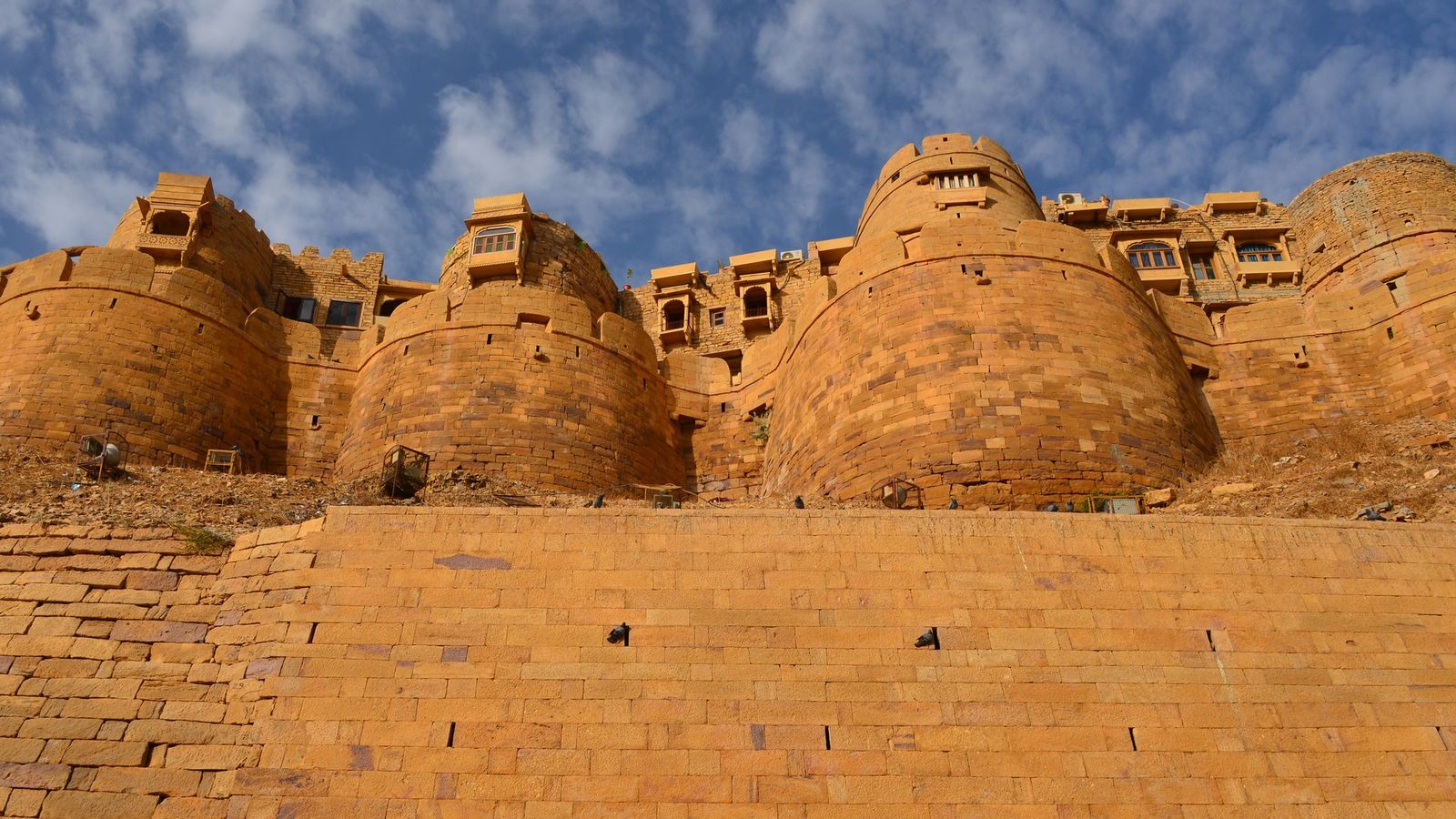
Photo: Clément Bardot, CC BY-SA 4.0 (cropped), via Wikimedia Commons

Rajasthan is the desert state of north-west India, where old kingdoms built forts on every ridge and palaces beside every lake. Travellers come for the walled cities, the Thar Desert, the tigers of Ranthambore and a year of fairs. The cities sit a long day's drive apart, so a first trip usually follows a loop: Jaipur, Jodhpur, Jaisalmer and Udaipur.
Every hill has a fort, and every fort a story it still tells.
Where to go
- Jaipur: the pink old city, a UNESCO World Heritage Site, with Amber Fort on the ridge above. See Jaipur before the shops open.
- Udaipur: palaces and ghats on Lake Pichola, and the quiet lanes of the old town. See Udaipur and the lake palaces.
- Jodhpur: the blue houses of the old city below Mehrangarh Fort, one of the largest forts in India.
- Jaisalmer: a golden sandstone fort that people still live in, carved havelis, and the dunes of the Thar to the west.
- Chittorgarh and Kumbhalgarh: two great Rajput fortresses, both part of the Hill Forts of Rajasthan World Heritage Site. Kumbhalgarh's wall runs for kilometres over the Aravallis.
- Ranthambore: a tiger reserve around an old fort near Sawai Madhopur, with safaris from October to June.
- Pushkar: a small temple town around a sacred lake, with one of the few temples to Brahma, and the camel fair each November.
- Keoladeo National Park, Bharatpur: wetlands full of resident and migratory birds in winter, best explored by cycle or rickshaw.
- Mount Abu: Rajasthan's only hill station, in the Aravallis, known for the carved marble Dilwara Jain temples and Nakki Lake.
- Shekhawati: small towns north of Jaipur whose merchant havelis are covered in wall paintings.
For a wider loop through the state, read Rajasthan beyond the pink city.
Main cities
Jaipur is the capital and the usual first stop, with the City Palace, the Jantar Mantar observatory and the old bazaars inside the walls. The other main cities each have one clear reason to visit.
- Jodhpur: Mehrangarh Fort, the clock-tower market and the blue lanes around it.
- Udaipur: the lakes, the City Palace and boat rides at sunset.
- Jaisalmer: the lived-in fort, havelis such as Patwon ki Haveli, and desert camps near the dunes.
- Bikaner: Junagarh Fort, the old city's sweet and snack shops, and the camel festival in January.
- Ajmer: the dargah of the Sufi saint Khwaja Moinuddin Chishti, and the short road to Pushkar.
- Kota: the Chambal river, the old palace with its painted rooms, and Kota doria saris.
- Alwar and Bharatpur: Alwar for its hill fort and Sariska Tiger Reserve; Bharatpur for Keoladeo's birds.
- Chittorgarh: the fort, its towers of victory and fame, and the stories of Rani Padmini and Mirabai.
Festivals
- Desert Festival, Jaisalmer (January or February): three days of folk music, camel races and puppeteers on the sand.
- Gangaur (March or April): women carry images of Shiva and Parvati in procession; in Udaipur it joins the Mewar Festival on Lake Pichola.
- Teej (July or August): the monsoon festival, with swings, green and red lehariya saris and a royal procession from Jaipur's City Palace.
- Pushkar Fair (October or November; 17 to 24 November in 2026): camel and cattle trading, contests and a bath in the lake at the Kartik full moon.
These festivals follow the Hindu calendar, so dates move each year; check the state tourism calendar before you go.
Food to try
- Dal baati churma: baked wheat balls with lentils and a sweet crumble of ghee, wheat and sugar.
- Laal maas: a fiery mutton curry coloured red by Mathania chillies.
- Ker sangri: dried desert beans and berries cooked with spices, a dish of the Thar.
- Pyaaz kachori and mirchi bada: fried breakfast snacks, best fresh in Jodhpur and Jaipur.
- Gatte ki sabzi: gram-flour dumplings in a yoghurt curry.
- Ghevar: a round, honeycombed sweet soaked in syrup, made around Teej.
Stories from Rajasthan
- Jaipur Old City in the Morning: Hawa Mahal, Bazaars and Tickets
- Udaipur, Lake Pichola: City Palace, Boat Rides and Timings
- Rajasthan Beyond Jaipur: Jodhpur, Jaisalmer, Forts and the Thar
- Cities in Rajasthan: Jaipur, Jodhpur, Udaipur and More to Visit
Plan your visit
| Best season | October to March, when days are warm and nights cool; desert nights can be cold in December and January. April to June is very hot. The monsoon (July to September) is short and green around Udaipur and Mount Abu. |
|---|---|
| How to reach | Jaipur International Airport is the main gateway, with airports also at Udaipur (Maharana Pratap Airport, Dabok) and Jodhpur. The main railway stations are Jaipur Junction, Jodhpur Junction, Ajmer Junction, Udaipur City and Sawai Madhopur for Ranthambore; Abu Road serves Mount Abu. |
| Getting around | Trains and overnight trains link the big cities; state buses (RSRTC) reach most towns. A car with a driver is the easiest way to follow a loop of forts and small towns. Jaipur has a metro line and auto-rickshaws. |
| Where to stay | Inside or near the walled city in Jaipur; around Lake Pichola in Udaipur; below Mehrangarh in Jodhpur's old city; in or below the fort in Jaisalmer, or desert camps near the dunes; Sawai Madhopur for Ranthambore; Pushkar town for the fair. |
| How long to spend | Five days for Jaipur and one more city. Ten to fourteen days for a loop of Jaipur, Jodhpur, Jaisalmer and Udaipur with Ranthambore or Pushkar. |
| Permits | No permit is needed for most of Rajasthan. Ranthambore safaris are booked through the Rajasthan Forest Department's online system. Near the Pakistan border in Jaisalmer district, Tanot and Longewala are open to visitors; the forward border post at Babliyan is for Indian citizens only, and foreign visitors need prior permission and verification at the Tourist Reception Centre in Jaisalmer. Check before you go. |
Questions people ask
What is the best time to visit Rajasthan?
October to March. Plan the desert for November to February, when the days are pleasant and the Desert Festival and Pushkar Fair fall.
How many days do I need for Rajasthan?
Ten to fourteen days covers Jaipur, Jodhpur, Jaisalmer and Udaipur at an easy pace. With five days, choose Jaipur and one other city.
When is the Pushkar Fair in 2026?
Rajasthan's festival calendar lists it from 17 to 24 November 2026, ending on the Kartik full moon. The daily programme is fixed close to the date, so check before you go.
Is Ranthambore open in the monsoon?
The core zones, 1 to 5, are open from 1 October to 30 June and close in the monsoon. Some outer zones stay open from July to September; check the Forest Department's booking site.
Can foreigners visit the India-Pakistan border near Jaisalmer?
Foreign visitors can go to Tanot and Longewala with prior permission and verification at the Tourist Reception Centre in Jaisalmer. The Babliyan border post is open to Indian citizens only.
Written by Muthu, editor of Aura of India. Sources: Rajasthan Tourism: fairs and festivals, Rajasthan Tourism: Mount Abu, Rajasthan Forest Department: Ranthambore safari booking procedure. Last verified: 13 October 2026.
Your turn: Which fort stayed with you longest: Mehrangarh, Jaisalmer, Chittorgarh or Kumbhalgarh?
Comments
Post a Comment
Comments are always welcome, that will help us to motivate ourselves and improve our services. Thanks!!