Temples of Maharashtra: Shirdi, Siddhivinayak and Jyotirlingas
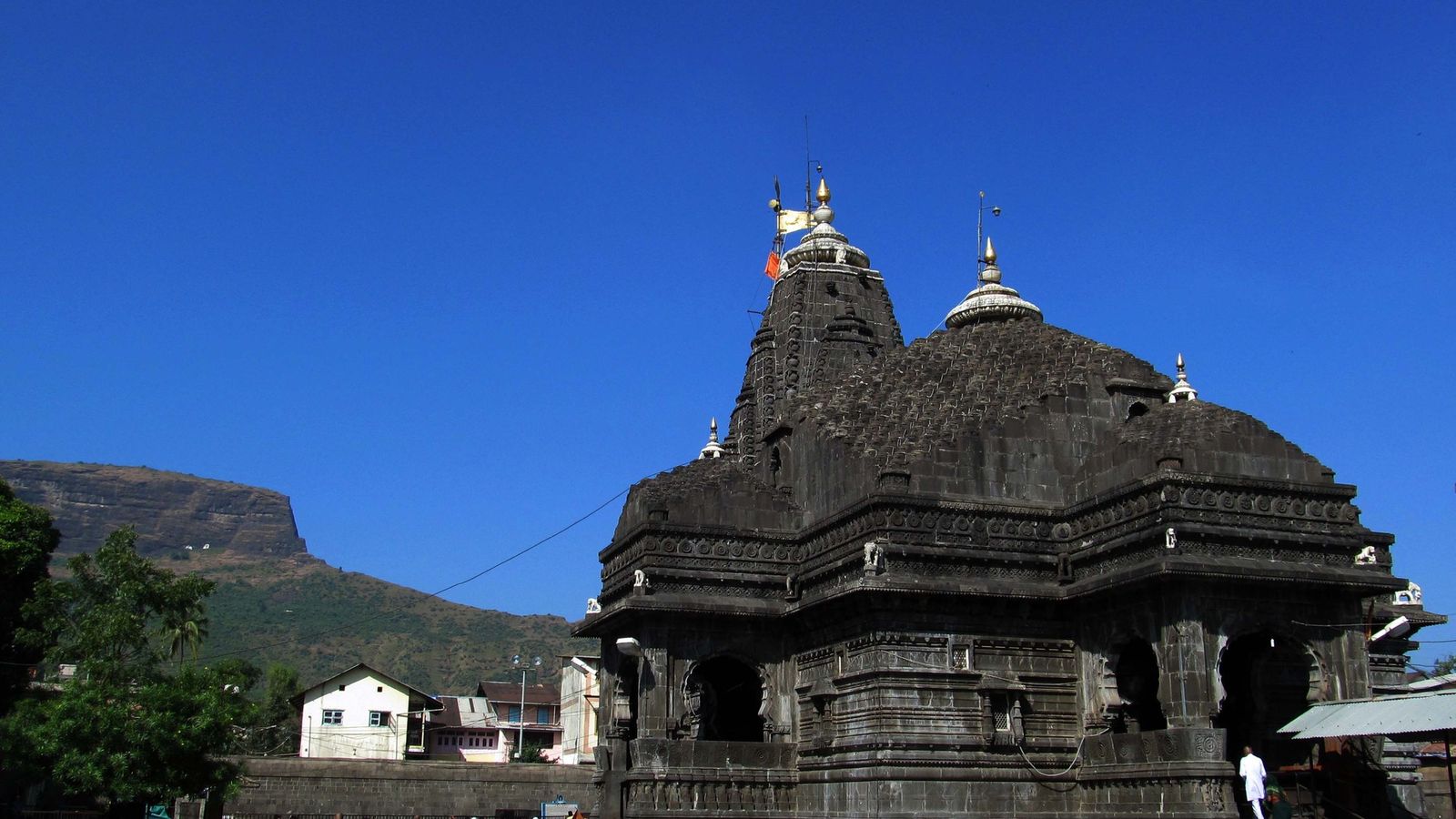
Photo: Niraj Suryawanshi, CC BY-SA 3.0 (cropped), via Wikimedia Commons

Maharashtra, from a Mumbai street to the hills of the Western Ghats.
In Maharashtra, the same week can hold a queue in Mumbai and a climb through the monsoon forest.
Ganesh in the city
In Mumbai, the Siddhivinayak temple at Prabhadevi opens before dawn, and by six the queue already runs along the pavement. Ganesh, the elephant-headed god of beginnings, is the god of Maharashtra's cities. In Pune, the Dagdusheth Halwai Ganpati temple, founded by a sweet-maker in the nineteenth century, is lit gold every night. Each year in August or September, the ten days of Ganesh Chaturthi fill both cities with processions, drums and clay images carried to the sea or the river.
The Jyotirlingas
Maharashtra holds five of the twelve Jyotirlingas, the shrines where Shiva is worshipped as a column of light. Trimbakeshwar, near Nashik, stands close to the source of the Godavari river. Bhimashankar is in forest on the crest of the Sahyadri hills. Grishneshwar is a short walk from the Ellora caves. Aundha Nagnath and Parli Vaijnath are in the Marathwada region, in the dry east. Many pilgrims try to visit all of them in one journey.
Why people come
Shirdi, a small town in Ahilyanagar district (formerly Ahmednagar), draws some of the biggest crowds in India to the tomb of Sai Baba, a saint revered by Hindus and Muslims alike. Kolhapur's Mahalakshmi temple is one of the most important goddess temples in the Deccan. At Jejuri, near Pune, worshippers of Khandoba, a form of Shiva, climb the hill steps and throw turmeric until the whole temple glows yellow. For visitors from abroad, Ellora and Grishneshwar together are the headline: a working temple next to a hillside of rock-cut ones.
Getting there
Mumbai and Pune have the main airports. Shirdi has its own airport and trains from Mumbai. Nashik for Trimbakeshwar is about four hours from Mumbai by road. Ellora and Grishneshwar are about thirty kilometres from Chhatrapati Sambhajinagar, the city formerly called Aurangabad, which has an airport. Bhimashankar is about three hours from Pune. The road is beautiful and slow in the monsoon.
A route through the temple country
Most visitors start in Mumbai. Siddhivinayak at Prabhadevi is calmest early on a weekday. Tuesday is its busiest day, when darshan runs from 3:15 am to 11:30 pm.
From Mumbai, road and rail run north-east to Nashik, about four hours away. Trimbakeshwar lies some 30 km beyond, below the hill where the Godavari rises. Shirdi is a short drive south-east of Nashik, and from Shirdi the road goes on to Chhatrapati Sambhajinagar for Ellora and Grishneshwar.
Pune is the base for Dagdusheth Ganpati, Jejuri and Bhimashankar. Kolhapur sits apart in the south-west. Aundha Nagnath and Parli Vaijnath lie east in Marathwada and suit a separate trip. A calm week covers Mumbai, Nashik, Shirdi and Ellora; add Pune and Kolhapur for ten days.
Nashik and the 2027 Kumbh
The Simhastha Kumbh Mela returns to Nashik and Trimbakeshwar, as it does every twelve years. The flag goes up on 31 October 2026 at Ramkund in Nashik and at Trimbakeshwar. The main bathing days, the Amrit Snans, fall on 2 August and 31 August 2027, then 11 September in Nashik and 12 September at Trimbakeshwar. The mela runs on into July 2028.
Around those dates, expect closed roads, long queues and high room prices. Outside them, Trimbakeshwar is a quiet hill town with a stone tank, Kushavarta, at its centre.
Temples to know
- Siddhivinayak, Prabhadevi, Mumbai: the city's Ganesh temple.
- Dagdusheth Halwai Ganpati, Pune: the heart of Pune's Ganesh festival.
- Shirdi Sai Baba, Shirdi: the tomb of a saint of two faiths.
- Trimbakeshwar, near Nashik: a Jyotirlinga near the source of the Godavari.
- Bhimashankar, Pune district: a Jyotirlinga in hill forest.
- Grishneshwar, beside Ellora: a Jyotirlinga next to the caves.
- Mahalakshmi, Kolhapur: a great goddess temple of the Deccan.
- Khandoba, Jejuri: a hill temple of turmeric and drums.
- Aundha Nagnath and Parli Vaijnath, Marathwada: the eastern Jyotirlingas.
At Jejuri, the turmeric settles on the steps, and on everyone who climbs them.
Plan your visit
| Best season | October to March, after the monsoon and before the heat. Ganesh Chaturthi, in late August or September, fills Mumbai and Pune; Navratri brings crowds to Kolhapur. |
|---|---|
| How to reach | Fly to Mumbai or Pune. Shirdi has its own airport, 17 km from the shrine, and Sainagar Shirdi station is 4 km away. Chhatrapati Sambhajinagar airport serves Ellora and Grishneshwar. |
| Getting around | Trains link Mumbai with Nashik Road, Pune and Kolhapur. For Trimbakeshwar, Bhimashankar, Jejuri and Ellora, hire a car or take state buses from the nearest city. |
| Where to stay | Dadar or Prabhadevi in Mumbai, central Nashik near the Godavari ghats, the streets around the Shirdi shrine, and Chhatrapati Sambhajinagar city for Ellora. |
| How long to spend | Five to seven days for the main circuit; two more for Aundha Nagnath and Parli Vaijnath. |
| Dress and rules | Siddhivinayak asks for clothes that cover the body and turns away torn jeans, short skirts and revealing clothes. At Shirdi, darshan runs from 6 am to 9:30 pm. Trimbakeshwar's hours and dress rules are not published by the trust; check before you go. |
Open Shri Saibaba Samadhi Mandir, Shirdi, Maharashtra in Google Maps
Questions people ask
Which Jyotirlingas are in Maharashtra?
Five are usually counted: Trimbakeshwar near Nashik, Bhimashankar near Pune, Grishneshwar by Ellora, Aundha Nagnath in Hingoli district and Parli Vaijnath in Beed district. Parli's claim is shared with Baidyanath at Deoghar in Jharkhand.
What are Shirdi's darshan timings?
The Sai Baba Sansthan opens the temple at 4:45 am and holds the Kakad Aarti at 5:15 am. Darshan runs from 6 am to 9:30 pm, and the night Shej Aarti is at 10 pm.
Is there a dress code at Siddhivinayak?
Yes. Since January 2025 the temple trust asks visitors to wear clothes that cover the body. Torn jeans, short skirts and revealing clothes are not allowed.
When is the Nashik Kumbh Mela?
It opens with the flag hoisting on 31 October 2026. The main bathing days are 2 August, 31 August and 11 September 2027 in Nashik, with Trimbakeshwar's last bath on 12 September.
Read next
Written by Muthu, editor of Aura of India. Sources: Shree Siddhivinayak Temple Trust: temple schedule, Shri Saibaba Sansthan Trust, Shirdi: FAQ, Government of Maharashtra: renaming of Ahmednagar to Ahilyanagar, District Nashik: Simhastha Kumbh Mela schedule (PDF). Last verified: 13 October 2026.
Your turn: Which temple on this route did you find calmest, and at what time of day did you go?
Comments
Post a Comment
Comments are always welcome, that will help us to motivate ourselves and improve our services. Thanks!!