Chettinad Food in Karaikudi: Pepper Chicken, Spices, What to Eat
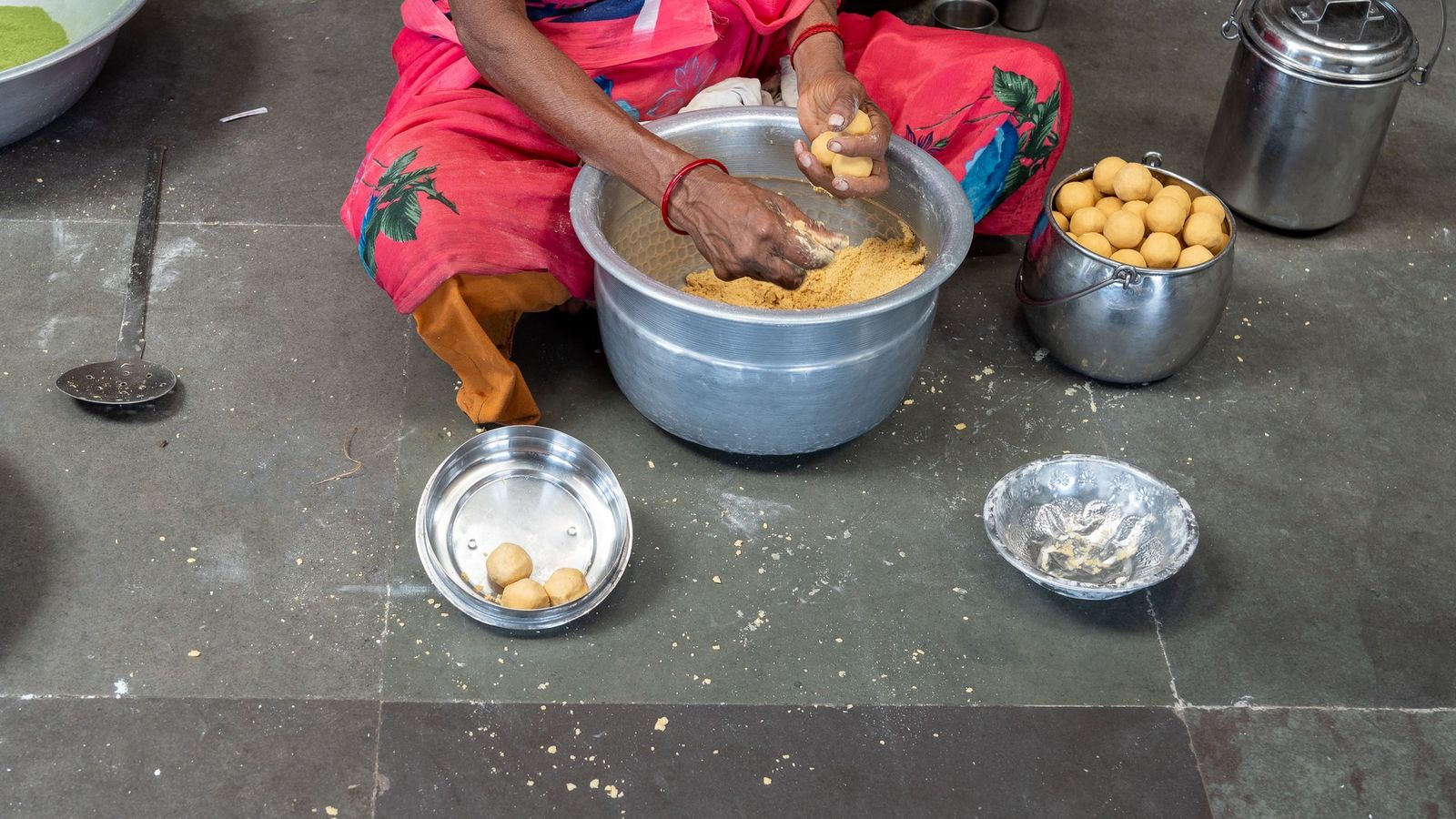
Photo: Rainer Halama, CC BY-SA 4.0 (cropped), via Wikimedia Commons

A kitchen in the Chettinad country near Karaikudi, Tamil Nadu, in the hour before lunch.
In Chettinad the heat should have a name: black pepper, roasted that morning and ground for one pot.
A dark plate
The meal comes on a banana leaf. Plain rice sits in the middle, and around it go the dishes that made the region's name. There is milagu kozhi, chicken cooked down with black pepper until the spice clings to it. There is a kuzhambu, a tamarind gravy darkened with roasted spices, and a varuval, meat or vegetables fried dry in masala. Good pepper chicken is brown, not red. It smells of roasted pepper, fennel and curry leaves, and its heat builds slowly at the back of the throat instead of burning the lips.
Not everything is fierce. Mornings and evenings belong to tiffin, the light meals between. Vellai paniyaram are soft white cakes of rice and lentils, fried and eaten with a sharp red chutney. Idiyappam, steamed rice noodles, comes with sweetened coconut milk.
Roasted, then ground
Most of the work happens before anything reaches the pot. Whole spices are dry-roasted in a heavy pan and ground fresh for each dish: black pepper, dried red chillies, fennel, cumin, coriander seed, cinnamon and star anise. Two ingredients set this kitchen apart. Kalpasi, or stone flower, is a dried lichen that turns earthy and smoky when it meets hot oil. Marathi mokku is a dried flower bud, used in small amounts. Cooks speak of masalas of eighteen spices, but the aim is balance.
In Chettiar homes the senior woman of the house, the aachi, kept these recipes and ran the kitchen. At weddings, teams of hired cooks worked under the aachis to set out rows of grain dishes, side dishes and sweets, each in its fixed place on the leaf. Many of those cooks later opened eating houses of their own around Karaikudi.
A merchant's pantry
Pepper was India's heat long before chillies arrived from the Americas in the sixteenth century, and Chettinad cooking still leans on it. The land is dry, so its kitchens learned to keep food: sun-dried meat, salted and dried vegetables, pickles in brine. Trade added the rest. The Chettiars lent money and traded in Burma, Ceylon and Malaya, and brought dishes home. Kavuni arisi, a black rice cooked sweet with coconut, came from Burma with the families who lived there, and idiyappam is shared with Sri Lanka.
Where to eat it
Eat it close to where it comes from. Karaikudi and the villages around it have simple eating houses that serve set meals on banana leaves, and some heritage mansions cook Chettinad meals when booked ahead. Lunch is the main meal, and the best dishes run out by mid-afternoon. Most visitors arrive by train at Karaikudi, or drive in from the airport at Madurai.
Pepper, chilli and the round red goondu
Outside Tamil Nadu, 'Chettinad' on a menu often means a red, oily gravy that tastes mostly of chilli powder. Cooks from the region describe something else: balanced, layered heat, with black pepper underneath. The red chilli they reach for is often the goondu, a short, round dried chilli that gives colour and flavour with less bite. Uppu kari, mutton fried with salt and these chillies, is a good test of a kitchen; so is plain pepper chicken, which should be dark, dry and fragrant rather than fiery.
Dishes change with the meal. Lunch brings the gravies and fries; evening tiffin brings paniyaram, idiyappam and kandarappam, a sweet fried cake. At feasts, kavuni arisi and payasam close the leaf.
Pepper chicken at home
The method is short; the care goes into the masala. Dry-roast black peppercorns, fennel, cumin, coriander seed and a few whole dried red chillies in a heavy pan until they smell toasted, not burnt. Cool them and grind them fine. Fry sliced onion in oil with a stick of cinnamon and curry leaves until soft, add ginger, garlic and turmeric, then the chicken and salt. Cook until the chicken is done, add the ground pepper masala, and keep stirring until the gravy dries and the spice coats every piece.
Grind only what you need for the day; pepper loses its edge quickly once ground. For Tamil Nadu's lighter side, read idli and filter coffee, and for the region as a whole, the Tamil Nadu guide.
Before you go
- Go at lunch: the full leaf is served at midday; evenings lean towards tiffin.
- Name the dish: ask for milagu kozhi or uppu kari, not just "Chettinad chicken".
- Pace the heat: pepper builds slowly, so keep buttermilk or curd rice for the end.
- Vegetarians eat well: paniyaram, kara kuzhambu, kootu and poriyal fill a leaf without meat.
- Use your right hand: cutlery is usually offered, but the leaf is made for fingers.
- Carry snacks home: murukku and other fried snacks are sold by weight in Karaikudi.
The leaf is folded, the pepper is still warm on the tongue, and in the kitchen the stone is grinding the next batch.
Plan your visit
| Where to eat it | Karaikudi and the Chettinad villages around it: simple eating houses in town, and heritage mansions that serve meals when booked ahead. |
|---|---|
| Price guide | Town eating houses are inexpensive; heritage-house meals cost more and need booking. Athangudi Palace lists group lunches for 25 or more from ₹299 (vegetarian) and ₹449 (non-vegetarian) a head, as of October 2026. |
| When it is served | The full meal at lunch; paniyaram, idiyappam and other tiffin in the morning and evening. |
| Try it with | Plain rice or idiyappam to carry the gravy, and buttermilk or curd rice to cool the pepper. |
| For vegetarians | Kara kuzhambu, kootu, poriyal, vegetable varuval and paniyaram make a full leaf. |
| Getting there | Train to Karaikudi Junction, or fly to Madurai or Tiruchirappalli and drive about 100 km. |
Open Karaikudi, Sivaganga district, Tamil Nadu in Google Maps
Questions people ask
Is Chettinad food very spicy?
It is spiced more than hot. Home cooks balance many roasted spices, and the heat comes as much from black pepper as from chilli. Restaurant versions far from Chettinad are often hotter than the original.
What is kalpasi?
Kalpasi, or stone flower, is a dried lichen used in Chettinad masalas. Fried briefly in oil, it adds an earthy, smoky note.
What is the best-known Chettinad dish?
Pepper chicken, milagu kozhi, is the dish most people know. Locals would add uppu kari, kara kuzhambu, vellai paniyaram and kavuni arisi.
What is kavuni arisi?
A black rice, cooked as a sweet with coconut and sugar. Chettiar families brought it from Burma, where many of them traded and farmed rice before the Second World War.
Read next
Written by Muthu, editor of Aura of India. Sources: The Hindu: Chettinad food is all about the spices, The Hindu: Flavours of Chettinad, The New Indian Express: The heirloom's exodus (Burma black rice, 2025), Vogue India: Chettinad recipes from The Bangala Table, The Better India: Chettinad cuisine and its culinary treasures, Athangudi Palace: plan your visit (group lunch prices). Last verified: 15 October 2026.
Your turn: Where did you eat your best Chettinad meal, and was it the pepper or the chilli that you remember?
Comments
Post a Comment
Comments are always welcome, that will help us to motivate ourselves and improve our services. Thanks!!