Maheshwar Ghats: Narmada, Ahilya Fort and Handlooms
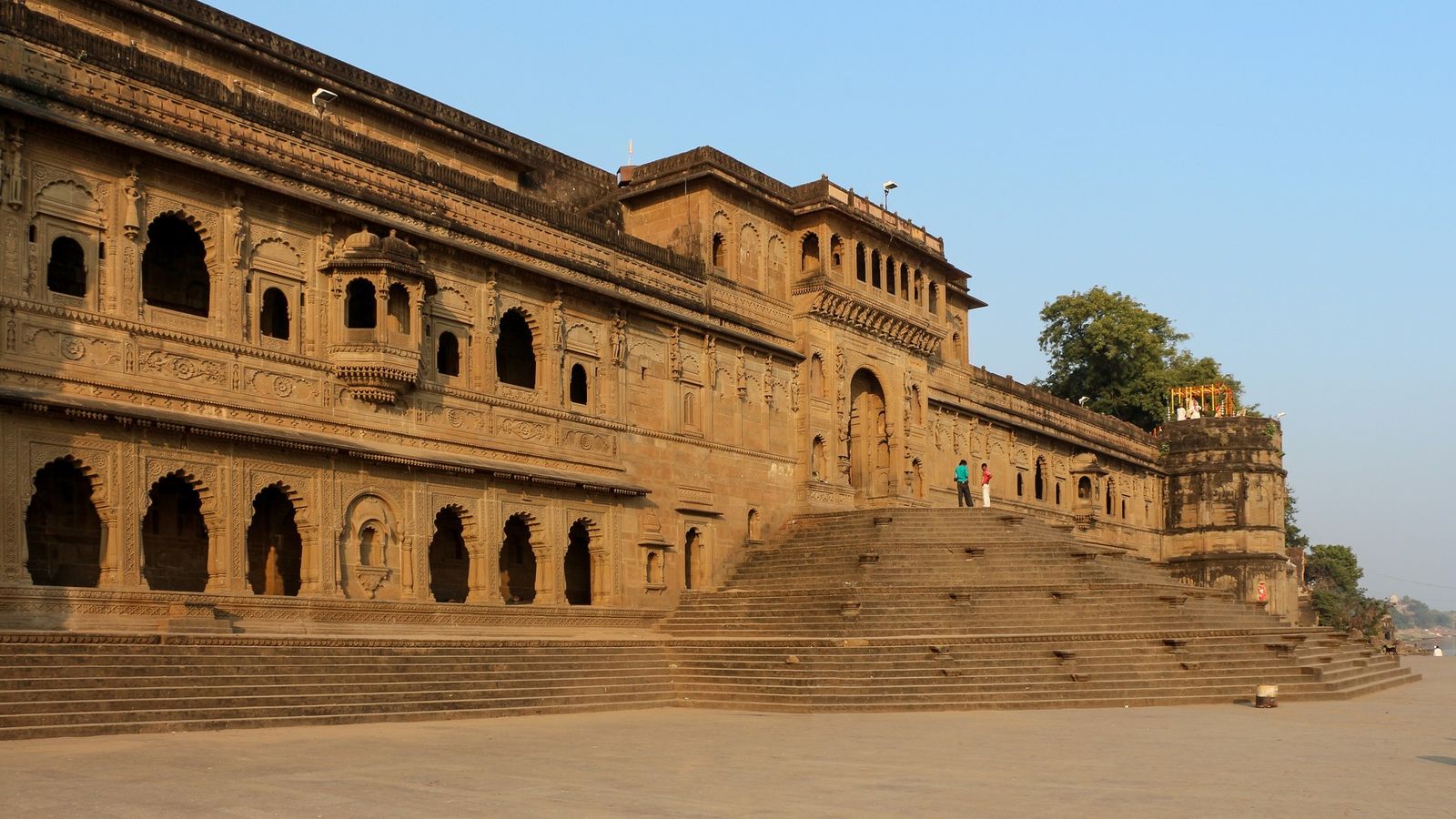
Photo: Bernard Gagnon, CC BY-SA 3.0 (cropped), via Wikimedia Commons

The Narmada ghats at Maheshwar, Madhya Pradesh, on a clear winter morning.
Maheshwar faces the river first, and the fort and the looms follow from that bank.
Stone steps to the water
From the fort wall the Narmada looks wide and slow. Below it, stone ghats drop in long terraces to the water: Ahilya Ghat closest to the palace, then Peshwa and Phanase with their small memorials. Pilgrims wash and sit; boats wait for short crossings. Baneshwar, a small shrine on a mid-river island, is reached by boat when the water allows. The fort mass sits above the steps, pale against the sky, with the modern town behind it on the landward side.
How the bank is used
Morning belongs to bathers and walkers. By late afternoon families gather on the steps, and after sunset an aarti is often held on the main ghat. Between river and lane, shops sell Maheshwari cloth: cotton and silk-cotton saris with checked or striped fields and a distinctive border. Rehwa Society, a weavers’ cooperative revived with Holkar support in the late 1970s, still runs looms and a sales outlet so visitors can see the work and buy from the makers.
Ahilyabai Holkar made Maheshwar her capital in the eighteenth century. The fort and palace hold a life-size statue of the queen on a throne and a simple Shiva shrine. Temples along the bank, including Ahilyeshwar, keep the place a pilgrimage stop as well as a day trip from Indore. This is a Narmada town, not a substitute for Omkareshwar further upstream; the island temple and the weaving street are separate stories. Between the fort gate and the water, the lanes stay narrow: tea stalls, cloth shops and the sound of looms when a workshop door is open.
Why people come
They come for the quiet of the steps, the Holkar fort above them, and cloth that is still woven in town. Film crews have used the same skyline. In November, around Kartik Purnima, Nimar Utsav brings music and dance to the bank; Madhya Pradesh Tourism lists it among the year’s main events here. The rest of the year the draw is simpler: water, stone, and a short walk between ghat, fort and loom.
Getting there
Maheshwar lies about 90–100 km south of Indore by road, roughly two hours via Dhamnod. Omkareshwar is about 80 km away by road. The nearest major airport and rail hub are in Indore. Local buses and taxis serve the town; once there, the fort, ghats and weaving lanes are walkable. October to March is the comfortable season; summers are harsh, and midday sun is strong even in winter.
Maheshwari cloth at the loom
Maheshwari saris are typically light cotton or silk-cotton, with a plain, striped or checked field and a characteristic border. Madhya Pradesh Tourism traces the style to Ahilyabai’s time and notes a weaving tradition revived in the late twentieth century through Rehwa Society, which still employs local weavers and sells from Maheshwar.
Watch a loom if the cooperative allows visitors that day, then buy from the outlet rather than from unmarked roadside stacks if you want a clear link to the makers. Prices vary by yarn and work; ask for the fibre content before you pay.
A river day from Indore
Leave Indore after breakfast, reach the ghats by late morning, walk the fort and Rajwada, then spend the afternoon at Rehwa and on the steps. A short boat ride toward Baneshwar fits if the water is calm. Return to Indore by evening, or stay overnight at a riverside lodge if you want dawn on the Narmada.
Omkareshwar is a separate temple-island day; do not collapse both into one rushed loop unless you start very early. For the wider state, see the Madhya Pradesh guide.
Places to know
- Ahilya Fort and Rajwada: the Holkar palace above the river, with Ahilyabai’s statue and a Shiva temple.
- Narmada ghats: Ahilya, Peshwa and Phanase; free access along the bank.
- Baneshwar: island shrine reached by boat when the river permits.
- Rehwa Society: cooperative looms and shop for Maheshwari fabric.
- Ahilyeshwar Temple: riverside shrine linked to the Holkar family.
At dusk the fort softens to shadow, and the river keeps the last of the light.
Plan your visit
| Best season | October to March. Summers are severe; cover your head even on winter middays. |
|---|---|
| Entry | Ghats are free. Ahilya Fort and temples are commonly listed as free; some private listings quote a fee — check at the gate. |
| Boats | Short Narmada crossings and Baneshwar trips are priced per boat on the ghat; agree the fare before you board. |
| How to reach | About 90–100 km by road from Indore (roughly two hours). Nearest major airport and rail hub: Indore. |
| Where to stay | Near the fort and ghats for dawn and dusk; Indore if Maheshwar is a day trip. |
| How long to spend | Half a day for ghats, fort and a loom visit; a night if you want the evening aarti without haste. |
| Dress and river | Modest clothing at temples; take care on wet steps. Do not enter deep water without local advice. |
Open Maheshwar Ghats, Maheshwar, Madhya Pradesh in Google Maps
Questions people ask
Is Maheshwar the same as Omkareshwar?
No. Maheshwar is a Holkar fort-and-weaving town on the Narmada. Omkareshwar is a different temple destination further along the river.
Can you visit Ahilya Fort without a guide?
Yes. The fort and Rajwada are straightforward to walk. Local guides are available near the entrance if you want names and stories; agree a fee first.
Where should you buy Maheshwari saris?
Rehwa Society and established weaving outlets in town are the clearest places to see looms and buy with fibre details. Compare prices before you commit.
How far is Maheshwar from Indore?
About 90–100 km by road, typically around two hours depending on traffic and the route via Dhamnod.
Read next
Written by Muthu, editor of Aura of India. Sources: Madhya Pradesh Tourism: Maheshwar, Madhya Pradesh Tourism: destination overview PDF (Maheshwar fort hours note). Last verified: 22 October 2026.
Your turn: Did you come for the ghats, the fort, or the Maheshwari looms — and which ghat did you sit on?
Comments
Post a Comment
Comments are always welcome, that will help us to motivate ourselves and improve our services. Thanks!!