Jharkhand Travel Guide: Waterfalls, Netarhat, Betla and Deoghar
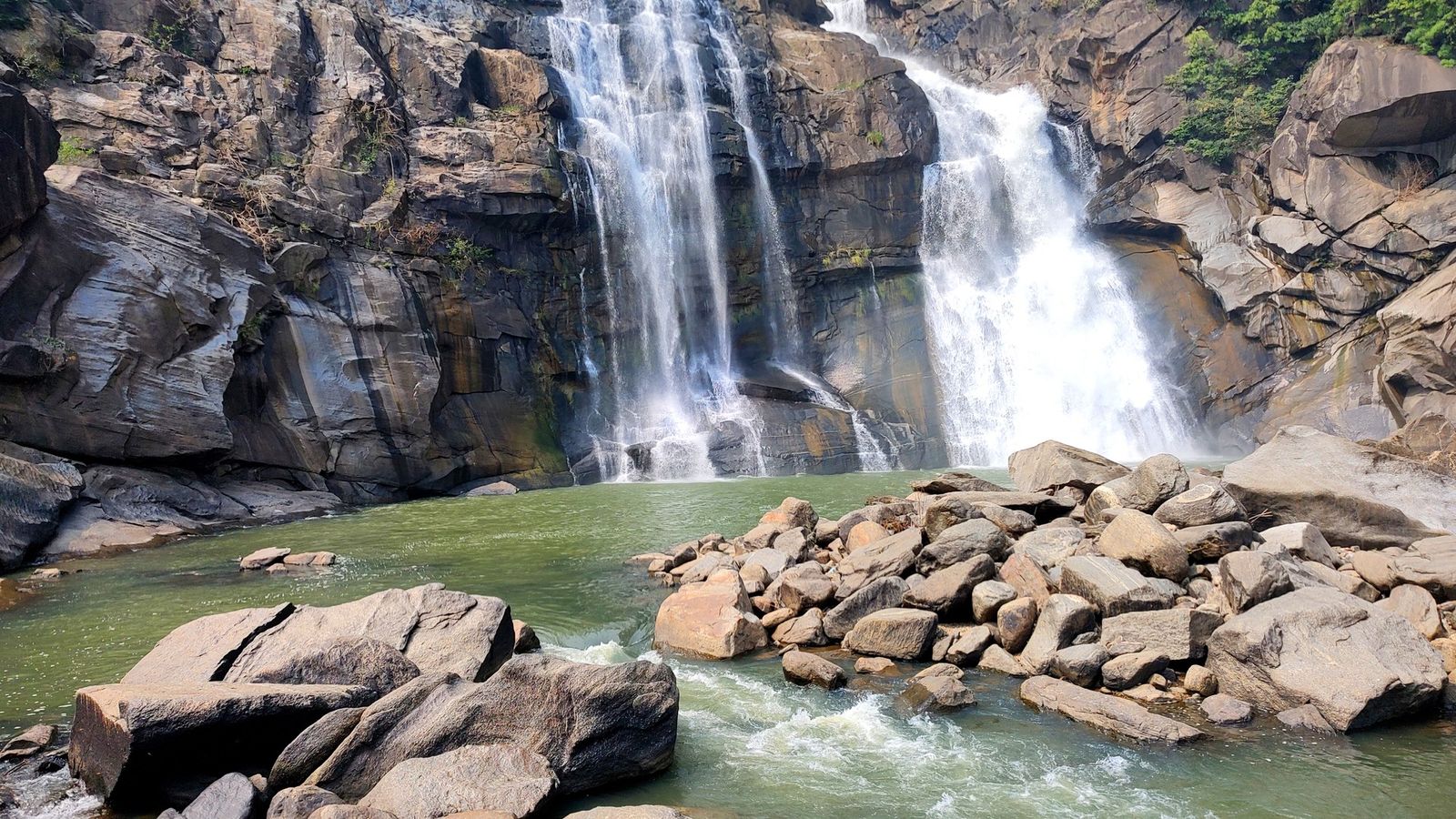
Photo: Kingshuk Mondal, CC BY 4.0 (cropped), via Wikimedia Commons

Jharkhand sits on the Chota Nagpur plateau, a land of sal forest, rocky hills and waterfalls between Bihar and Odisha. It is the home of many Adivasi peoples, among them the Santhal, Munda, Oraon and Ho, whose festivals follow the seasons of the forest. Travellers come for the waterfalls around Ranchi, the cool plateau at Netarhat, the tiger reserve at Betla, and the great pilgrim shrines of Deoghar and Parasnath.
A plateau of forest and falling water, where the festivals follow the sal tree.
Where to go
- The falls near Ranchi: Hundru, Dassam, Jonha and Sita falls, at their fullest just after the monsoon.
- Netarhat: the highest point of the plateau, with pine woods, pear orchards, and sunrise and sunset points.
- Betla National Park: the heart of the Palamau Tiger Reserve, with jeep safaris for elephant, bison and deer, and the ruined Palamu forts in the forest.
- Deoghar: the Baidyanath temple, one of the twelve jyotirlingas of Shiva, and the end of the Shravan pilgrim walk.
- Parasnath: Sammed Shikhar, the holiest Jain hill, where twenty of the twenty-four Tirthankaras are believed to have attained salvation.
- Patratu valley: a winding road down to a lake, about 40 kilometres from Ranchi.
- Rajrappa: the Chhinnamasta temple where the Bhairavi river joins the Damodar.
- Maluti: a village of old terracotta temples near the West Bengal border.
- Hazaribagh: lakes, a forest sanctuary, and the painted Sohrai and Khovar walls of nearby villages.
For the temples in more depth, read Jharkhand's temples, from Deoghar to Maluti, and for a tour of the regions, Jharkhand, across the plateau.
Main cities
Ranchi is the capital, a plateau town with a mild climate by Indian standards, and the base for the waterfalls, Patratu and the road to Netarhat and Betla.
- Ranchi: the falls, Tagore Hill, the Jagannath temple at Jagannathpur, and the tribal museum.
- Jamshedpur: the planned steel town built around Tata Steel, with Jubilee Park and the Dalma hills and wildlife sanctuary nearby.
- Dhanbad: the coal town of the state, a railway junction, and a gateway to Parasnath and Maithon dam.
- Bokaro: a planned steel city with a large lake and city park.
- Deoghar: the temple town, with its own airport, crowded in the month of Shravan.
- Hazaribagh: a quieter town of lakes and forest, and a base for Sohrai painting villages.
- Giridih: the nearest town to Parasnath, with Usri falls on the way.
Festivals
- Sarhul (March or April): the spring festival of the sal blossom, with processions and dance in Ranchi.
- Shravani Mela (July and August): pilgrims carry Ganges water from Sultanganj in Bihar to Baidyanath in Deoghar.
- Karma (August or September): a branch of the karam tree is planted in the village and danced around all night.
- Sohrai (October or November): the harvest and cattle festival around Diwali, when walls are freshly painted.
- Tusu (January): songs and riverside fairs at Makar Sankranti, especially in the east.
Food to try
- Dhuska: deep-fried bread of rice and lentil batter, often eaten with potato curry or ghugni.
- Rugra: a wild mushroom of the sal forest, cooked as a curry in the monsoon.
- Chilka roti: a thin rice-flour pancake, eaten with chutney or curry.
- Bamboo shoot: young shoots cooked as a dry vegetable or a sour curry.
- Arsa: a sweet fried cake of rice flour and jaggery, made for festivals.
- Litti chokha: roasted stuffed wheat balls with mashed aubergine and potato, shared with neighbouring Bihar.
Stories from Jharkhand
- Temples of Jharkhand: Baidyanath Dham, Rajrappa and Maluti
- Districts of Jharkhand: Ranchi, Netarhat, Deoghar and Parasnath
- Cities in Jharkhand: Ranchi, Jamshedpur, Dhanbad, Deoghar Guide
Plan your visit
| Best season | October to March is cool and dry. The waterfalls are fullest from late August to October. April to June is hot, and Betla National Park is closed from 1 July to 30 September. |
|---|---|
| How to reach | Birsa Munda Airport, Ranchi, and Deoghar Airport. Main railway stations: Ranchi, Hatia, Tatanagar (Jamshedpur), Dhanbad, Bokaro Steel City, Jasidih (for Deoghar) and Parasnath. |
| Getting around | Hired cars and taxis from Ranchi for the falls, Patratu and Netarhat; trains between Ranchi, Jamshedpur, Dhanbad and Bokaro. For Betla, trains to Daltonganj or Barwadih, then road. |
| Where to stay | Ranchi's Main Road and Lalpur area; Bistupur in Jamshedpur; Netarhat village; the Betla tourist complex at the park gate; Deoghar town near the temple; Madhuban at the foot of Parasnath. |
| How long to spend | Two or three days for Ranchi and its falls; five days to add Netarhat and Betla; a week or more to include Deoghar and Parasnath. |
| Permits | No permits are needed. Betla National Park is open from 1 October to 30 June; jeep safaris are booked through the Palamau Tiger Reserve. Check before you go, as rules and fees change each season. |
Questions people ask
What is the best time to visit Jharkhand?
October to March. Come in September or October if you want the waterfalls full, and avoid May and June, when the plateau is hot.
When is Betla National Park open?
From 1 October to 30 June. It closes from 1 July to 30 September for the monsoon breeding season.
How do I reach Netarhat?
Netarhat is about 145 kilometres from Ranchi by road, a drive of four to five hours. There is no railway station on the plateau, so most people hire a car from Ranchi.
How do I reach Deoghar?
Fly to Deoghar Airport, or take a train to Jasidih Junction, about 7 kilometres from the temple town.
Written by Muthu, editor of Aura of India. Sources: Jharkhand Tourism: Netarhat, Jharkhand Tourism: Parasnath, Department of Forest, Environment and Climate Change, Jharkhand: Betla, Airports Authority of India: Ranchi. Last verified: 13 October 2026.
Your turn: Which of Jharkhand's waterfalls have you seen in full flow, and in which month?
Comments
Post a Comment
Comments are always welcome, that will help us to motivate ourselves and improve our services. Thanks!!