Chandigarh Sector by Sector: What to See and Where It Is
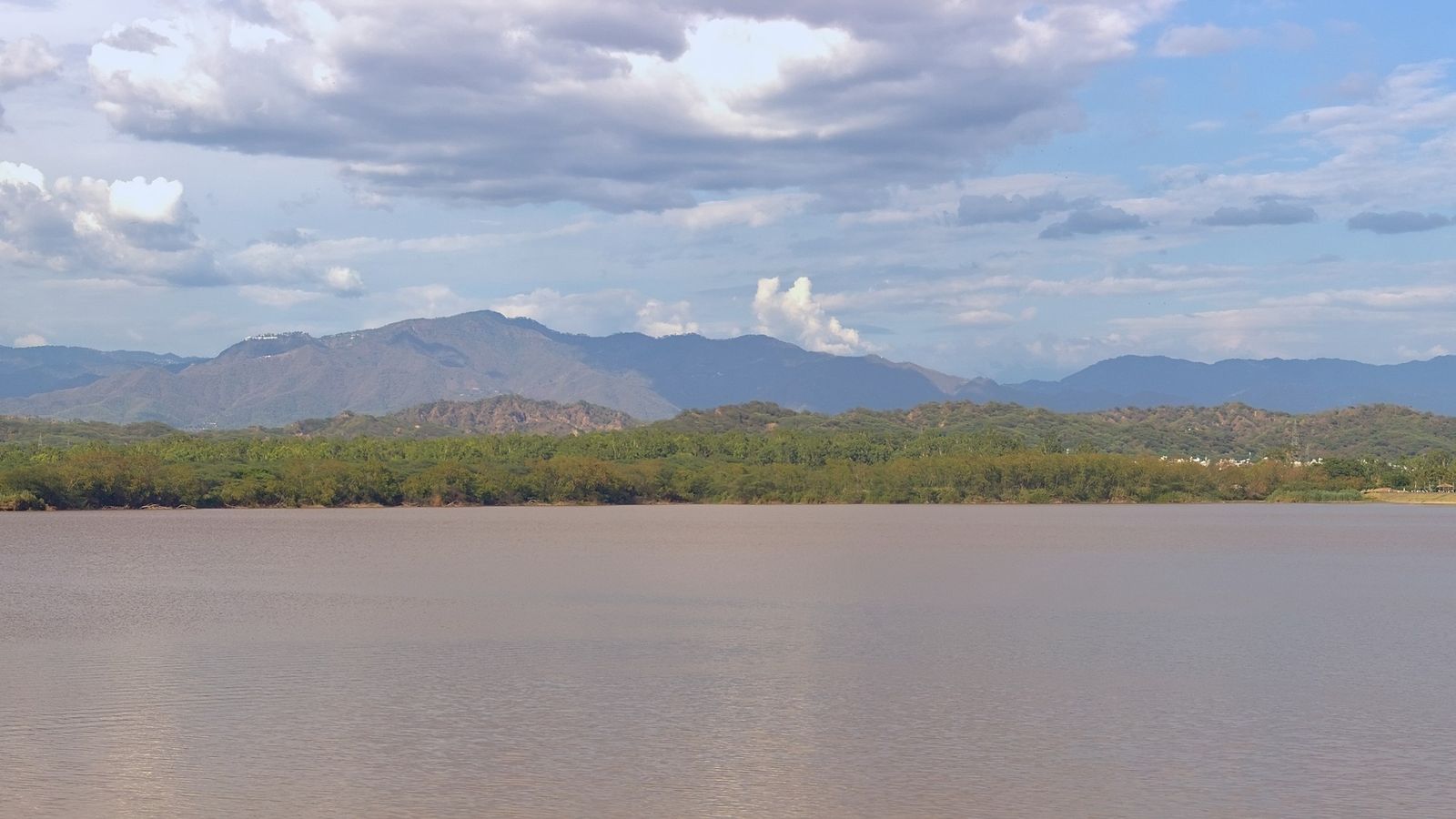
Photo: UnpetitproleX, CC BY-SA 4.0 (cropped), via Wikimedia Commons

Chandigarh at first light, from the dam on Sukhna Lake, with the Shivalik hills behind.
In Chandigarh an address is a number on a grid, and the grid has hardly moved since the 1950s.
Reading the grid
There are no "districts" to learn in Chandigarh: the whole union territory forms one district with the same outline, so a visitor learns sectors instead. Le Corbusier made the sector the basic unit of the city. Each one is a rectangle of 800 by 1,200 metres, closed off from the fast roads around it, with its own shops, school and health centre, and only four ways in for traffic. A shopping street runs across every sector and joins the one in the next, so the markets form a long ribbon through the city.
The numbers start at the northern edge, by the hills, and rise towards the south. There is no Sector 13. Quarters are lettered A to D, so 19-B is one corner of Sector 19. Addresses in the 60s, 70s and beyond are mostly in Mohali, in Punjab, where the grid carries on.
Sector 1: the Capitol, the Rock Garden and the lake
Sector 1 sits at the head of the city. In the Capitol Complex the Assembly, the Secretariat and the High Court face each other across open concrete, with four monuments between them: the Open Hand, the Tower of Shadows, the Geometric Hill and the Martyrs' Memorial. Entry is by free guided tour, with photo ID; only weekday tours go inside.
A short way east, on Uttar Marg, is the Rock Garden, about 35 acres of figures and walls made from broken tiles, bangles, pots and scrap. Nek Chand began it in secret in 1957. Beyond it lies Sukhna Lake, made in 1958 by damming the Sukhna Choe, a seasonal stream off the Shivaliks (choe is the local word for one). It is free, open from 5 am to 9 pm, and closed to motorboats. Across the road in Sector 5, Pierre Jeanneret's house is now a small museum.
The middle: Sectors 10, 16, 17, 19 and 22
Sector 17 is the city centre, about 240 acres around a paved plaza closed to traffic, with shops, cinemas, the main bus terminal and a musical fountain at 7, 8 and 9 in the evening. Next door, Sector 22 is the everyday market of clothes and shoe shops and small hotels. Sector 16 holds the Zakir Hussain Rose Garden, opened in 1967 and spread over about 40 acres.
Sector 10 is the museum quarter, along the green strip of Leisure Valley. The Government Museum and Art Gallery has Gandhara sculpture and Pahari miniature paintings, and the Natural History Museum and the Chandigarh Architecture Museum stand beside it. In Sector 19, the old architects' office on Madhya Marg is now the Le Corbusier Centre, with the team's plans, photographs and furniture.
Getting there and around
Shaheed Bhagat Singh International Airport lies on the Chandigarh and Mohali border. The railway station is about 8 km from Sector 17, with fast trains from New Delhi, and buses use the terminals in Sectors 17 and 43. There is no metro.
Sectors are large, so walks take longer than the map suggests. The Sector 1 sights sit close together; for the rest, use CTU buses or auto-rickshaws. In 2026 the city suspended the licences of Ola, inDrive, Uber and Rapido for six months each, so do not count on app cabs.
How the grid was drawn
Le Corbusier did not start from a blank sheet. An earlier plan by the American planners Albert Mayer and Matthew Nowicki had curving roads; he kept much of its thinking but turned it into a rectangular grid for the fast roads and made the city smaller to save money. It was meant as a garden city of low buildings, built in two phases: Sectors 1 to 30 for about 150,000 people, then the denser Sectors 31 to 47 for 350,000 more.
Roads were sorted into seven types, the '7 Vs', from fast highways (V1) down to footpaths and cycle tracks (V7); the city's own transport plan admits the footpath network was never fully built. The missing Sector 13 has a plain official story: the number was set aside for a cultural zone that was later dropped.
Sectors to know
- Sector 1 (Capitol and lake): the Capitol Complex, the Rock Garden and Sukhna Lake.
- Sector 5 (Uttar Marg): Pierre Jeanneret's house museum, near the lake.
- Sector 10 (Leisure Valley): the Government Museum, the Natural History Museum and the Architecture Museum.
- Sector 16 (Jan Marg): the Zakir Hussain Rose Garden, at its best in February and March.
- Sector 17 (City Centre): the pedestrian plaza, the evening fountain and the main bus terminal.
- Sector 19 (Madhya Marg): the Le Corbusier Centre, in the old architects' office.
- Sector 22 (beside Sector 17): everyday markets and budget hotels.
- Sector 43 (south of the centre): the second interstate bus terminal.
Walk north from the plaza at dusk: the sector numbers fall, the hills come closer, and the city stops at the water.
Plan your visit
| Which sector to sleep in | Sector 17 or Sector 22 puts the plaza, the evening fountain and the main bus terminal on the doorstep. Sectors 7 to 10, along Leisure Valley, keep the museums close and the lake within reach. Mohali and Panchkula, where the grid spills over, are cheaper and quieter but further from both. |
|---|---|
| Distances on the grid | Each sector is 800 by 1,200 metres, so even neighbours are a long walk apart. The Sector 1 sights, the Capitol, the Rock Garden and the lake, sit close together, with Pierre Jeanneret's house across the road in Sector 5. The rest are spread over Sectors 10, 16, 17, 19 and 22; between them, and up to Sector 1, take a CTU bus or an auto-rickshaw. |
| App cabs | In 2026 Ola, inDrive, Uber and Rapido each had their licences suspended for six months, so check on arrival which, if any, are running. |
| A route through the sectors | Morning in Sector 1: the 10 am Capitol tour, then the Rock Garden and the lake. Afternoon in Sector 10's museums and the Le Corbusier Centre in Sector 19, and the Sector 17 fountain after dark. Spread it over two days to go slowly. |
| Season | The walks between sectors are easiest from October to March, and the Sector 16 roses peak in February and March. May and June bring the heat, and the monsoon runs from July to September. |
| Getting to Chandigarh | The airport, the railway station (about 8 km from Sector 17) and the bus terminals in Sectors 17 and 43 are covered in the Chandigarh travel guide. |
| Fees and closing days | Capitol tours free at 10 am, noon and 3 pm, with ID. Rock Garden ₹30 for adults, ₹10 for children; 9 am to 6 pm from October to March. Government Museum ₹30, Le Corbusier Centre ₹20, Pierre Jeanneret's house ₹10; all three closed on Mondays. Fees as of October 2026. |
Questions people ask
Why is there no Sector 13 in Chandigarh?
The number was kept for a cultural zone that was later dropped, so the grid skips from 12 to 14. Addresses still follow the sector and a quarter letter, A to D, as in 19-B.
Which sights are in Sector 1?
The Capitol Complex, the Rock Garden and Sukhna Lake. Pierre Jeanneret's house is just across the road in Sector 5.
Can I use Uber or Ola in Chandigarh?
Not reliably. In 2026 the Chandigarh State Transport Authority suspended the licences of Ola, inDrive, Uber and Rapido for six months each. Use CTU buses or auto-rickshaws, and check the current position when you arrive.
Read next
Written by Muthu, editor of Aura of India. Sources: Chandigarh Administration: Le Corbusier's master plan, Chandigarh Administration: Edict of Chandigarh, Chandigarh Tourism: Capitol Complex, Chandigarh Tourism: Rock Garden, Chandigarh Tourism: ticket fees, The Tribune: Ola, Uber, Rapido, InDrive barred in Chandigarh. Last verified: 15 October 2026.
Your turn: Did you find your way by sector numbers alone, or did the grid still catch you out?
Nice. CakesNcakesshop is the best cake shop in chandigarh. Visit:- Chota Bheem Cake - 1 Kg
ReplyDelete