India's Largest Cities: Population, What to See, Getting Around
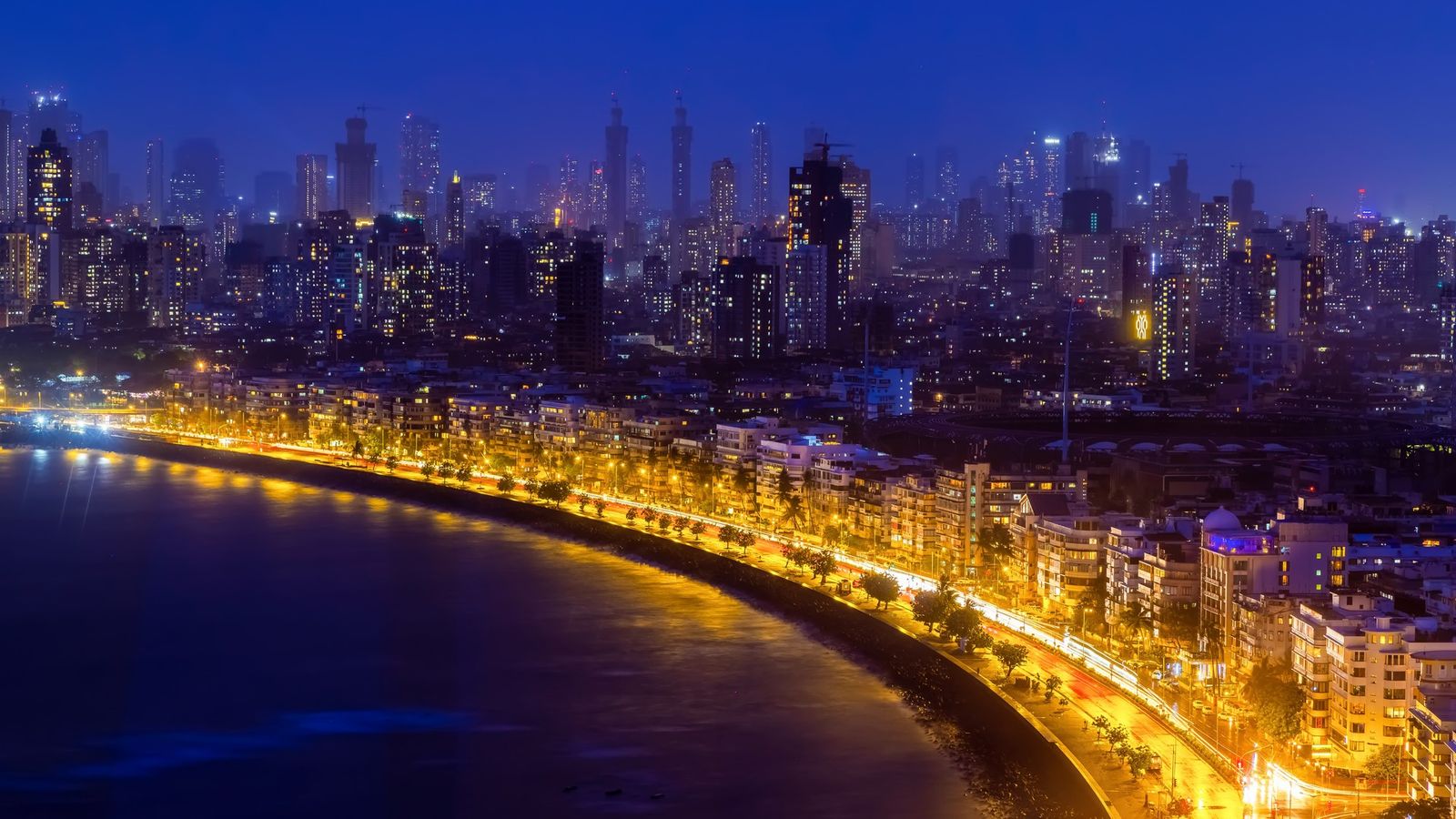
Photo: Dr Vikramjit Kakati, CC BY-SA 4.0 (cropped), via Wikimedia Commons

Evening on Marine Drive in Mumbai, the street lights coming on one by one along the curve of the bay.
India's biggest cities are hard to measure and harder to take in, and the best way into each is by its own trains, ferries and streets.
Which cities are the largest?
The answer depends on what you count. The Census of India 2011, the last one completed, counted urban agglomerations, a city together with the towns and suburbs that have grown into it. On that measure Greater Mumbai came first with about 18.4 million people, then Delhi with 16.3 million and Kolkata with 14.1 million, followed by Chennai, Bengaluru, Hyderabad, Ahmedabad, Pune, Surat and Jaipur. Count only the people inside each city's municipal limits and the order changes: Bengaluru rises to third, and Kolkata, whose municipal area is small, drops well down. Older lists mix the two measures, which is why they rarely agree.
Newer figures use other methods again. The United Nations' World Urbanization Prospects 2025, which draws city edges by continuous built-up area, puts Delhi at about 30 million, fourth in the world, with Kolkata at about 22.6 million and Mumbai at about 20.2 million. The next census counts the population in February 2027, and its figures will settle the question for a while.
Mumbai and Delhi
Mumbai is a long, narrow city on what were once seven islands. The old centre, around Fort and Colaba, is easy on foot; for the rest there are suburban trains, cheap, fast and packed at rush hour. The underground Aqua Line metro, fully open since October 2025, runs from Cuffe Parade through the old business district to both airport terminals and on to Aarey. A second airport now serves the region from Navi Mumbai, across the harbour.
Delhi spreads wide, and its metro, the largest in India at more than 400 km and about 300 stations, is the best way across it. The Airport Express line links the international airport with New Delhi station. Old Delhi's lanes are best on foot or by cycle-rickshaw. In winter smog can be heavy, so check the air quality before long days outdoors.
Kolkata, Chennai, Bengaluru and Hyderabad
Kolkata opened India's first metro in 1984, and since 2024 a line has run in a tunnel beneath the Hooghly river between Howrah and Esplanade. Ferries still cross the river, and the trams that once filled the city have mostly gone. Chennai is a long coastal city of temples, beaches and old neighbourhoods such as Mylapore, with a metro line to the airport. Bengaluru is milder in climate than the others but slow on its roads; its metro covers about 96 km, though the line to the airport is not expected before 2027. Hyderabad pairs an old city around the Charminar with new districts to the west, linked by three metro lines.
Ahmedabad, Pune, Surat and Jaipur
Ahmedabad's walled old city, with its pols, the gated lanes of houses, is India's first World Heritage City, and its metro now runs on to Gandhinagar, the state capital. Pune mixes Maratha history with a large student and software city, and has its own metro. Surat, the diamond and textile city on the Tapi, has no metro running yet; the first section is expected around the end of 2026. Jaipur, the smallest of the ten, keeps its walled Pink City compact enough to walk, with a single metro line.
Getting around a big Indian city
In most of these cities the metro is the calmest way to travel. Tickets are cheap, sold at counters, machines or as QR codes on phone apps, and bags are usually screened at the entrance. Avoid the morning and evening rush on any train. Mumbai's suburban trains have separate first-class and women's compartments.
App cabs and auto-rickshaws work in every city here, and prepaid taxi counters at airports and big stations avoid haggling. Old quarters such as Old Delhi, Ahmedabad's pols or Jaipur's bazaars are for walking, but pavements are uneven and traffic rarely stops, so cross with locals.
Cities to know
- Mumbai (Maharashtra): the Fort area on foot, trains for the rest.
- Delhi (Delhi): India's largest metro, and Old Delhi on foot.
- Kolkata (West Bengal): the oldest metro and the Hooghly ferries.
- Chennai (Tamil Nadu): temples, the Marina and a metro to the airport.
- Bengaluru (Karnataka): mild weather, gardens and a growing metro.
- Hyderabad (Telangana): the Charminar, Golconda fort and three metro lines.
- Ahmedabad (Gujarat): the pols of a World Heritage City and a metro to Gandhinagar.
- Pune (Maharashtra): Maratha history and day trips to hill forts.
- Surat (Gujarat): food and the riverfront; metro still to come.
- Jaipur (Rajasthan): a walled city made for walking.
Nobody sees all of Mumbai or Delhi; the visitors who enjoy them pick a neighbourhood, learn one train line, and come back.
Plan your visit
| Best season | October to March for most of these cities. Delhi and Jaipur are cool but often smoggy from November to January; Mumbai has heavy monsoon rain from June to September; Chennai's wettest months are October to December; Bengaluru is mild all year. |
|---|---|
| How to reach | Delhi, Mumbai, Bengaluru, Chennai, Kolkata and Hyderabad take most international flights; all ten cities have airports and are on the main railway lines. |
| Getting around | Metro in all but Surat (as of October 2026); suburban trains in Mumbai, Chennai and Kolkata; ferries in Mumbai and Kolkata; app cabs and auto-rickshaws everywhere. |
| Where to stay | Near a metro or suburban station: Colaba, Fort or Bandra in Mumbai; Connaught Place or South Delhi; Park Street in Kolkata; Egmore or Mylapore in Chennai; MG Road or Indiranagar in Bengaluru; the old city edge in Ahmedabad and Jaipur. |
| How long to spend | Three or four days each for Mumbai, Delhi and Kolkata; two or three for the others. More in our India guide. |
Questions people ask
Which is the largest city in India?
It depends on the measure. In the Census of India 2011, Greater Mumbai was the largest urban agglomeration. The UN's 2025 estimate, which uses built-up area rather than city boundaries, puts Delhi first. The 2027 census will give new official figures.
Why do population figures for Indian cities differ so much?
Because they count different areas: the city's municipal limits, the wider urban agglomeration, a planning region, or, in the UN's newer method, the whole continuous built-up area. Always check which measure, source and year a figure comes from.
When will the 2027 census results be out?
The houselisting stage ran from April to September 2026, and the population count is in February 2027, with 1 March 2027 as its reference date. No date had been announced for the results as of October 2026.
Which city is easiest for a first visit?
Jaipur is small enough to see in two days, and Mumbai's old centre is easy to walk. For an early start in Kolkata, read Kolkata at dawn.
Read next
Written by Muthu, editor of Aura of India. Sources: Ministry of Housing and Urban Affairs: million-plus cities, Census 2011, UN DESA: World Urbanization Prospects 2025, World Cities in 2025 data booklet, PIB: Census 2027 schedule, Kolkata Metro Rail Corporation: overview, Gujarat Metro Rail: Ahmedabad Phase II overview. Last verified: 15 October 2026.
Your turn: Which big Indian city did you find easiest to get around, and was it the metro, the trains or your own feet?
Comments
Post a Comment
Comments are always welcome, that will help us to motivate ourselves and improve our services. Thanks!!