Andhra Meals on a Banana Leaf: Gongura, Podi and How to Eat
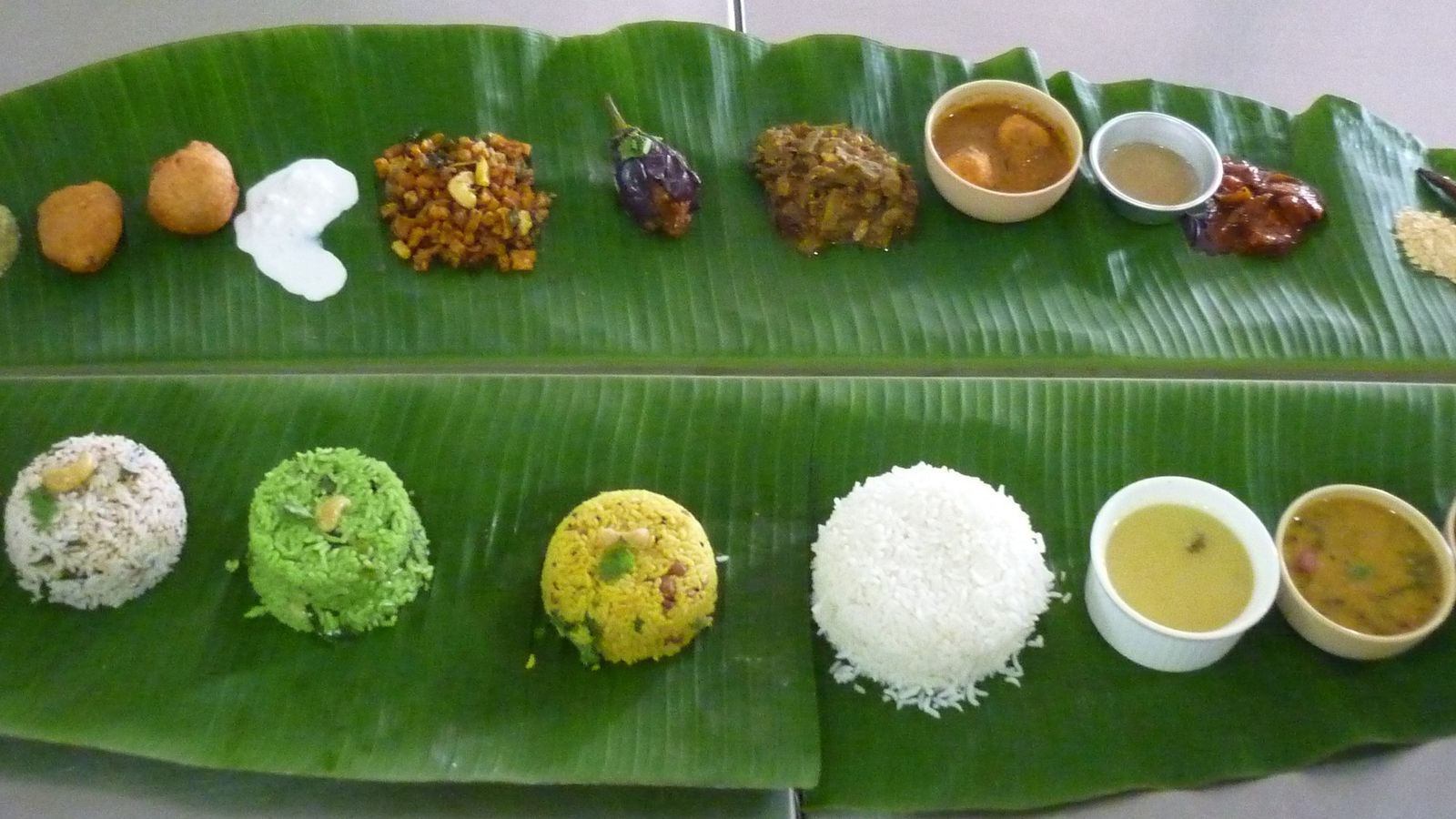
Photo: United Hotel Management Academy, CC BY-SA 4.0 (cropped), via Wikimedia Commons

Lunchtime in an Andhra mess, a plain eating house that serves set meals, in Vijayawada or Guntur.
Rice sits in the middle of the leaf, and everything around it is there to be mixed in, by hand.
The leaf, laid out
The meal comes on a banana leaf, rinsed with a splash of water at the table. Then the servers arrive, quickly, with steel buckets. A pinch of salt goes at the tip of the leaf. Pickles and chutneys go to one side, cooked vegetables to the other, and a mound of hot rice in the middle, with a spoon of ghee, clarified butter, poured over it.
Look for the small things first. Gongura pachadi is a sharp chutney of sorrel leaves, sour and dark green. Avakaya is the raw-mango pickle, red with chilli and mustard, made once a year in the summer heat. Podi is a coarse powder of roasted lentils and chilli, eaten with ghee. Then come pappu, the dal; pulusu, a thin, sour stew of tamarind and vegetables; charu, a peppery broth like rasam; and curd at the end.
Eating in order
The leaf is eaten in courses, not tasted at random. The first mouthful is rice mixed with podi or pickle and ghee, small and fierce, to wake the appetite. Next comes rice with pappu, then with pulusu or sambar, then with charu. Each time, the servers come back with fresh rice. In most messes the meal is unlimited, and they keep filling the leaf until you stop them with a raised hand.
Curd rice closes the meal and cools the mouth. Eat with your right hand. When you finish, many people fold the leaf in half. Which way it is folded differs by family and occasion, so watch the table once before you copy anyone.
Why it is so hot
Andhra grows more chilli than any other Indian state, about half of the country’s crop in 2023–24, by the count of the state agricultural university. The market yard at Guntur is the largest chilli market in Asia, and the Guntur Sannam chilli carries a Geographical Indication, a legal mark that ties a product to its place. The food of the Guntur and Vijayawada belt is the hottest in the state. Two Andhra sweets carry the same mark: Bandar laddu from Machilipatnam, and Atreyapuram pootharekulu, paper-thin sheets of rice starch rolled with sugar and ghee.
This is not the food of Hyderabad, which is in Telangana. Hyderabad’s best-known dishes come from the Deccani cooking of the Nizams’ court; see Hyderabadi biryani. The Andhra leaf is plainer, built on rice, lentils, tamarind and chilli.
Where to find it
An Andhra meal is mainly a lunchtime thing, served from about noon. In the evening many places switch to tiffin, light dishes such as dosa and idli. Look for boards that say “Meals” near bus stands, railway stations and temple towns. Vijayawada, on the main coastal railway and with its own airport, has some of the oldest messes, and Guntur is under an hour away by road or train.
The mess that started it
In Vijayawada the mess is an institution: a plain hall, long tables, a leaf and refills without limit. Perraiah Mess has served vegetarian meals on a plantain leaf since 1955, according to The Hindu. It is known for mudda pappu, plain mashed dal eaten first with hot rice, ghee and avakaya. In the 1950s a meal there cost one rupee.
Many smaller messes grew up around colleges and offices, cooking for students and workers far from home. The idea has not changed: food that tastes like a home kitchen, served fast, with the servers watching for an empty patch of leaf.
Beyond the leaf
Mornings start differently. Pesarattu is a thin crêpe of green gram, often folded around upma and eaten with ginger chutney. Ulava charu, a dark soup of horse gram, turns up on special meals around Vijayawada, sometimes with a spoon of fresh cream on top.
For sweets, look for pootharekulu from Atreyapuram in the Godavari delta, and the soft, crumbly Bandar laddu of Machilipatnam. Both are sold in sweet shops along the coast, and both hold a Geographical Indication.
Before you go
- Less chilli: “karam takkuva” asks for less heat; it softens the curries, not the pickle.
- Avakaya: use less than you think; a little pickle seasons a lot of rice.
- Vegetarian or not: many messes are fully vegetarian; others add fish, chicken or mutton, so ask.
- Hands: there is always a basin; wash first and eat with the right hand.
- Refills: they come fast; cover the leaf with your hand when you have had enough.
- Prices: set meals are priced on a board at the counter, often a basic meal and a “special” with more dishes.
By the last course the leaf is nearly bare, with a smear of red pickle at one edge, and the server is already coming back with rice.
Plan your visit
| Where to eat it | Vegetarian messes and meals halls in Vijayawada, Guntur and Rajamahendravaram, and near bus stands, railway stations and temple towns across the state. |
|---|---|
| Price guide | Set prices on a board at the counter, usually a basic meal and a dearer ‘special’ with more dishes. Prices vary by town: check before you sit down. |
| When it is served | Mainly at lunch, from about noon. In the evening many places serve tiffin instead: dosa, idli and pesarattu. |
| Try it with | Majjiga, thin spiced buttermilk, to cool down; a sweet paan to finish where it is offered. |
| Spice level | Hot, especially around Guntur and Vijayawada. Ask for less chilli, keep the curd for last, and treat the pickle as seasoning. |
Questions people ask
What is gongura?
The leaf of a sorrel plant, also called roselle, with a sharp, sour taste. In Andhra it becomes a chutney, gongura pachadi, and goes into dal and meat curries.
Is an Andhra meal vegetarian?
The classic meal on a leaf is vegetarian, and many messes serve nothing else. Non-vegetarian places add fish, prawn, chicken or mutton curries; ask what is cooking that day.
How do you eat an Andhra meal?
With your right hand, in courses: rice with podi or pickle and ghee, then with dal, then with pulusu or sambar, then charu, and curd rice to finish.
Is Andhra food the same as Hyderabadi food?
No. Hyderabad is in Telangana, and its best-known dishes, such as biryani, come from the Deccani cooking of the Nizams’ court. The Andhra leaf is built on rice, dal, tamarind and chilli.
Read next
Written by Muthu, editor of Aura of India. Sources: Intellectual Property India: Geographical Indication, Guntur Sannam Chilli, Intellectual Property India: Geographical Indication, Atreyapuram Pootharekulu, APEDA: Andhra Pradesh geographical indications (Bandar Laddu), Guntur district, Government of Andhra Pradesh: One District One Product (chilli, Guntur market yard), Acharya N.G. Ranga Agricultural University: Chilli outlook 2023–24 (PDF), The Hindu: A ‘hut’ where a concept was born (Perraiah Mess, Vijayawada). Last verified: 15 October 2026.
Your turn: What goes on your first mouthful of an Andhra meal: podi and ghee, gongura or avakaya?
Comments
Post a Comment
Comments are always welcome, that will help us to motivate ourselves and improve our services. Thanks!!