Golden Temple, Amritsar: Light, Etiquette and Sarovar
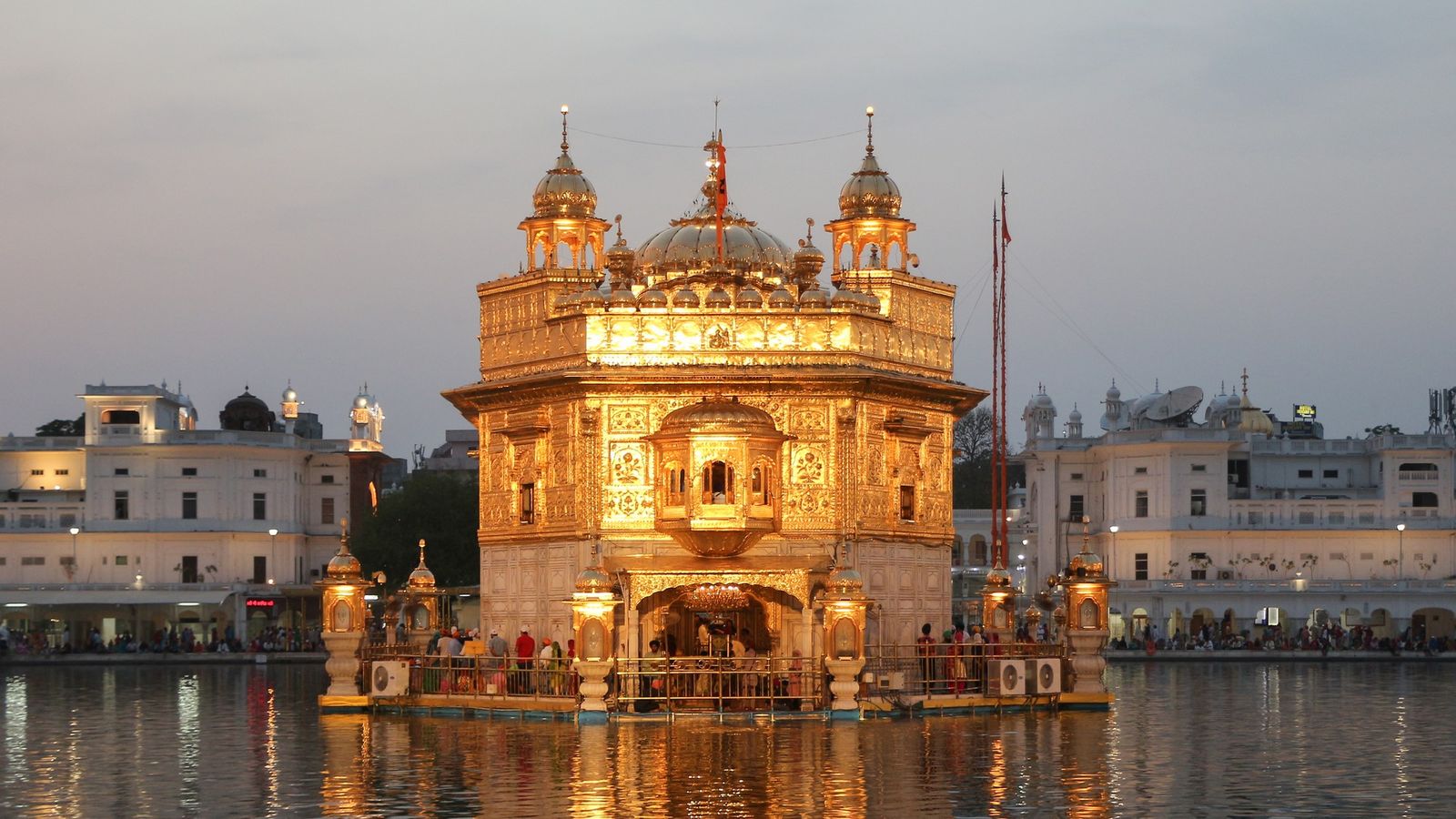
Photo: Bernard Gagnon, CC BY-SA 4.0 (cropped), via Wikimedia Commons

Harmandir Sahib, Amritsar, in the hour when the sun drops and the gold holds the last light.
The Golden Temple is open all day and night, but the water and the metal agree on one hour: late afternoon into dusk.
What you see in the golden hour
Sri Harmandir Sahib sits in the middle of the Amrit Sarovar, the sacred pool. A marble causeway leads to the sanctum. The upper walls and dome catch the low sun and throw a warm reflection across the water. Pilgrims walk the parikrama, the marble path around the tank, in a steady clockwise flow. Akal Takht stands opposite on the far side of the complex. The sound is kirtan from inside the sanctum, carried over the courtyard. Arrive from about an hour before sunset; stay through the blue hour when the floodlights take over and the reflection sharpens.
How to enter and behave
Cover your head before you step in; free scarves are usually available near the entrances if you have none. Remove shoes and socks at the free jora ghar, wash hands, and walk through the footbath. Dress modestly. Do not bring tobacco, alcohol or intoxicants into the complex. Speak softly. Sit with feet away from the Guru Granth Sahib and keep feet out of the sarovar when you rest by the edge. Photography rules tighten on the causeway and inside the sanctum; follow the sewadars. Langar, the free community meal, runs day and night; sit in rows on the floor and accept what is served.
Why light and water matter here
Guru Ram Das developed the sarovar; Guru Arjan Dev built the first Harmandir Sahib so that the house of prayer would sit low in the water, open to all sides. The gold cladding that gives the shrine its English name came in a later century. People come for darshan, for langar seva, and for the peace of the tank. The complex does not charge an entry fee. The daily routine of prakash, kirtan and sukhasan follows the Nanakshahi calendar and shifts slightly with sunrise and sunset—check the month’s times if you want a specific ceremony.
Getting there and timing your visit
Shaheed Bhagat Singh International Airport is about 15 km from the temple. Amritsar Junction is well linked by rail. Autos and taxis drop you near the clock-tower entrance or side gates; the last stretch is on foot through security. The shrine is open twenty-four hours. For the golden-hour reflection, be inside the complex before sunset, not still in the shoe queue. Winter evenings are cold on wet marble; carry a shawl. Summer afternoons are harsh; dusk is kinder.
Catching the gold on the water
For the classic reflection, be inside the complex about an hour before sunset. Clear winter air helps; monsoon clouds can mute the gold but deepen the sky. After dark the floodlights keep the sanctum bright—different picture, same calm walk.
If you also want the quiet of amrit vela, that is a separate, very early visit. Ceremony times shift by month; check the published daily routine.
Langar and the rest of the day
Langar is free and open to all. Sit in the row you are shown, eat what is served, and leave the utensils where volunteers direct. If you return to the shrine afterward, wash hands and feet again.
Jallianwala Bagh is a short walk away for a sober second stop. For more of Punjab beyond Amritsar, see the Punjab guide.
Rules that keep the visit calm
- Head cover: required for everyone; keep it on until you leave.
- Shoes: deposit together if you are a group; do not lose the token.
- Sarovar: walk clockwise; do not put feet in the water while sitting.
- Langar: free, continuous; wash again if you return to the shrine after eating.
- Phones: silent; no video in the sanctum.
- Best light: late afternoon to dusk for the gold and the reflection.
When the sun goes, the gold does not. It borrows the lamps and keeps the water bright a little longer.
Plan your visit
| Entry | Free. Donations welcome. No ticket for the shrine complex. |
|---|---|
| Hours | Open 24 hours. Prakash, kirtan and sukhasan times change with the month and with sunset—check the current schedule. |
| Best light | Late afternoon into dusk for gold on the sarovar; early dawn for fewer crowds and softer air. |
| Dress and rules | Cover your head; remove shoes; modest clothes; no tobacco or intoxicants; keep feet out of the sarovar when sitting. |
| How to reach | Shaheed Bhagat Singh International Airport about 15 km; Amritsar Junction by rail; auto or taxi to the clock-tower or side gates, then on foot. |
| Where to stay | Near the Golden Temple for dawn visits; areas toward the station or airport road for quieter nights. |
| Time needed | One to two hours for parikrama and darshan; longer if you take langar and wait for sunset. |
Questions people ask
Do you need a ticket for the Golden Temple?
No. Entry is free. Follow the queue for shoes, cover your head, and wash hands and feet before you enter.
What is the best time for photographs of the gold?
Late afternoon to dusk for warm light on the sanctum and a clear reflection. Follow rules that restrict photography on the causeway and inside the sanctum.
Can anyone eat in the langar?
Yes. Langar is open to all, free of charge. Sit as directed and accept the meal served.
Must you cover your head?
Yes. Everyone covers their head inside the complex. Scarves are usually available near the entrance if you do not bring one.
Is the temple open at night?
Yes. The complex remains open through the night, though specific ceremonies follow a daily timetable that shifts through the year.
Read next
Written by Muthu, editor of Aura of India. Sources: Golden Temple: daily routine and timings, Golden Temple: visitor rules and guidelines, Punjab Tourism, Incredible India: Amritsar. Last verified: 22 October 2026.
Your turn: Did you catch Harmandir Sahib at sunset or at dawn, and did you sit for langar the same visit?
Comments
Post a Comment
Comments are always welcome, that will help us to motivate ourselves and improve our services. Thanks!!