Mandu on the Plateau: Jahaz Mahal and When to Go
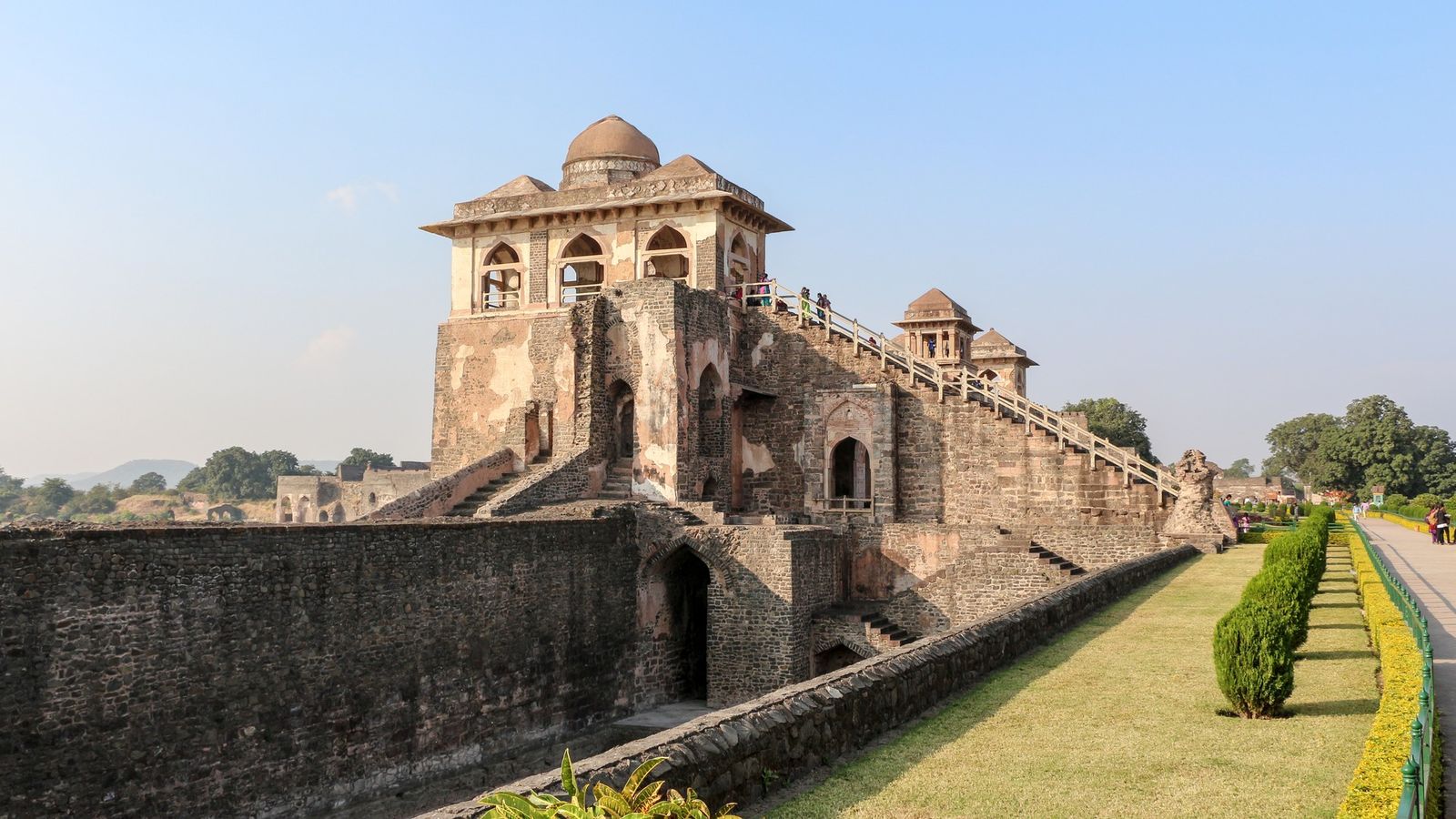
Photo: Bernard Gagnon, CC BY-SA 3.0 (cropped), via Wikimedia Commons

Jahaz Mahal on the Mandu plateau, Madhya Pradesh, after the monsoon rains.
Mandu sits high and open: the monuments do not crowd each other; the sky does the rest.
A palace between two lakes
Jahaz Mahal, the Ship Palace, stretches about 120 metres between Munj Talao and Kapur Talao. From the bank it reads as a long, two-storeyed hull of arches and overhanging balconies. When the tanks hold water, the reflection completes the idea of a vessel at rest. The plateau around it is scattered with other Afghan-era buildings: Hindola Mahal with its sloping walls, the great Jami Masjid, and Hoshang Shah’s marble tomb, often named as an early model studied before the Taj.
Walking the ridge
Visitors move between clusters rather than through a single courtyard. Roopmati’s Pavilion sits on a crest with a view toward the Narmada plains; Baz Bahadur’s palace lies below it. The old fort wall runs for tens of kilometres around the plateau, broken by gateways such as Delhi Darwaza. Autos and cycles cover the longer gaps; the short walks between Jahaz Mahal, the mosque and the tomb are done on foot. Carry water between stops — shade is uneven once you leave the larger halls.
Monsoon and early winter change the place most clearly. Madhya Pradesh Tourism favours July to March: after the rains the tanks fill, grass returns, and cloud sits low on the Vindhyas. Winter light is clear and low; summers on the plateau are severe. December often brings the Mandu Festival of music, craft and open-air events around the monuments.
Why the plateau mattered
Mandu was the capital of the Malwa sultans, then briefly of Baz Bahadur, before Mughal and later rule. The buildings mix Afghan plans with local stonework. People come for that spread of ruins in open air, not for a single indoor museum. Give the main clusters time: the palace tanks, the mosque court and the tomb garden each need a quiet half-hour. Local kitchens serve dal paniya, maize cakes with dal, and in season vendors sell baobab fruit, locally called khorasani imli, whose trees are said to have reached Mandu centuries ago from Africa.
Getting there
Indore’s airport is about 95 km away; the road journey takes around three hours. Buses run from Indore’s Gangwal and Sarawate stands, and from Dhar about 40 km north. Ratlam is a further rail option at about 130 km. The main ASI monuments open roughly sunrise to sunset; buy the group ticket at the counter or on the ASI e-ticket portal, and keep photo identity ready.
Monsoon green, winter clear
After the rains the tanks at Jahaz Mahal hold water and the plateau turns green; cloud moves through the valleys. Madhya Pradesh Tourism’s Mandu page favours July to March for comfort. Winter gives sharper low light on stone and easier walking between clusters. Midsummer heat on the ridge is extreme; start at opening time if you must go then.
December’s Mandu Festival adds concerts and craft stalls around the monuments when it runs — confirm that year’s dates with MP Tourism before you plan around it.
A plateau circuit without rush
Give Jahaz Mahal and the nearby mosque–tomb group a full morning, then Hindola Mahal, and keep Roopmati’s Pavilion and Baz Bahadur’s palace for late afternoon light. Hire an auto for the longer gaps rather than walking every kilometre in the sun.
Maheshwar is about 40–65 km away depending on the road used; it pairs well as a separate half-day, not as a squeeze after a full Mandu loop. See also Madhya Pradesh.
Places to know
- Jahaz Mahal: ship-like palace between the twin tanks; start here for the classic view.
- Jami Masjid and Hoshang Shah’s Tomb: the great mosque and India’s early marble royal tomb nearby.
- Hindola Mahal: audience hall with sloping side walls.
- Roopmati’s Pavilion: hilltop lookout toward the Narmada plains.
- Baz Bahadur’s Palace: courtyard and terraces on the slope below the pavilion.
By late afternoon the tanks hold the sky, and the palace seems to ride on still water.
Plan your visit
| Best season | July to March for greener tanks and cooler air; October to March for the clearest winter walking. |
|---|---|
| Entry | ASI Group of Monuments, Mandu. Recent e-ticket listings show about ₹20 for Indians and ₹250 for foreigners; older tourism pages differ — check the ASI portal or the gate as of October 2026. |
| Opening hours | Roughly sunrise to sunset for the main monuments; carry photo ID for e-tickets. |
| How to reach | Indore airport about 95 km (around three hours by road). Buses from Indore and from Dhar (about 40 km). |
| Where to stay | On the plateau near the monuments for dawn and dusk; Indore if Mandu is a long day trip. |
| How long to spend | One full day for the main clusters; two if you want Roopmati at both ends of the day. |
| Food note | Try dal paniya at a local eatery; baobab (khorasani imli) appears in season from roadside sellers. |
Questions people ask
What is Jahaz Mahal?
A long palace built between two artificial lakes, Munj Talao and Kapur Talao, so that it reads like a ship when the tanks hold water. Madhya Pradesh Tourism gives its length as about 120 metres.
Is one day enough for Mandu?
Yes for the main groups if you use an auto between clusters. Two days are better if you want slow light at Roopmati’s Pavilion and time in the mosque and tomb.
When is Mandu greenest?
In and just after the monsoon, roughly July to September, when the plateau is fresh and the tanks are more likely to hold water.
How far is Mandu from Indore?
About 95 km by road; buses and taxis take around three hours depending on stops and traffic.
Read next
Written by Muthu, editor of Aura of India. Sources: Madhya Pradesh Tourism: Mandu, ASI Bhopal Circle: Jahaz Mahal monument page, ASI e-ticketing portal. Last verified: 22 October 2026.
Your turn: Did you see Jahaz Mahal with water in the tanks, or on a dry day — and which pavilion held you longest?
Comments
Post a Comment
Comments are always welcome, that will help us to motivate ourselves and improve our services. Thanks!!