Himachal Pradesh Travel Guide: Where to Go, Seasons and Permits
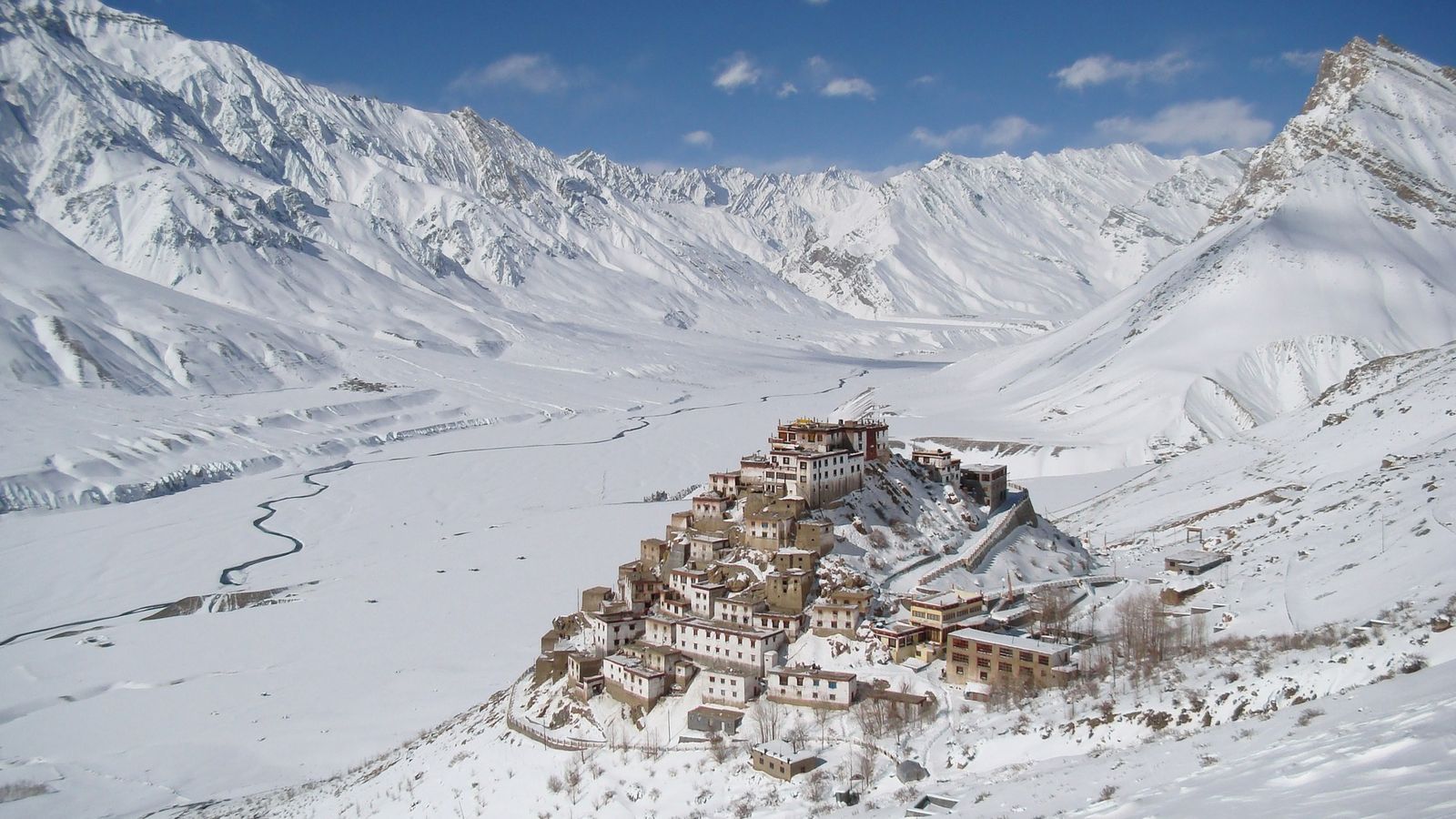
Photo: Original: Kulbhushan Singh Suryawanshi (website) Derivative work: Aristeas, CC BY-SA 4.0 (cropped), via Wikimedia Commons

Himachal Pradesh climbs from the Shivalik foothills to the high, dry valleys of Lahaul and Spiti on the edge of Tibet. Most travellers come for cool summers, cedar forests, apple orchards and old wooden temples. The south is green and a day's drive from Delhi or Chandigarh. The north is cold desert, and its passes open for only part of the year.
One state, from orchards in the south to a cold desert in the north.
Where to go
- Shimla: the old summer capital of British India, with the Mall and the Ridge, reached on the narrow-gauge railway from Kalka, a UNESCO World Heritage line.
- Manali and the Kullu valley: orchards, the wooden Hidimba Devi temple among cedars, and the road north through the Atal Tunnel to Lahaul.
- Dharamshala and McLeod Ganj: home of the Dalai Lama and the Tibetan community in exile, with monasteries, cafés and the walk up to Triund.
- Spiti: a high desert of mud-brick villages around Kaza. Key monastery on its hill and the old monastery at Tabo are the reasons to come.
- Kinnaur: the Sangla valley and Chitkul village on the Baspa river, and Kalpa, which faces the Kinner Kailash range across the Sutlej.
- Bir Billing: one of India's best-known paragliding sites, with Tibetan monasteries in Bir at the landing ground.
- Great Himalayan National Park: a UNESCO World Heritage park, entered through the quiet Tirthan and Sainj valleys, for forest walks and river villages.
- Chamba and Dalhousie: Chamba's stone temples above the Ravi, and the meadow at Khajjiar ringed by deodar trees.
- Manikaran: hot springs in the Parvati valley, where a gurdwara and a Rama temple stand side by side.
Main cities
Shimla is the capital and the seat of government. The assembly also meets for its winter session at Tapovan, near Dharamshala. Most towns here are small; you go to them for a temple, a valley or a road onward.
- Shimla: Mall Road, the Viceregal Lodge, the Jakhu temple, and day trips to Kufri and Chail.
- Dharamshala: Tibetan life in upper McLeod Ganj, the cricket ground, and the Kangra valley below.
- Manali: the base for Solang, Rohtang Pass and the long drives to Lahaul, Spiti and Ladakh.
- Kullu: the Dhalpur ground where the Dussehra fair is held, and rafting on the Beas.
- Mandi: a temple town on the Beas, called Chhoti Kashi for its many shrines, among them the old Bhootnath temple.
- Solan: a busy town on the Shimla road, known for mushrooms, and a stop on the way to Kasauli and Chail.
- Chamba: the Lakshmi Narayan temple group and the Bhuri Singh Museum of hill paintings.
- Palampur: the tea gardens of the Kangra valley, and a base for Bir and the Baijnath temple.
- Bilaspur: a new town above the Gobind Sagar reservoir, rebuilt after the old town was flooded by the Bhakra dam.
For the state's twelve districts, valley by valley, read Himachal Pradesh, valley by valley. For its shrines, see Himachal's wooden temples. Ladakh lies beyond the passes: Ladakh.
Festivals
- Kullu Dussehra (October): it begins on Vijayadashami, when the festival ends elsewhere, and village deities are carried to Dhalpur for a week.
- International Shivratri Fair, Mandi (February or March): a week of processions as the hill deities come down to the town.
- Minjar Mela, Chamba (July or August): a fair for the maize season that ends at the Ravi.
- Lavi Fair, Rampur Bushahr (November): an old trading fair for wool, dry fruit and horses from Kinnaur and Spiti.
- Losar (February or March): the Tibetan New Year in the monasteries of Lahaul, Spiti and Kinnaur.
Regional calendars can shift these dates by a day; check before you go.
Food to try
- Dham: the festive meal cooked by hereditary cooks called botis and served on leaf plates, with rice, rajma, curries and sweet rice.
- Madra: chickpeas or beans slow-cooked in yoghurt and spices, a Chamba dish and part of every dham.
- Siddu: a steamed wheat bun filled with poppy seed or walnut paste, eaten hot with ghee.
- Chha gosht: lamb in a tangy gravy of yoghurt and gram flour.
- Babru: Kangra's deep-fried bread stuffed with black gram, often eaten with tamarind chutney.
- Thukpa: noodle soup in Spiti and Kinnaur, welcome after a cold day on the road.
Stories from Himachal Pradesh
- Himachal Pradesh Temples: Hidimba, Jwalamukhi and How to Visit
- Himachal Pradesh District by District: Where to Go and When
- Cities in Himachal Pradesh: Shimla, Dharamshala, Mandi and More
Plan your visit
| Best season | March to June for Shimla, Manali and Dharamshala; mid-June to September for Lahaul and Spiti, when the high passes are open; December to February for snow in the lower hills. July and August bring heavy monsoon rain and landslides. |
|---|---|
| How to reach | Chandigarh airport is the main gateway, about 120 km from Shimla. Small airports at Kangra (Gaggal) for Dharamshala, Bhuntar for Kullu and Manali, and Jubbarhatti for Shimla have few, weather-dependent flights. Railheads: Kalka (toy train to Shimla), Chandigarh, Pathankot for Kangra and Chamba, and Una. Overnight buses run from Delhi to Shimla, Manali and Dharamshala. |
| Getting around | State HRTC buses reach almost every town, and taxis can be hired for the valleys. Hill roads are slow, so plan short daily distances. Kunzum La and Baralacha La close in winter. |
| Where to stay | Shimla (around the Mall, or quieter Chhota Shimla), Old Manali or Naggar, McLeod Ganj or Dharamkot, Kaza in Spiti, Sangla or Kalpa in Kinnaur, and the Tirthan valley for the national park. |
| How long to spend | Four or five days for Shimla with Manali or Dharamshala; ten to twelve days for a Spiti circuit through Kinnaur, which gives the body time to adjust to the altitude. |
| Permits | Foreign nationals need a Protected Area Permit for upper Kinnaur beyond Jangi and for Spiti villages such as Tabo and Dhankar, issued by the SDM at Reckong Peo (Kalpa), Kaza, Keylong, Shimla and other offices, normally for groups of two or more through a recognised travel agency. Indian citizens show ID at the checkposts. Vehicles driving up to Rohtang Pass need a one-day permit from rohtangpermits.hp.gov.in (₹500 plus a ₹50 congestion charge for a car, as of October 2026). |
Questions people ask
What is the best time to visit Himachal Pradesh?
March to June suits Shimla, Manali and Dharamshala. Mid-June to September is the season for Lahaul and Spiti, when the passes are open. Come in December to February if you want snow.
Do I need a permit for Spiti or Kinnaur?
Indian citizens do not need a permit but show ID at checkposts such as Jangi and Sumdo. Foreign nationals need a Protected Area Permit for upper Kinnaur and villages such as Nako, Tabo and Dhankar; the SDM office at Reckong Peo is the usual place to get it before Jangi.
Is it safe to visit Himachal Pradesh in the monsoon?
July and August bring heavy rain to the lower and middle hills, and in recent years floods and landslides have closed main roads for days. If you travel then, keep spare days and check road status each morning. Lahaul and Spiti get far less rain.
How do I reach Manali?
The nearest airport is Bhuntar, about 50 km away, with few flights. Most travellers take an overnight bus from Delhi or Chandigarh, or fly to Chandigarh and drive.
How many days do I need for Spiti?
Allow ten to twelve days for a loop from Shimla through Kinnaur to Kaza and back via Manali. Going up slowly through Kinnaur helps with the altitude.
Written by Muthu, editor of Aura of India. Sources: District Kinnaur, Government of Himachal Pradesh: Tourist guidelines and Protected Area Permits, Rohtang Pass Permit MIS, Tourism Development Council Manali: permits and fees, Shimla District, Government of Himachal Pradesh: How to reach. Last verified: 13 October 2026.
Your turn: Have you driven the Spiti circuit? Did you go in through Kinnaur or over Kunzum La from Manali?
Comments
Post a Comment
Comments are always welcome, that will help us to motivate ourselves and improve our services. Thanks!!