Himachal Pradesh Temples: Hidimba, Jwalamukhi and How to Visit
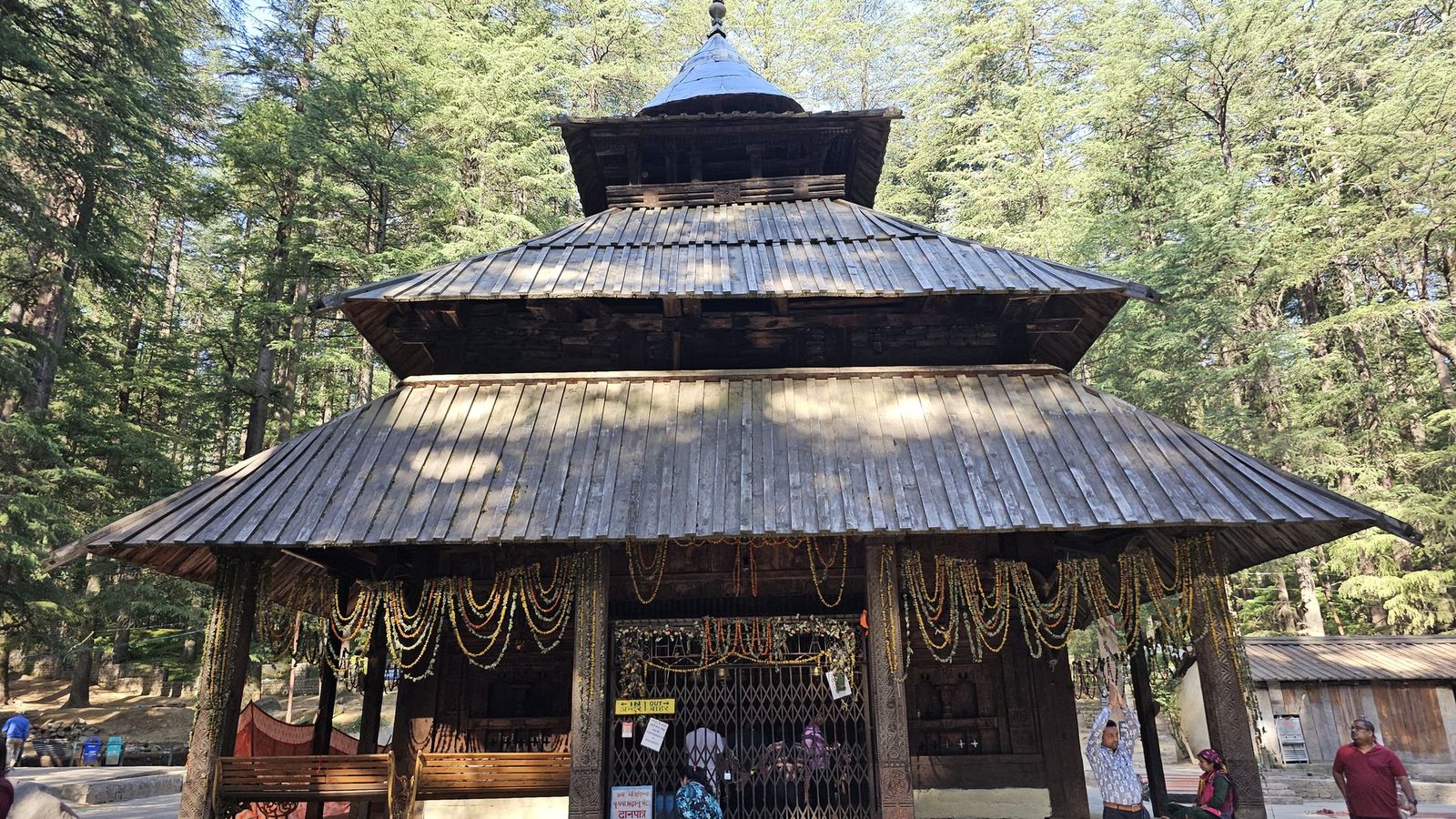
Photo: Ganesh Mohan T, CC BY-SA 4.0 (cropped), via Wikimedia Commons

A cedar forest above Manali, in Himachal Pradesh, on a cold morning.
In the Himalaya, the temples wear roofs of wood and slate, and snow sits on them in winter.
Wooden temples in the forest
In the Kullu valley, the Hidimba Devi temple stands in a grove of deodar cedars above Manali. It was built in 1553, with a four-tiered pagoda roof of wood and a doorway carved with animals and gods. Hidimba, a forest goddess, is linked to the Mahabharata story of the Pandava brothers. The style is Himachal's own: layers of timber and stone laid alternately, strong against earthquakes, with overhanging roofs for snow. At Sarahan, the Bhimakali temple rises in the same layered wood and stone, looking across the Sutlej valley.
Flames, eyes and feet
Several of Himachal's great goddess temples are Shakti Peethas, places where parts of the goddess Sati are said to have fallen to earth. At Jwalamukhi, in Kangra, there is no image at all: small blue flames of natural gas burn from the rock, and they are the goddess. Naina Devi, on a hill above the Gobind Sagar reservoir in Bilaspur, is linked to her eyes. Chintpurni, in Una, to her feet. In Navratri, twice a year, the queues at all three run down the hills.
Why people come
Himachal is called Dev Bhoomi, the land of the gods, and every village has its own deity. In October, during Kullu Dussehra, hundreds of village gods are carried down from the hills in palanquins to gather in Kullu for a week. The Baijnath temple in Kangra, built in 1204, is one of the finest stone temples in the hills. Bijli Mahadev, on a ridge above Kullu, is known for the lightning said to strike its lingam every few years, after which the priests put it back together with butter.
Getting there
Kullu-Manali has a small airport at Bhuntar, and buses run overnight from Delhi to Manali in about twelve hours. Kangra has an airport at Gaggal, near Dharamshala, for Jwalamukhi, Chamunda and Baijnath. Shimla has an airport and the narrow-gauge Kalka-Shimla railway, a UNESCO World Heritage Site. Roads above Manali can close with snow from December to March.
The goddess circuit
Naina Devi, Chintpurni and Jwalamukhi lie along the southern hills of the state, and many pilgrims visit them in one trip, often with Chamunda and the Kangra temple of Brajeshwari added. Naina Devi stands on a hilltop in Bilaspur, reached by steps or a ropeway, with a view over the Gobind Sagar reservoir. From there the road runs north-west into Una district to Chintpurni, roughly 110 km, where vehicles stop below the town and the last stretch is on foot. Jwalamukhi is about 30 km further on, in Kangra.
In the twice-yearly Navratri, in March or April and again in September or October, each of these temples holds a fair, and crowds are at their heaviest. At Chintpurni, the autumn fair in 2026 runs from 11 to 20 October, and darshan during the fair is by registration slip. If you want quiet, go outside Navratri, on a weekday, early in the morning.
Hidimba and the Kullu valley
The Hidimba Devi temple is built over a rock where the goddess is said to have meditated, and the rock is still worshipped inside. The National Mission on Monuments records an inscription on a wooden plank by the door, dated 1553, naming Raja Bahadur Singh of Kulu as the builder. The walls are in the local timber-and-stone style, and the roof rises in tiers.
Hidimba is not only a temple goddess. Each October she is carried down to Kullu to attend Raghunath at the Dussehra gathering of village gods, which in 2026 runs from 21 to 27 October. For the rest of the state, district by district, see Himachal Pradesh by district and our guide to Himachal Pradesh.
Temples to know
- Hidimba Devi, Manali: a wooden pagoda in a cedar forest.
- Jwalamukhi, Kangra: a goddess worshipped as natural flames.
- Naina Devi, Bilaspur: a hilltop Shakti Peetha above the lake.
- Chintpurni, Una: a goddess who "removes worries".
- Chamunda Devi, Kangra: a river temple under the Dhauladhar range.
- Baijnath, Kangra: a stone Shiva temple from 1204.
- Bhimakali, Sarahan: timber and stone above the Sutlej.
- Bijli Mahadev, Kullu: the lightning temple on the ridge.
- Tara Devi, Shimla: a hill temple with views over the town.
- Baba Balak Nath, Hamirpur: a cave shrine of a boy saint.
At Hidimba, arrive early, before the crowds, when the only sound is the wind in the cedars.
Plan your visit
| Entry fee | No entry fee at Hidimba, Jwalamukhi, Naina Devi or Chintpurni. The Naina Devi ropeway is ticketed; check the fare at the base. |
|---|---|
| Opening hours | Hours change with the season and with festivals. Jwalamukhi’s published times differ between sources, so check before you go. Arrive early in Navratri. |
| Best time | March to June and September to November. Navratri fairs bring the biggest crowds. Hidimba is open all year, but snow can block roads above Manali from December to March. |
| Nearest airport and station | Bhuntar (Kullu) airport for Hidimba, about 50 km from Manali. Gaggal (Kangra) airport for Jwalamukhi and Chamunda. Chandigarh airport, about 100 km, and Anandpur Sahib station, about 20 km, for Naina Devi. Amb Andaura or Una station for Chintpurni. |
| Where to stay | Old Manali or the Dhungri area for Hidimba; Dharamshala or Kangra town for the Kangra temples; Una town or Chintpurni’s pilgrim lodges for the southern circuit. |
| Dress and rules | Remove shoes and cover your head where asked. During fairs, polythene bags and loudspeakers are banned at Chintpurni. Photography inside the sanctum is usually not permitted. |
Open Hidimba Devi Temple, Manali, Himachal Pradesh in Google Maps
Questions people ask
When was the Hidimba Devi temple built?
An inscription by the door dates the present temple to 1553, in the reign of Raja Bahadur Singh of Kulu. A 2024 study of the inscription argues for 1551.
Which Shakti Peethas are in Himachal Pradesh?
The best known are Jwalamukhi in Kangra, Naina Devi in Bilaspur and Chintpurni in Una. Each is linked to a different part of the goddess Sati: the flames, the eyes and the feet.
How far is Chintpurni from Jwalamukhi?
About 30 km by road, around an hour’s drive. Naina Devi to Chintpurni is roughly 110 km.
When is the Navratri fair at Chintpurni in 2026?
The autumn fair runs from 11 to 20 October 2026. The attendance is heaviest on the eighth day, and darshan is by registration slip during the fair.
Read next
Written by Muthu, editor of Aura of India. Sources: National Mission on Monuments and Antiquities: Hidimba Devi temple, Manali, Himachal Tourism: Temples, Himachal Tourism: Chintpurni Temple, Una, The Tribune: Navratra fair at Mata Chintpurni, 11 to 20 October 2026. Last verified: 13 October 2026.
Your turn: Did you visit Himachal’s goddess temples during Navratri, or on a quiet day? How long did the queue at Chintpurni or Naina Devi take?
Comments
Post a Comment
Comments are always welcome, that will help us to motivate ourselves and improve our services. Thanks!!