Meghalaya Travel Guide: Where to Go, When to Visit, How to Reach
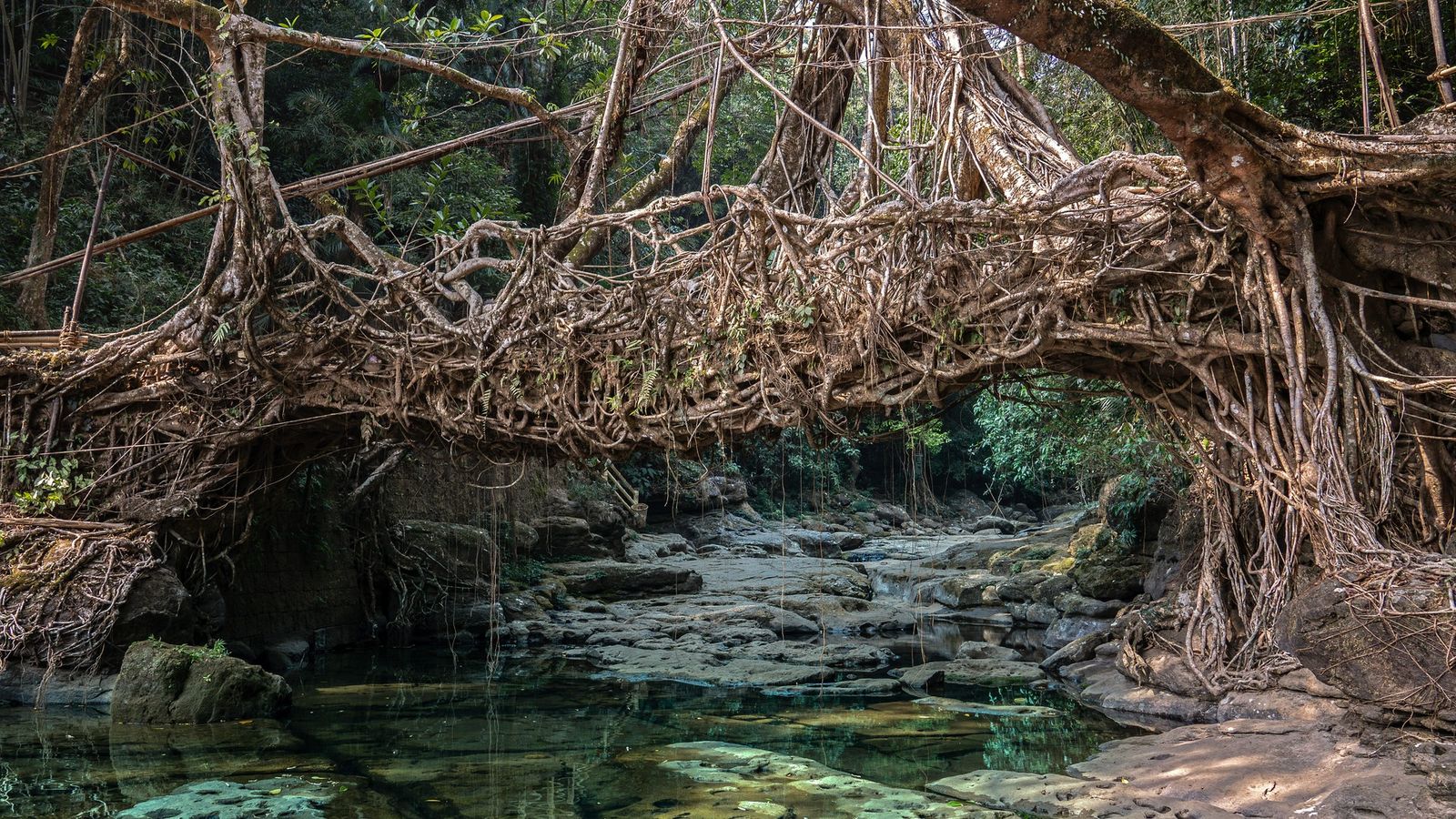
Photo: Joydeep Chakraborty, CC BY-SA 4.0 (cropped), via Wikimedia Commons

Meghalaya means "abode of clouds", and the name works as a forecast. The state is a plateau of three hill regions, the Khasi, Jaintia and Garo Hills, cut by gorges, waterfalls and long limestone caves. Travellers come for the living root bridges, the clear rivers along the Bangladesh border and the cool air of Shillong. It is a short drive up from Guwahati, which makes it the easiest hill country to reach in the North East.
The bridges here are not built. They are grown, root by root, over a lifetime.
Where to go
- Shillong: the hill capital of pine slopes, with Ward's Lake in the centre, Police Bazar for shopping and a strong live-music scene.
- Sohra (Cherrapunji): a high plateau of waterfalls such as Nohkalikai, limestone caves at Mawsmai and some of the heaviest rain on earth.
- Nongriat: a long flight of steps down a forested valley to the double-decker living root bridge, made by guiding the roots of rubber fig trees across a stream.
- Mawlynnong: a Khasi village known for its tidy lanes and flower gardens, with a living root bridge close by.
- Dawki and Shnongpdeng: the Umngot River near the Bangladesh border, so clear in the dry months that boats seem to float on air.
- Laitlum: the edge of the plateau near Shillong, where the land drops away into deep green canyons.
- Mawphlang Sacred Forest: a grove kept untouched by Khasi custom for generations, visited with a local guide.
- Jowai and Nartiang: the Jaintia Hills, with standing stones at Nartiang and the Krang Suri waterfall.
- Tura and the Garo Hills: far fewer visitors, with Nokrek National Park, Balpakram and the Siju caves.
Main cities
Shillong is the capital and the base for most trips. Day routes run from it to Sohra, Dawki, Mawlynnong and Laitlum, and it has the widest choice of places to stay and eat.
- Shillong: lakes, cathedrals, markets and music, and the start of most day trips.
- Tura: the main town of the Garo Hills, for Nokrek and the Wangala festival.
- Jowai: the Jaintia Hills town, for the Behdienkhlam festival in July and the monoliths of Nartiang.
- Sohra: a small town on the edge of the plateau, best for walkers and waterfalls.
- Nongpoh: the Ri-Bhoi town on the Guwahati road, near Umiam Lake.
- Nongstoin: headquarters of West Khasi Hills, for the quieter western plateau.
- Williamnagar: the East Garo Hills town on the Simsang River.
- Baghmara: the South Garo Hills town, closest to Balpakram and Siju.
For how the hills divide into districts, see Meghalaya, from the Khasi Hills to the Garo Hills. Assam's Kaziranga and Majuli are an easy add-on from Guwahati: see Assam.
Festivals
- Shad Suk Mynsiem, April: the Khasi "dance of peaceful hearts", three days at the Weiking ground in Shillong.
- Behdienkhlam, July: the Pnar festival in Jowai, with tall decorated towers, called rots, carried to a sacred pool and a football-like game called dad-lawakor.
- Nongkrem Dance, usually November: a five-day Khasi thanksgiving at Smit, about 11 km from Shillong.
- Wangala, autumn, usually November: the Garo harvest festival, with the Hundred Drums gathering near Tura.
- Christmas, December: churches and streets across Shillong are lit for the season.
Food to try
- Jadoh: Khasi rice cooked with pork, often eaten for breakfast.
- Dohneiiong: pork cooked in a dark sauce of black sesame.
- Tungrymbai: fermented soybean, cooked with pork or eaten as a side.
- Doh khlieh: a pork salad with onion, ginger and chilli.
- Pukhlein: a sweet fried cake of rice flour and jaggery.
- Nakham bitchi: a Garo soup made with dried fish and chilli.
Stories from Meghalaya
- Meghalaya Travel by District: Shillong, Sohra, Dawki, Garo Hills
- Cities in Meghalaya: Shillong, Tura, Jowai and Sohra to Visit
Plan your visit
| Best season | October to April, for clear skies and dry trails (Meghalaya Tourism). July to September is the heavy monsoon: the waterfalls are at their fullest, but trails are slippery and hill roads can close after landslides. |
|---|---|
| How to reach | Fly to Lokpriya Gopinath Bordoloi International Airport, Guwahati, or take a train to Guwahati station, then drive about 100 km (3 to 3.5 hours) up to Shillong past Umiam Lake. Shillong Airport at Umroi, about 30 km from the city, has only a few flights (Kolkata and a handful of other cities). No railway reaches Shillong. |
| Getting around | Hired taxis are the easiest way to reach Sohra, Dawki, Mawlynnong and Laitlum from Shillong. Shared Sumos run between the main towns. The Garo Hills are a long drive from Shillong, so plan them as a separate leg. |
| Where to stay | Shillong (Police Bazar, Laitumkhrah); Sohra for the waterfalls and Nongriat walk; homestays in Mawlynnong and Shnongpdeng; Jowai for the Jaintia Hills; Tura for the Garo Hills. |
| How long to spend | Five to seven days for Shillong, Sohra, Nongriat, Mawlynnong and Dawki. Add three or four days for the Garo Hills. |
| Permits | Indian nationals need no permit (Meghalaya Tourism). Foreign nationals must register on arrival and may need permits for some border areas. The state is setting up a visitor registration system, starting at Umling on the Guwahati road; check before you go. |
Questions people ask
What is the best time to visit Meghalaya?
October to April, when the skies are clear and the trails are dry. Come in the monsoon only if you want the waterfalls at full strength and do not mind rain most days.
How do I reach Shillong from Guwahati?
By road: about 100 km, or three to three and a half hours, by taxi or shared Sumo past Umiam Lake. Shillong's own airport at Umroi has only a few flights, so most visitors fly into Guwahati.
Do I need a permit to visit Meghalaya?
Indian nationals do not need a permit. Foreign nationals must register on arrival. The state plans a visitor registration system, so check the current rules before you travel.
Is it safe to visit Meghalaya in the monsoon?
It can be done with care. Heavy rain makes steep trails such as the Nongriat steps slippery and can cause landslides on hill roads. Keep spare days, start walks early and follow local advice on river crossings.
How many days do I need for Meghalaya?
Five to seven days covers Shillong, Sohra, the living root bridges, Mawlynnong and Dawki. Add three or four days if you want the Garo Hills around Tura.
Written by Muthu, editor of Aura of India. Sources: Meghalaya Tourism: FAQs and planning help, Meghalaya Tourism: Shad Suk Mynsiem, Meghalaya Government Portal: Nongkrem Dance, Meghalaya Government Portal: Behdienkhlam Festival. Last verified: 13 October 2026.
Your turn: Have you walked down to the double-decker root bridge at Nongriat? How long did the climb back up take you?
Comments
Post a Comment
Comments are always welcome, that will help us to motivate ourselves and improve our services. Thanks!!