Sacred Places of Bihar: Bodh Gaya, Patna Sahib and Pawapuri
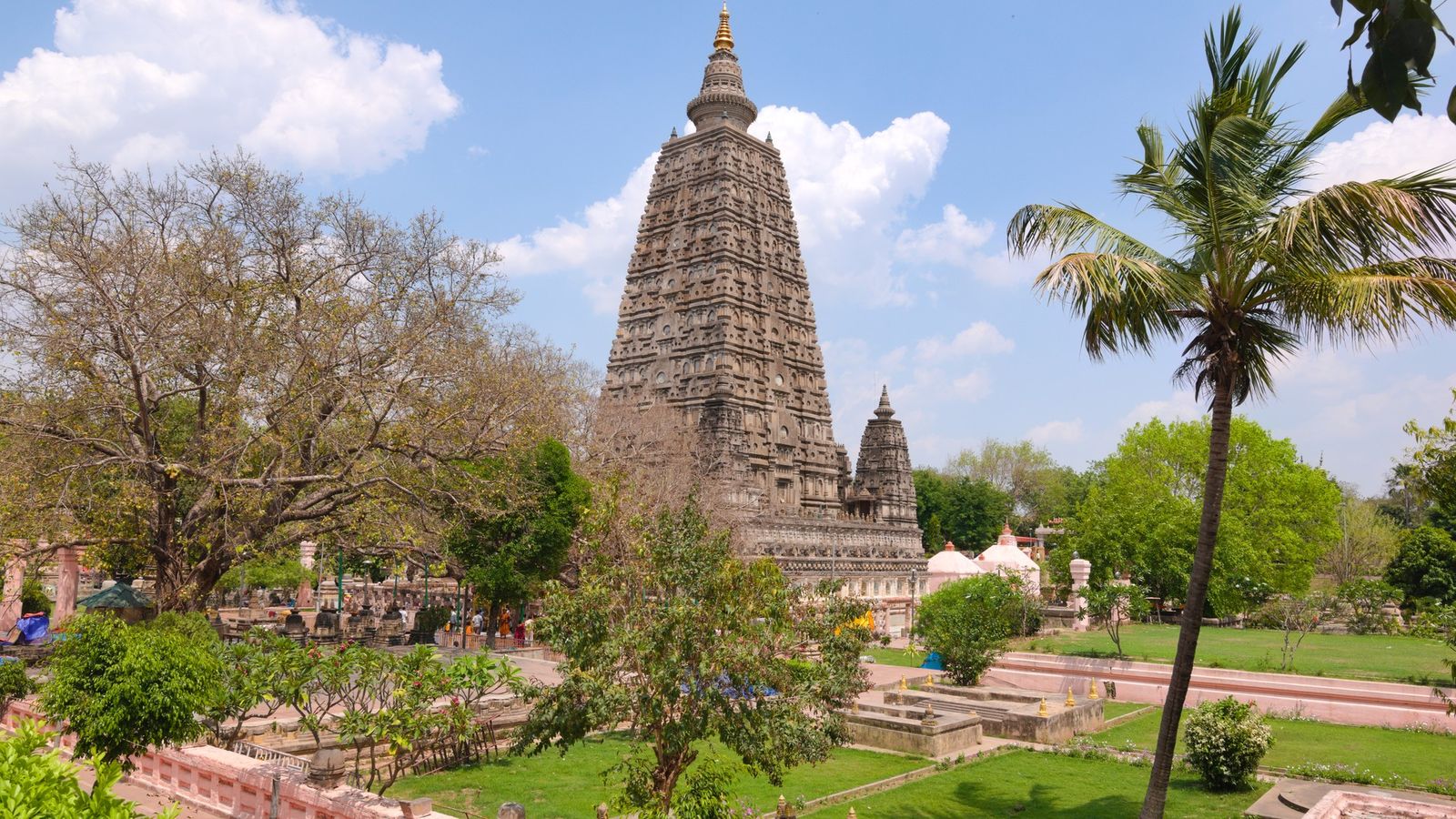
Photo: Rohit Sharma, CC BY-SA 4.0 (cropped), via Wikimedia Commons

Bodh Gaya, in Bihar, in the hour before dawn.
In Bihar, four religions have a birthplace, a turning point or a holy city within a few hours of each other.
Bodh Gaya, a town of pilgrims
Bodh Gaya is a small town that lives by its pilgrims. Buddhist tradition holds that around 2,500 years ago Siddhartha Gautama sat under a pipal tree here and woke as the Buddha, and nearly everything in the town has grown up around that spot. Monks from Tibet, Thailand, Sri Lanka, Myanmar and Japan come in the winter season and chant in their own languages, and Buddhist countries have built monasteries of their own in the lanes around the old temple. For the temple itself, its tower and what to see inside, read the largest temples in Bihar.
Gaya and Patna
Twelve kilometres north, Gaya is a Hindu pilgrim city with a different purpose. On the ghats of the Falgu river and at the Vishnupad temple, where a footprint of Vishnu is set in stone, Hindus offer pinda, rice balls, so that the souls of their parents and grandparents find rest. The busiest weeks are the autumn fortnight of Pitru Paksha. In Patna, the capital, Takht Sri Harmandir Sahib, called Patna Sahib, marks the birthplace of Guru Gobind Singh, the tenth Sikh guru, and is one of the five takhts, the seats of Sikh authority. By Patna Junction station, Hindu pilgrims also stop at the Mahavir Mandir, a Hanuman temple known for its laddus.
Why people come
For Jains, Bihar is where Mahavira, the last of the tirthankaras, the Jain teachers, was born and where he died. At Pawapuri, the Jal Mandir, a white marble shrine, rises from a pond of lotuses on the spot of his cremation. In the Kaimur hills, the small stone Mundeshwari temple is counted among the oldest temples in India still in worship. Sitamarhi, in the north, is revered as the birthplace of Sita. Pilgrims of all four faiths, Buddhist, Hindu, Jain and Sikh, travel here.
Getting there
Gaya has an international airport, with flights from Southeast Asia in the pilgrim season, and Patna has the main domestic airport. Bodh Gaya is about twenty minutes from Gaya airport. Pawapuri is about two hours south-east of Patna, near Rajgir and the ruins of Nalanda, the ancient university. The Baidyanath temple at Deoghar, often linked with Bihar, has been in Jharkhand since the state was formed in 2000.
Pitru Paksha at Gaya
Pitru Paksha is the fortnight of the Hindu year set aside for the dead, and it falls in September or October; regional calendars can move the dates, so confirm them for the year you travel. In those two weeks Gaya, renamed Gaya Ji in 2025, is the busiest it gets. Families travel from all over the country to offer pinda for their ancestors, and the ghats along the Phalgu and the lanes up to the Vishnupad temple are crowded through the fortnight.
If you are coming for the rites, book rooms well ahead. If you are not, see Gaya in another month of the season, when the ghats are quieter.
Patna Sahib, the Sikh takht
Takht Sri Harmandir Sahib stands in the old eastern part of Patna, where Guru Gobind Singh was born. As one of the five takhts, the seats of Sikh authority, it draws Sikh pilgrims from far outside Bihar. Cover your head, wash your feet and leave your shoes at the gate before going in.
Pair it with the Patan Devi temple, the old goddess of the city, on the same side of town, and with the Mahavir Mandir by the main station on the way back.
A route through four faiths
Fly into Gaya or Patna. Spend the first day at Bodh Gaya, and the second at Vishnupad in Gaya, 12 km away, with the ghats on the Phalgu. On the third day, drive north-east through Rajgir and Nalanda to Pawapuri, where the Jal Mandir stands in its lotus pond. End in Patna at Takht Sri Patna Sahib, the birthplace of Guru Gobind Singh, and at Mahavir Mandir by the main station.
Mundeshwari, in Kaimur district in the far west, and Sitamarhi, in the north, each need their own day. For Bihar's biggest temples, see the largest temples in Bihar; for the rest of the state, the Bihar guide.
Places to know
- Mahabodhi, Bodh Gaya: where the Buddha reached enlightenment.
- Vishnupad, Gaya: Vishnu's footprint, and rites for ancestors.
- Takht Sri Patna Sahib, Patna: the birthplace of Guru Gobind Singh.
- Mahavir Mandir, Patna: a Hanuman temple by the station.
- Patan Devi, Patna: the old goddess of the city.
- Jal Mandir, Pawapuri: a white temple in a lotus pond.
- Mundeshwari, Kaimur: one of the oldest working temples in India.
- Mangla Gauri, Gaya: a hilltop Shakti Peetha.
- Janaki Mandir, Sitamarhi: honouring the birthplace of Sita.
At Bodh Gaya, walk the path around the temple at dawn. Every language you hear is saying the same prayer.
Plan your visit
| Best season | September to April. Each place has its own peak: Pitru Paksha (September or October) at Gaya, Buddha Purnima (April or May) at Bodh Gaya, and Chhath on Patna's riverbanks soon after Diwali. |
|---|---|
| Which end to start | Start at Gaya airport for the Buddhist and Hindu sites; in winter it also takes flights from Bangkok, Paro and Yangon. Start at Patna airport for Patna Sahib, Pawapuri and Nalanda, or arrive by train at Gaya Junction or Patna Junction. |
| Between the stops | Bodh Gaya to Gaya: 12 km by auto. Gaya to Pawapuri: a hired car via Rajgir and Nalanda. Pawapuri to Patna: about two hours. Mundeshwari and Sitamarhi are separate day trips by car. |
| Where to stay | Bodh Gaya's monastery area for the first nights; Rajgir for Nalanda and Pawapuri; central Patna near Fraser Road or Gandhi Maidan for Patna Sahib. |
| How long to spend | Four or five days for the whole circuit; add a day each for Mundeshwari and Sitamarhi. |
| Timings | Only the Mahabodhi's hours are published officially; for Vishnupad, Patna Sahib, Pawapuri and the rest, check before you go. |
| Customs | Head covered and feet washed at Patna Sahib; no phones at Bodh Gaya's main temple or at Vishnupad; shoes off at every shrine on the route. |
Questions people ask
When is Pitru Paksha at Gaya?
It falls in September or October and lasts about a fortnight. Regional calendars can shift the dates, so confirm them for your year and book rooms early.
What should I do before entering Patna Sahib?
Cover your head, leave your shoes at the gate and wash your feet. Visitors of every faith are welcome.
Is Gaya now called Gaya Ji?
Yes. The Bihar cabinet renamed the city Gaya Ji in May 2025. Older signs, tickets and maps may still say Gaya.
Which international flights land at Gaya?
In the winter pilgrim season, flights link Gaya with Bangkok, Paro in Bhutan and Yangon. Schedules change by season, so check with the airlines.
Read next
Written by Muthu, editor of Aura of India. Sources: Bihar Tourism: Mahabodhi Temple, Bihar Tourism: Vishnupad Temple, Bodhgaya Temple Management Committee: temple timing. Last verified: 13 October 2026.
Your turn: Have you made the trip from Bodh Gaya to Patna Sahib in one go? Which stop on the way stayed with you?
Comments
Post a Comment
Comments are always welcome, that will help us to motivate ourselves and improve our services. Thanks!!