Araku Valley: Vistadome Train, Borra Caves and Coffee Country
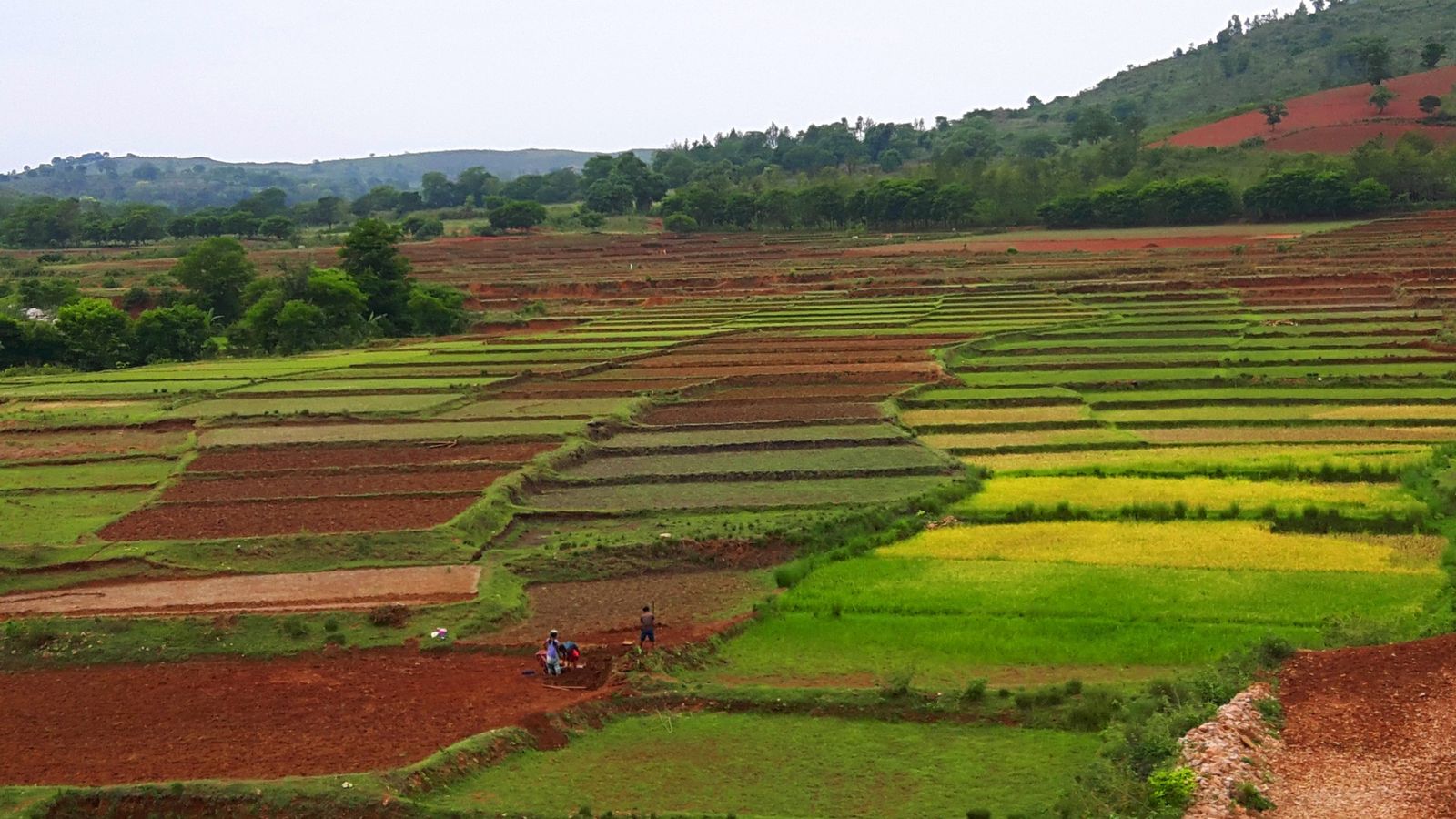
Photo: Kalyanmurthy_Hyd, CC BY-SA 4.0 (cropped), via Wikimedia Commons

The Araku valley in the Eastern Ghats of Andhra Pradesh, on a late October morning.
Araku has no great peak, only fold after green fold of hill, and coffee growing in the shade.
A valley above the coast
Araku lies about 115 km inland from Visakhapatnam, high in the Eastern Ghats and close to the Odisha border. The valley floor sits roughly 600 to 900 metres above the sea, and the air is cooler than on the coast. The hills are rounded, and they roll away in layers, each one paler than the last. In late October the monsoon is ending. Streams still run, paddy stands green in the low fields, and mist lies in the hollows until mid-morning. On the slopes, coffee grows in the shade of silver oaks.
Farms, coffee and a small town
Most people in the valley are Adivasi, the indigenous peoples of these hills, and most of them farm. Rice and millets fill the valley bottoms. Higher up, family plots grow Arabica coffee, picked by hand. Coffee reached these hills in the early twentieth century, and in 2019 Araku Valley Arabica Coffee was registered as a Geographical Indication, a legal mark that ties a product to its place.
Araku town is small: a market, a few streets, a station and the road down to the coast. Weekly markets draw people in from the hill villages. Dhimsa, a circle dance of the valley's tribal communities, belongs to festivals, and is also staged for visitors.
Why people come
For a coast that is hot most of the year, Araku is the nearest cool air. People come for the ghat road, the coffee, the quiet and the railway. The line from Kottavalasa, near Visakhapatnam, to Kirandul in Chhattisgarh was built to carry iron ore, and it climbs through dozens of tunnels and across deep ravines. On the way up it passes Borra Caves, limestone caverns hollowed out by the Gosthani river, about 80 metres deep, with stalactites hanging from the roof.
The district is named after Alluri Sitharama Raju, who led the Rampa Rebellion against British rule in these hills from 1922 to 1924. When Andhra Pradesh redrew its districts on 31 December 2025, Araku stayed in a smaller Alluri Sitharama Raju district, run from Paderu.
Getting there
The day train, 58501 Visakhapatnam–Kirandul Passenger, leaves Visakhapatnam at 7 am. It is timetabled to stop at Borra Guhalu, the station for the caves, at about 9.40 am, and to reach Araku at 11 am. It carries Vistadome coaches, with glass roofs and seats that turn to face the view; book them on IRCTC well ahead. The return train, 58502, is due back in Visakhapatnam at 9 pm and often runs late, so many travellers come down by car instead, stopping at the caves and viewpoints. By road the climb takes three hours or more.
Train up, road down
The train is slow, and that is the point. It covers about 130 km in four hours, leaving the plain after Shrungavarapukota and climbing through tunnel after tunnel. Vistadome seats sell out first, especially in holidays; bookings open 60 days ahead. For the Dasara rush, the railway added an extra Vistadome coach from 13 to 20 October 2026.
Stay at least one night. Arrive on the morning train, spend the afternoon at Padmapuram Gardens and the Tribal Museum, and keep the next morning for Galikonda and the coffee slopes. Come down by car through Ananthagiri and stop at Borra Caves. Allow an hour inside: the steps are steep and damp, so wear good shoes. Back on the coast, read Visakhapatnam.
Coffee from the valley
Araku coffee is Arabica, grown at about 900 to 1,100 metres under shade trees, mostly on small Adivasi holdings rather than large estates. The Forest Department raised the first big plantations between 1960 and 1978, and from 1976 the Integrated Tribal Development Agency helped tribal families plant coffee on their own land.
The Geographical Indication, registered by the Coffee Board in 2019, covers these hills in Andhra Pradesh and the neighbouring part of Odisha. In Araku town, the coffee museum and stalls sell beans and ground coffee. For more of the state, see the Andhra Pradesh guide.
Places to know
- Borra Caves: limestone caves above the Gosthani river, open 10 am to 5 pm daily.
- Ananthagiri: coffee estates and forest on the ghat road, below the valley.
- Galikonda viewpoint: one of the highest points of the Ananthagiri hills.
- Padmapuram Gardens: an old horticultural garden and nursery close to Araku town.
- Tribal Museum, Araku: the homes, tools, crafts and dances of the valley's Adivasi peoples.
- Chaparai: a stream sliding over broad sheets of rock near Dumbriguda.
By noon the mist has lifted off the coffee, and the train has gone on into the hills.
Plan your visit
| Entry fee | The valley is free. Borra Caves, the Tribal Museum and Padmapuram Gardens charge small fees, plus camera charges at Borra. Published rates differ, so check at the gate (as of October 2026). |
|---|---|
| Opening hours | Borra Caves: 10 am to 5 pm daily. Museum and garden hours: check before you go. |
| Best time | October to February. October is green after the rains; nights turn cold from December. Cyclone alerts in October and November can close the ghat roads. |
| How to reach | Train 58501 from Visakhapatnam at 7 am, due at Araku at 11 am; book Vistadome seats on IRCTC. By road, about 115 km. |
| Nearest airport and station | Visakhapatnam International Airport. Araku station for the valley, Borra Guhalu for the caves. |
| Where to stay | Araku town for the valley, Ananthagiri for the coffee slopes, or Visakhapatnam for a long day trip. |
| Time needed | One night in the valley. A day trip is possible but rushed. |
Open Araku Valley, Alluri Sitharama Raju district, Andhra Pradesh in Google Maps
Questions people ask
Which district is Araku valley in now?
Alluri Sitharama Raju district, with its headquarters at Paderu. The reorganisation of 31 December 2025 moved the Rampachodavaram and Chinturu areas into the new Polavaram district; Araku stayed where it was.
Does the Araku train have Vistadome coaches?
Yes. The day train, 58501 from Visakhapatnam and 58502 back, carries glass-roofed Vistadome coaches. Book them on IRCTC; they fill early at weekends and in holidays.
What are the Borra Caves timings?
10 am to 5 pm, every day. Entry and camera fees are paid at the gate; by local tradition, entry is free on Maha Shivaratri, when pilgrims visit the shrine inside.
Can Araku be done as a day trip from Visakhapatnam?
Yes: the 7 am train up and a car back down via Borra Caves. It is a long day; a night in the valley is easier.
Read next
Written by Muthu, editor of Aura of India. Sources: Alluri Sitharama Raju District, Government of Andhra Pradesh: history, The Hindu: Two new districts, Polavaram and Markapuram, come into force (1 January 2026), The Hindu: Extra Vistadome coach on Vizag-Araku train from October 13 to 20 (12 October 2026), Incredible India (Ministry of Tourism): Borra Caves, Visakhapatnam District, Government of Andhra Pradesh: landscapes (Araku Valley), Geographical Indications Registry: Araku Valley Arabica Coffee, Deccan Chronicle: Borra Caves open free of charge for Shivaratri (15 February 2026). Last verified: 15 October 2026.
Your turn: Did you go up to Araku by the Vistadome train or by the ghat road, and which stop would you tell a first-timer not to skip?
Comments
Post a Comment
Comments are always welcome, that will help us to motivate ourselves and improve our services. Thanks!!