Dussehra 2026: Ravana Effigies, Ramlila and Where to Watch
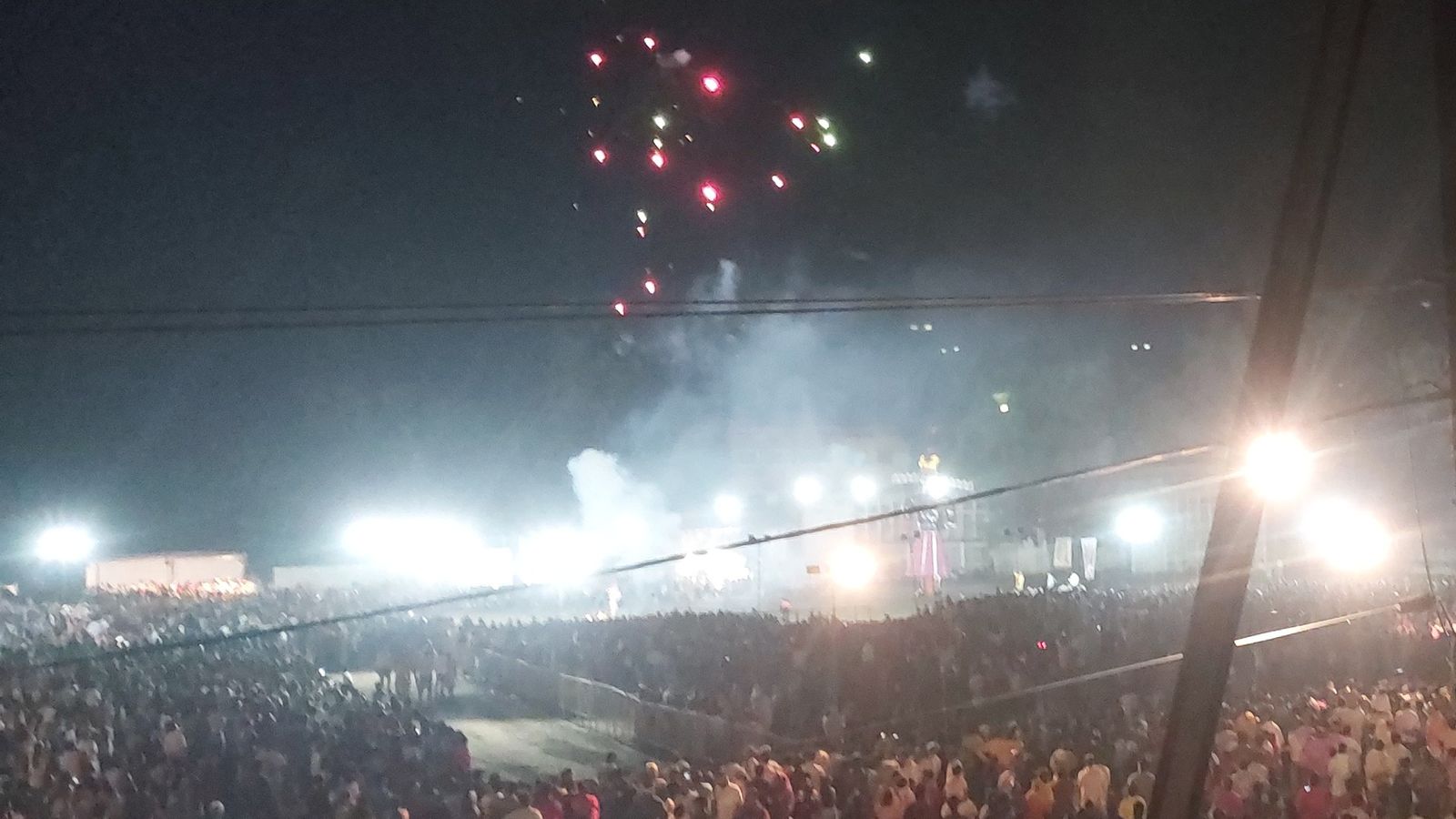
Photo: The open draft, CC BY-SA 4.0 (cropped), via Wikimedia Commons

A Ramlila ground in North India on the afternoon of Dussehra.
By sunset Ravana will be smoke. For now he stands over the crowd.
Giants on the ground
By afternoon the effigies are standing. Ravana, the ten-headed king of Lanka, is the tallest, sometimes more than twenty metres high. Beside him stand his brother Kumbhakarna and his son Meghnad. They are built of bamboo, paper and cloth, painted in bright colours and packed with fireworks. Around them are fair stalls, balloon sellers and families looking for a place to stand.
The story ends tonight
For the nine nights of Navratri, troupes have acted out the Ramayana on a stage at the edge of the ground. This is the Ramlila. Tonight is the last scene. Rama defeats Ravana. At dusk an actor playing Rama shoots a burning arrow, and the effigies go up one after another. The crowd cheers, the fireworks crack, and in a few minutes the giants are frames of glowing bamboo.
What the day means
Dussehra, also called Vijayadashami, is the tenth day, which follows the nine nights of Navratri. It marks the victory of Rama over Ravana and, in other traditions, of Durga over the demon Mahishasura. It is a day to begin new things and to honour tools and books. In 2026 it falls on 20 October in most of North India. Bengal and Mysuru keep their tenth day on 21 October. Regional calendars can shift a date by a day.
Where to see it
Delhi has some of the biggest Ramlilas, at the Ramlila Maidan and on the grounds near the Red Fort. Many effigies are built in Titarpur, in west Delhi, where whole streets make them in the weeks before. At Ramnagar, near Varanasi, the Ramlila runs for a month. The Ramlila tradition is on UNESCO’s list of Intangible Cultural Heritage. In Himachal Pradesh, Kullu’s Dussehra usually begins on Vijayadashami and lasts a week; in 2026 it runs from 21 to 27 October.
Three other Dussehras
In Mysuru, Dasara is a ten-day state festival, from 11 to 21 October in 2026. There are no effigies. On the last day, 21 October, the goddess Chamundeshwari rides in a golden howdah on an elephant, from the palace to Bannimantap, about five kilometres. The floral offering at the palace is fixed for 4:10 to 4:35 pm, and the procession leaves after it. A torchlight parade follows at Bannimantap at 7 pm. Seats inside the palace and at Bannimantap need passes; along the route you can watch for free, if you come early.
In Kullu, the festival is a gathering of village gods. Each deity is carried down to Dhalpur Maidan in a palanquin to attend Raghunath, Rama, whose chariot is pulled across the ground on the first day. The custom dates from the seventeenth century. In 2026 it runs from 21 to 27 October, and 347 deities have been invited. In Bengal, 21 October is Bijoya Dashami, the last day of Durga Puja, when the images are taken to the river; see the immersion on the Hooghly.
Reading the calendar
Hindu festivals follow the lunar calendar, so the date moves each year. Dussehra falls on the tenth lunar day, Dashami, of the bright half of the month of Ashvin. In 2026 that lunar day begins at about 12:50 pm on 20 October and ends at about 2:11 pm on 21 October. Most of North India keeps the festival on the 20th, because Dashami holds through the afternoon that day. Bengal and Mysuru keep it on the 21st.
So check the local date before you travel. Ramlila committees each set their own time for burning Ravana, usually just after sunset, which is around 5:45 pm in Delhi in late October. Navratri begins ten days earlier, on 11 October.
Before you go
- Arrive an hour before sunset to find a place with a clear view.
- Stand well back from the effigies and upwind of the smoke.
- The whole crowd leaves at once. Wait twenty minutes before heading out.
- Keep children close, and agree a meeting point in case you are separated.
The next morning the ground is quiet again: ash, a few bamboo ribs, and children looking for unburnt crackers.
Plan your visit
| 2026 dates | Dussehra is on Tuesday 20 October 2026 in most of India. Bengal, and Mysuru’s Jamboo Savari, keep it on 21 October. Kullu’s festival runs from 21 to 27 October. Regional calendars can shift a date by a day; check locally. |
|---|---|
| Where to see it | Delhi: Ramlila Maidan and the grounds near the Red Fort. Ramnagar, across the river from Varanasi, for a month-long Ramlila. Mysuru for the elephant procession. Kullu’s Dhalpur Maidan for the gathering of deities. |
| Timing | Effigies are usually burnt just after sunset; each committee sets its own time. In Mysuru the procession leaves the palace after 4:35 pm on 21 October. |
| What to wear and bring | Closed shoes, a light scarf against smoke and dust, water, and small notes for the fair stalls. Ear protection for small children. In Kullu, warm layers for the evenings. |
| Getting there and around | Use the metro or walk in the last stretch: roads around the big grounds close before dusk. Agree a meeting point. Leave twenty minutes after the burning, not with the crowd. |
| Safety | Stand well back from the effigies and upwind. Keep children close. Follow police barriers; they mark the fall zone. |
Questions people ask
When is Dussehra in 2026?
Tuesday 20 October 2026 in most of India. In Bengal, and for Mysuru’s Jamboo Savari, Vijayadashami is on Wednesday 21 October. Regional calendars can shift a date by a day.
What time is Ravan Dahan on Dussehra 2026?
There is no single national time. Each Ramlila committee announces its own, usually soon after sunset, which is about 5:45 pm in Delhi on 20 October.
When is the Mysuru Dasara Jamboo Savari in 2026?
On 21 October 2026. The floral offering at the palace is between 4:10 and 4:35 pm, after which the elephant procession sets out for Bannimantap. The torchlight parade starts there at 7 pm.
When is Kullu Dussehra in 2026?
From 21 to 27 October 2026, at Dhalpur Maidan in Kullu. It opens with the procession of Raghunath’s chariot.
Why is Dussehra also called Vijayadashami?
Vijaya means victory and dashami the tenth lunar day. It marks Rama’s victory over Ravana, and in other traditions Durga’s victory over Mahishasura.
Read next
Written by Muthu, editor of Aura of India. Sources: The Economic Times: Dussehra 2026 city-wise panchang, The Tribune: 347 deities invited for Kullu Dasehra (21-27 October 2026), Karnataka.com: Mysore Dasara 2026 dates and Jamboo Savari schedule. Last verified: 13 October 2026.
Your turn: Where did you watch Ravana burn: a big city ground or a small local one? What did the crowd do in the minute after?
Comments
Post a Comment
Comments are always welcome, that will help us to motivate ourselves and improve our services. Thanks!!