Sandesh in Kolkata: What It Is and Where to Eat It
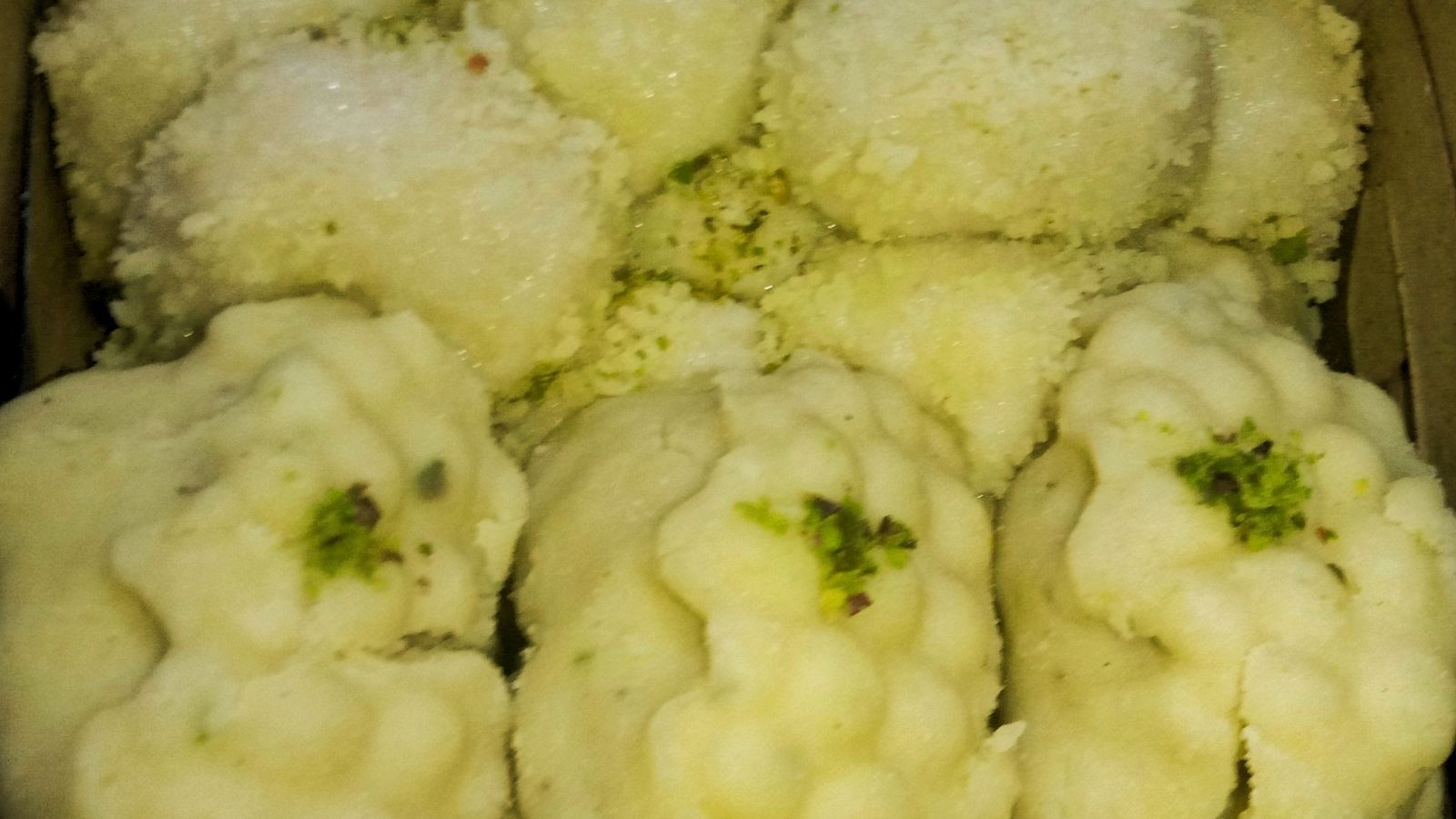
Photo: Billjones94, CC BY-SA 4.0 (cropped), via Wikimedia Commons

An old sweet shop in north Kolkata, late afternoon.
It should taste of milk first and sugar second.
A sweet made of fresh cheese
Sandesh is made from chhana, a soft fresh cheese made by splitting hot milk with lemon juice or whey and draining it in cloth. The chhana is kneaded, cooked gently with sugar until it just holds together, then pressed into shapes in carved wooden moulds: shells, fish, flowers and conches. The best sandesh is pale, not dyed, and so soft it gives under a light touch.
How it is eaten
Bengalis eat sweets the way other people drink tea: after lunch, with visitors, on the way home, as an offering at a temple, and by the box at every celebration. Soft sandesh, called naram pak, is eaten the same day. A firmer kind, kara pak, keeps longer and travels. The best season is winter, when sandesh is made with nolen gur, fresh date-palm jaggery, and turns light brown with a smoky sweetness.
Why people come for it
Bengal’s sweets are famous across India, and most of the best are made from chhana. The sweet shops of north Kolkata, some of them more than a century and a half old, are institutions, and families have argued for generations about which is best. For a visitor from abroad, sandesh is a gentle way into Bengali food: mild, milky and delicate, nothing like the syrup-soaked sweets many people expect.
Finding a good shop
Look in the old neighbourhoods of north and central Kolkata, around Shyambazar, Bagbazar and Bowbazar, where many of the oldest shops are. Go in the afternoon, when the day’s batch is fresh on the trays. Most shops sell by the piece. Many people buy a box of mixed sweets to take to a friend’s house, which is also a good way to try several.
From one sweet to sixty
The oldest sandesh was very plain. One of the oldest surviving shops, in Hedua in north Kolkata, opened in 1844, and its family say that at first it sold only one kind: kora paker munda, also called guli, a small firm ball of chhana and sugar. Then came jolbhora, larger, with a hard shell and a liquid centre, often of nolen gur. Soft norom pak came later still.
Today the same shop lists around sixty kinds. Some are named for their shape, some for their flavour, and a few for famous people. Talshash is moulded like a palm-fruit kernel. Parijat is soft and named after a flower. Abar khabo means 'I'll eat it again'. Newer ones come in chocolate, mango and strawberry, which purists ignore.
Sandesh has survived worse than fashion. On 23 August 1965, with milk scarce, the state government banned the making and sale of most chhana sweets. Sandesh was not exempt. Some sweet shops shut for weeks, until the Calcutta High Court struck the order down that November.
A short sweet walk in north Kolkata
Start in the afternoon at Hedua, near Bethune College on Bidhan Sarani, where the sandesh shops sit close to Swami Vivekananda's birthplace. Walk north along Bidhan Sarani towards Shyambazar, stopping where the trays look freshest. Most counters sell single pieces, so you can taste as you go.
From Shyambazar, Bagbazar and the river are a short walk west. In October, Kumartuli's workshops are just downstream. See Kolkata at dawn for the river and the flower market.
At the counter
- Point at the trays and ask for one of each. Nobody minds.
- Eat soft sandesh within the day. Carry kara pak if you are travelling.
- From November to January, ask for nolen gur sandesh.
- Try rosogolla too, the other famous chhana sweet, soaked in light syrup.
It is gone in two bites. Some of these shops have been making it the same way for five generations.
Plan your visit
| Where to eat it | The old sweet shops of north Kolkata: Hedua and Bidhan Sarani, Shyambazar, Bagbazar, and Bowbazar further south. Most are takeaway counters with no seating. |
|---|---|
| Price guide | At one of the oldest shops, most pieces cost ₹25 to ₹40, a plain guli ₹10 and the richest ₹50 to ₹70 (its published list, October 2026). Check at the counter. |
| When it is served | After meals, with guests, as a temple offering, and by the box at weddings and festivals. Fresh batches are on the trays from the afternoon. |
| How long it keeps | Soft naram pak keeps one to three days, firm kara pak about a week, in a cool, dry place. |
| Try it with | Rosogolla and mishti doi, sweet set curd. From November to January, ask for anything made with nolen gur. |
Open Girish Chandra Dey and Nakur Chandra Nandy, 56 Ramdulal Sarkar Street, Kolkata in Google Maps
Questions people ask
What is sandesh made of?
Chhana, a fresh cheese made by splitting hot milk and draining it, cooked gently with sugar or date-palm jaggery and pressed into moulds. There is no flour and usually no syrup.
What is the difference between naram pak and kara pak?
Naram pak is soft, cooked briefly, and best eaten the same day. Kara pak is cooked longer, so it is firmer and keeps for around a week, which makes it the one to carry home.
When is nolen gur sandesh available?
In winter, from about November to January, when the date palms are tapped for fresh sap. Some shops sell gur sandesh all year, but the fresh winter jaggery is the reason to wait.
Can I take sandesh on a flight?
Kara pak travels well in a sealed box. Soft sandesh does not keep, so eat it in Kolkata.
Read next
Written by Muthu, editor of Aura of India. Sources: The Indian Express: The 180-year-old journey of Girish Ch. Dey & Nakur Ch. Nandy, Girish Ch. Dey and Nakur Ch. Nandy: shop history, shelf life and price list, Indian Kanoon: Nani Gopal Paul vs State of West Bengal (Chhana Sweets Control Order, 1965). Last verified: 13 October 2026.
Your turn: Which sandesh shop in Kolkata would you send a first-time visitor to, and what should they order?
Comments
Post a Comment
Comments are always welcome, that will help us to motivate ourselves and improve our services. Thanks!!