Chhoti Diwali 2026: Oil Lamps, Cleaning and Eve Rituals
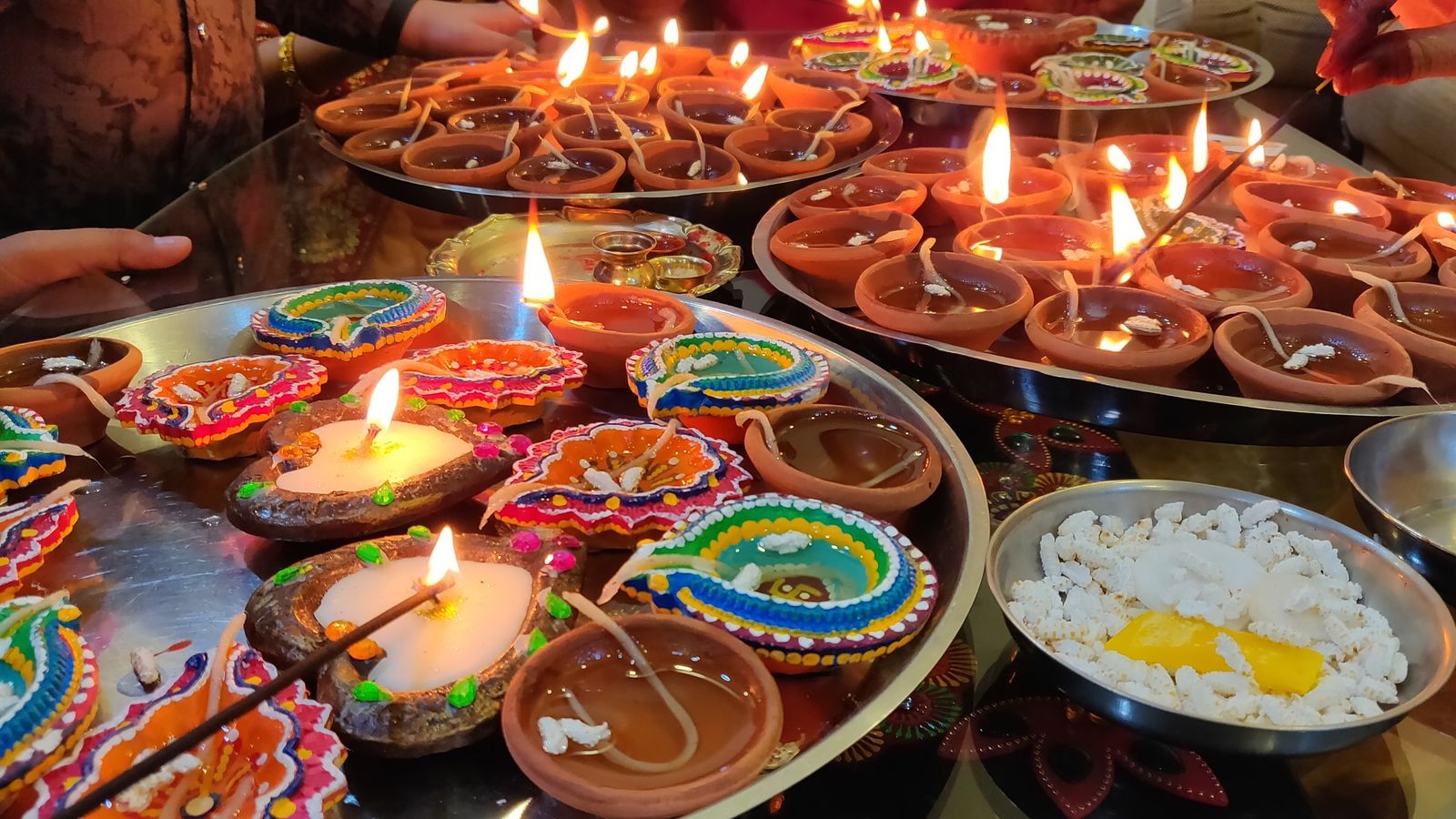
Photo: Arnav, CC BY-SA 4.0 (cropped), via Wikimedia Commons

A courtyard wall lined with oil lamps on Chhoti Diwali, the eve before the main festival night.
The small night is for cleaning, oil and the first row of lamps — not yet the full blaze of Diwali.
What the eve looks like
Chhoti Diwali, often tied to Naraka Chaturdashi, is the quieter public face of the festival. Homes finish their deep clean. Courtyards and steps take a first line of diyas. In parts of western India the day overlaps Kali Chaudas customs; in Bengal the same fortnight leans toward Kali Puja on the main night. Oil lamps burn with mustard or sesame oil and a cotton wick. The street may hear a few early crackers, but the full neighbourhood display usually waits for the Amavasya night of Diwali. The mood is preparation more than climax.
How households use the day
Many families take a pre-dawn oil bath, abhyang snan, especially where Naraka Chaturdashi rituals are strong. Clothes for the main day are set out. Rangoli patterns may be started at the door. Sweets are ordered or finished at home. Travellers invited into a house should follow the host: shoes off where others remove them, lamps lit with care, no stepping over a fresh rangoli. Photograph the lamps on walls and steps, not faces at prayer. Keep flames away from curtains and dry flowers.
Dates, names and why they shift
This project’s 2026 working calendar places Dhanteras on 6 November, Chhoti Diwali / Naraka Chaturdashi observances on 7 November, and the main Diwali night on 8 November. Panchang publishers do not always assign every name to the same civil date: some New Delhi calculations put Naraka Chaturdashi and Lakshmi Puja on the same Sunday, 8 November, with Kali Chaudas themes on the 7th. Regional almanacs in Tamil Nadu, Maharashtra and Bengal can each move a label by a day. Always read a local panchang for the city you are in. The meaning of the eve stays steadier than the label: clean, light the first lamps, ready the house for the main night.
If you are travelling
Markets sell last-minute diyas, oil and candles through the day; city centres are busy but calmer than Diwali evening itself. Trains and highways fill with people going home. In apartment cities, terrace and balcony lamps replace courtyard rows. Firecracker rules differ by state and by year; follow the local police order rather than last year’s habit. The next day’s main Diwali story is separate — this one ends when the first lamps are burning and the house is ready.
Names that share one fortnight
Chhoti Diwali, Naraka Chaturdashi, Kali Chaudas and Roop Chaudas are related labels that do not always fall on the same civil date in every city. Some households light the first serious row of diyas on the eve; others save the full display for Lakshmi Puja on the Amavasya night. In Bengal, Kali Puja dominates the main night more than a north-Indian terrace of Lakshmi lamps.
Travellers should ask the host which night is ‘the’ night for fireworks and full puja. Follow that answer over a national newspaper graphic.
Safety on the small night
Oil lamps tip; place them on metal plates or stone steps. Keep matches away from children. If the city allows green crackers only in short windows, those rules often begin before the main day — read the current police order.
The main Diwali night and the sweets-counter rush are separate stories in this schedule. This post ends when the house is clean and the first lamps are lit.
Eve checklist
- Confirm the local date: regional calendars can shift Chhoti Diwali by a day.
- Finish cleaning before dusk: lamps belong in a clear doorway and clean steps.
- Oil and wicks ready: cheap paraffin candles blow out; oil diyas hold longer.
- Children and flames: place lamps on stone or metal, not on a windy ledge alone.
- Crackers: check the city’s permitted hours before lighting anything that bangs.
The first lamps are few, and the dark between them still belongs to tomorrow’s celebration.
Plan your visit
| 2026 dates | Project calendar: Dhanteras 6 Nov; Chhoti Diwali / Naraka Chaturdashi observances 7 Nov; Diwali 8 Nov 2026. Some panchangs place Naraka Chaturdashi with Diwali on 8 Nov. Regional calendars can shift a day — check a local almanac. |
|---|---|
| Where to see it | Any neighbourhood doorway, courtyard or apartment terrace where families light early diyas; markets selling oil and lamps through the day. |
| What to wear and bring | Clothes you can cook and clean in during the day; a scarf if visiting a temple; cash for last-minute diyas. |
| Getting there and around | Local markets on foot or by metro/auto. Expect busy intercity trains as people head home for the main day. |
| What to do | Finish cleaning, place the first lamps at dusk, follow host customs for oil bath and prayer; save the largest firework plans for the night your locality treats as Diwali. |
Questions people ask
When is Chhoti Diwali in 2026?
Many household calendars treat Saturday 7 November 2026 as the Chhoti Diwali eve before Diwali on 8 November. Some panchangs assign Naraka Chaturdashi to 8 November instead. Confirm with a local panchang; regional calendars can shift a day.
How is Chhoti Diwali different from Diwali?
The eve is for finishing cleaning, oil baths in many homes, and lighting the first lamps. The main Diwali night carries the fuller Lakshmi Puja, larger lamp displays and, where allowed, the peak of crackers.
Is Naraka Chaturdashi the same as Chhoti Diwali?
They are often used together in north-Indian speech for the day before or beside the main Diwali night, but ritual focus and civil dates vary by region. Follow local usage.
Can visitors join a family’s Chhoti Diwali?
If invited, yes. Follow the host on shoes, prayer corners and photography. Offer help with lamps or cleaning rather than treating the house like a spectacle.
Read next
Written by Muthu, editor of Aura of India. Sources: Drik Panchang: Dhanteras 2026 (anchors the Diwali fortnight for New Delhi), Time and Date: Naraka Chaturdasi 2026 in India, Global Panchang: November 2026 Hindu calendar (India festival table). Last verified: 22 October 2026.
Your turn: On Chhoti Diwali do you light a full row of diyas, or only a few at the door before the main night?
Comments
Post a Comment
Comments are always welcome, that will help us to motivate ourselves and improve our services. Thanks!!