Diwali Night 2026: Terrace Lamps, Sweets and Safety
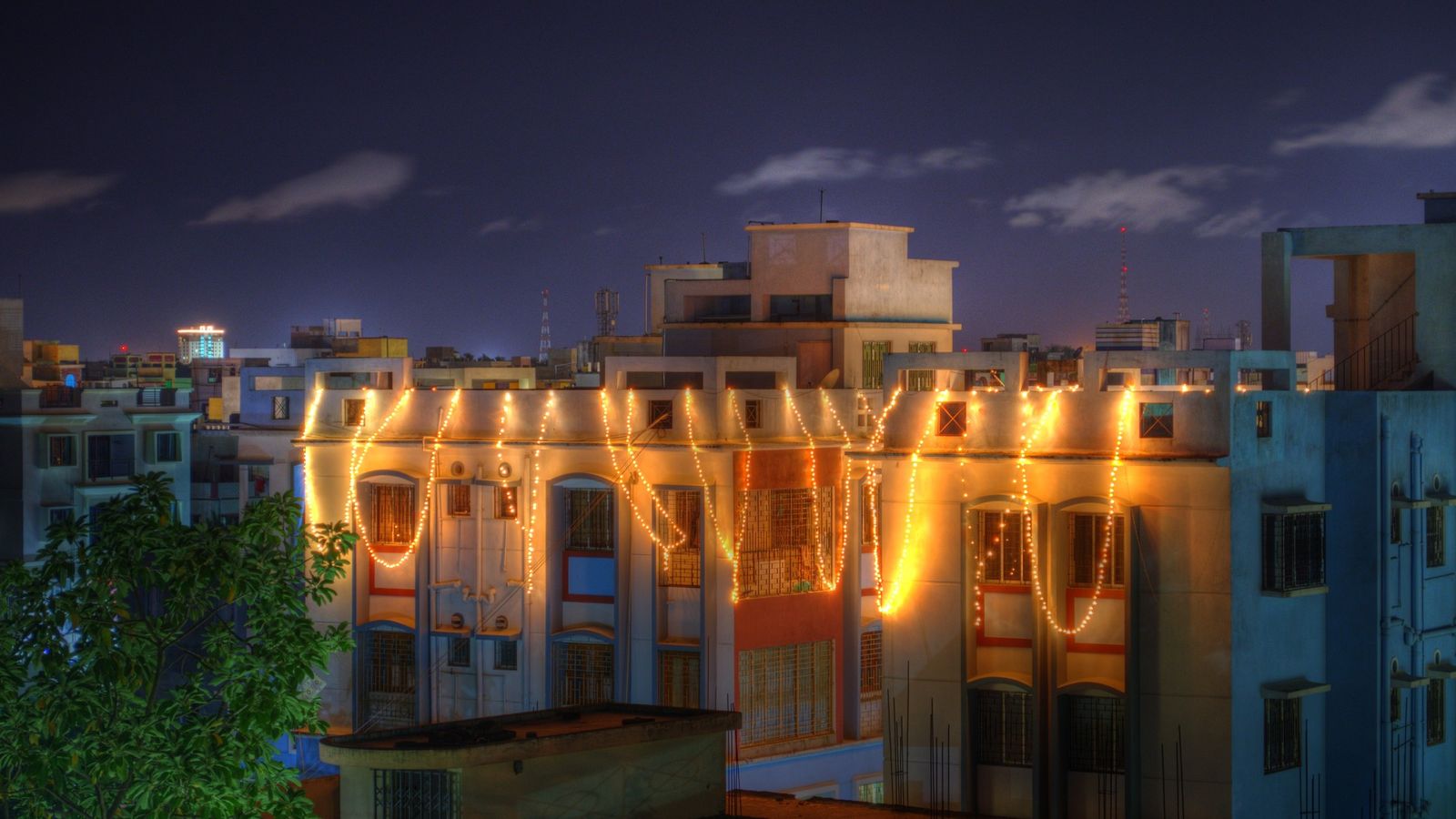
Photo: Prabhakar Banerjee, CC BY 2.0 (cropped), via Wikimedia Commons

A neighbourhood terrace somewhere in India, on the main night of Diwali.
The festival’s centre is not the bang in the sky; it is the row of lamps on the wall.
Lamps before the noise
On the main night of Diwali — 8 November in 2026 for much of India — families clean the house, set clay diyas along ledges and terrace walls, and share sweets after the evening puja. Regional calendars can shift the date by a day, so check the local almanac where you are staying. The terrace is ordinary: washing lines, water tanks, a view of other roofs. What changes is the light. Tiny flames run along the parapet, and the street below answers with more lamps in windows and doorways.
Many cities now limit the hours and types of fireworks. The safer, quieter picture of the night is still the lamp line, the rangoli at the door, and neighbours calling across the gap between buildings.
How the evening unfolds
Afternoon is for last cleaning and arranging the diyas. At dusk the household puja — often to Lakshmi and Ganesha in north India — is done indoors; then people step out to light the terrace. Sweets and snacks move from plate to plate. Children are watched near the parapet. Where crackers are allowed, they tend to come in a short, loud window; where they are restricted, the night stays with lamps and conversation.
A visitor invited onto a terrace should follow the household: shoes where others leave them, no standing on ledges for photographs, and no lighting fireworks unless the hosts do so within local rules. The gift that fits is a box of mithai or dry fruit, not a bag of crackers.
Why the night matters
Diwali marks the new moon of Kartik: light set against the darkest sky of the month. Stories differ by region — Rama’s return to Ayodhya, Krishna and Narakasura, the Jain and Sikh observances that fall in the same season — but the shared act is simple. People light the house and share food. The terrace is where a flat or a small house meets the open air, so the lamps are seen by the street as well as the family.
This is not a guide to firework brands or to “best cracker spots”. Those shows burn money, lungs and pets’ nerves. The lasting image of the night is the steady flame in a clay cup.
If you are travelling
On 8 November 2026 many offices and shops are closed or on short hours. Book trains and hotels early. In apartment cities, ask your host or hotel whether the roof is open to guests after dark. Carry a small torch for stairs, keep children back from edges, and follow the local police notice on cracker hours if any are published for your city. For the food side of the morning, see the sweets-counter story that follows later the same day on this site; for Bengal’s same-night Kali Puja, see the Kolkata piece.
Crackers, if at all
Many cities publish a short evening window and allow only approved “green” crackers when they allow any. Those notices change every year and by state. Read the local police or pollution-control message for the city you are in; do not copy another city’s hours.
If your building bans rooftop fireworks, keep to lamps. Pets, elders and night-shift workers live with every bang. The terrace story of Diwali does not need a sky full of smoke.
Travelling on the main day
8 November 2026 is a Sunday and a gazetted Diwali holiday in India. Trains and intercity buses fill early; neighbourhood shops may shut by afternoon. If you are a guest, ask about roof access and building rules before dusk.
For the morning mithai rush see the sweets-counter post; for Bengal’s same-night Kali Puja see the Kolkata post.
Terrace evening, kept simple
- Diyas: clay lamps with oil or ghee; place them where wind will not tip them onto cloth.
- Sweets: share what the household offers; do not insist on lighting crackers as a guest.
- Safety: water bucket near any flame; first-aid for burns; never leave children alone with matches.
- Noise: respect building rules and city time limits; pets and elders hear every bang.
- Calendar: confirm the main night with a local panchang — dates can move by a day.
When the last diya gutters out, the terrace is only a roof again — and the smell of oil hangs in the air.
Plan your visit
| 2026 date | Main Diwali / Lakshmi Puja night widely 8 November 2026. Regional calendars can shift a day — confirm with a local panchang. |
|---|---|
| Where to see it | Any neighbourhood terrace, courtyard or chawl roof you are invited to; public markets with lamp stalls in the evening. |
| What to wear and bring | Comfortable clothes for sitting on mats; a small torch for stairs; mithai or dry fruit if you are a guest. |
| Safety | Water near diyas; no children on parapets; follow local cracker time limits; first-aid for burns. |
| Getting around | Expect closed shops and heavy local traffic after dusk. Book cabs early if you must move between neighbourhoods. |
Questions people ask
When is Diwali in 2026?
The main day is widely kept on Sunday, 8 November 2026. Regional calendars can shift a date by a day.
Do I need fireworks to mark Diwali?
No. Lamps, sweets and the household puja are the centre of the night. Many cities restrict cracker hours and types.
What should a guest take to a terrace celebration?
A box of mithai or dry fruit, and willingness to follow the household’s rules on shoes, photos and fireworks.
Is Diwali the same night as Kali Puja?
In Bengal and parts of the east, Kali Puja falls on the same amavasya as Diwali elsewhere. The rites and mood differ; see the Kolkata Kali Puja post.
Read next
Written by Muthu, editor of Aura of India. Sources: timeanddate: Diwali/Deepavali 2026 in India, Incredible India: Diwali, URSC / Government holiday list noting Diwali 8 November 2026. Last verified: 22 October 2026.
Your turn: Where do you set the diyas — terrace wall, balcony rail, or courtyard steps?
Comments
Post a Comment
Comments are always welcome, that will help us to motivate ourselves and improve our services. Thanks!!