Orchha Cenotaphs by the Betwa: Day Trip from Jhansi
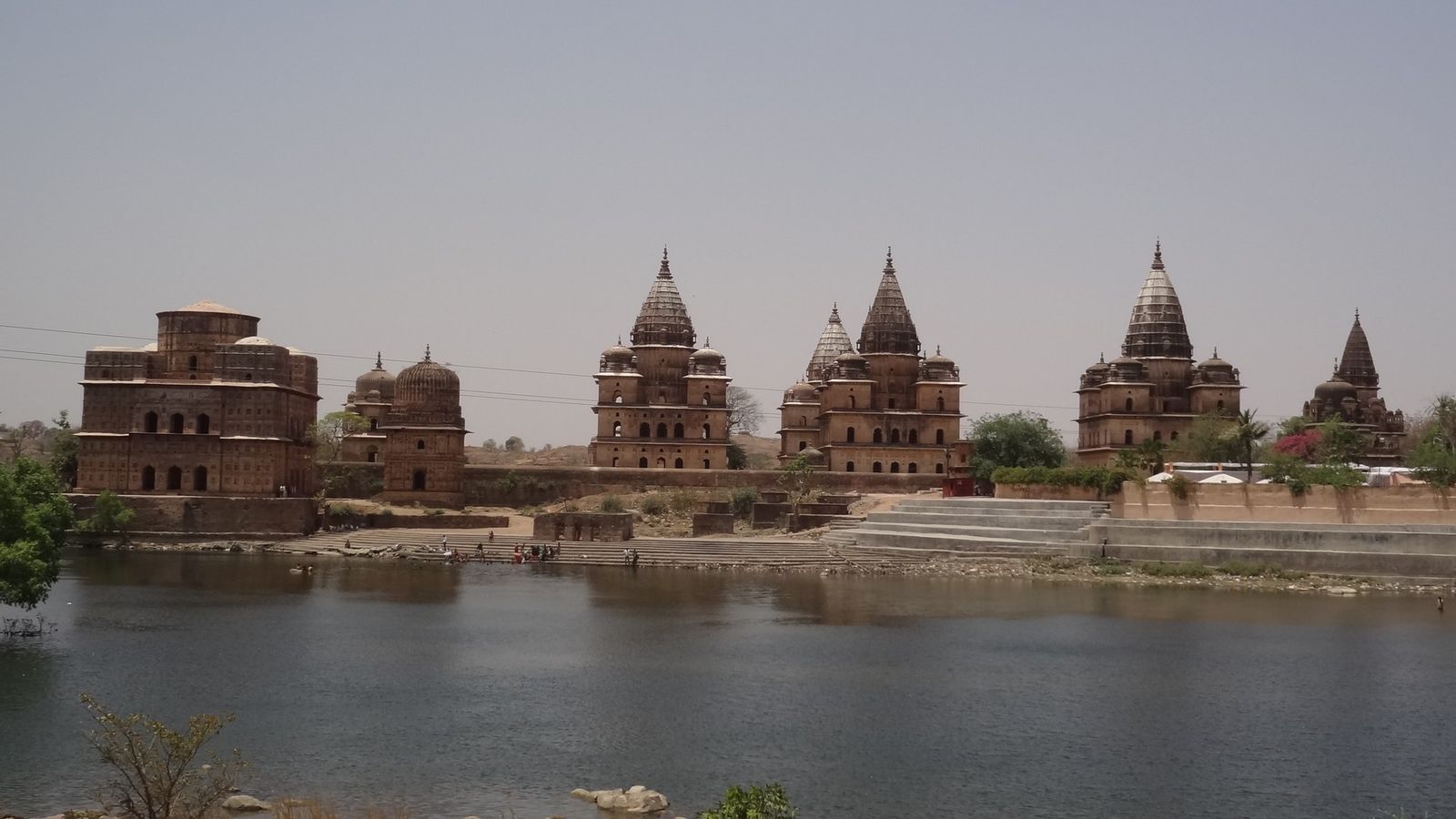
Photo: Navneel neeraj, CC BY-SA 4.0 (cropped), via Wikimedia Commons

Bundela chhatris along the Betwa at Orchha, Madhya Pradesh, in late afternoon.
Orchha lines its kings beside the river: a row of stone umbrellas watching the Betwa pass.
Cenotaphs on the bank
On the southern, right bank of the Betwa, a line of chhatris — domed memorial pavilions — marks Bundela rulers and their kin. Madhya Pradesh Tourism counts fifteen; some guides say fourteen. Square platforms carry multi-storey structures with narrow stairs to upper levels. The first often holds a marble image of Madhukar Shah and his queen; the last in the riverside view is linked to Veer Singh Deo. From Kanchan Ghat the whole row reads clearly against water and sky. Vultures sometimes nest in the upper windows.
Fort, temples and a day’s order
Across the river, Orchha Fort complex holds Raja Mahal and related palaces on an island-like rise, linked by bridge to the temple town. Ram Raja Temple, where Rama is treated as king as well as deity, sits in the main square. Laxmi Narayan Temple mixes fort and shrine forms on a ridge. A practical day from Jhansi starts early: fort and palace rooms first, temple square at midday, chhatris and river light in the afternoon. Cycles are easy to hire for the quiet roads along the Betwa.
Rudra Pratap founded Orchha in the early sixteenth century. The Bundela court left this dense stone town rather than a spread-out capital. People come for the riverside memorials and the compact fort-temple cluster, not for a second Khajuraho. Khajuraho’s temples are a separate journey further east. Between fort and chhatris the lanes stay small: cycle bells, tea stalls and the river wind when it rises off the Betwa.
Why the chhatris hold attention
They are funerary architecture in the open, meant to be seen from the water as much as from the path. Soft evening light and monsoon cloud suit photographs; harsh midday flattens the stone. MPSTDC also runs rafting stretches on the Betwa that pass the cenotaph line — seasonal, and worth booking locally when the river is in condition. Even without a raft, the ghat path is enough: walk the row once, then sit and let the river set the pace.
Getting there
Jhansi Junction is about 15–17 km away, with frequent taxis and buses. Orchha’s own station is closer to town but has fewer long-distance trains. Gwalior airport is roughly 140 km; Khajuraho is a longer road link for those combining temple circuits. State archaeology e-services sell tickets for the Orchha group of monuments (Raja Mahal group); keep the stub for linked sites and confirm the day’s price at the counter.
Light on the chhatris
Late afternoon softens the riverside memorials and throws long shadows from the domes. Morning is clearer for the fort interiors. If you have only one strong light window, give it to the cenotaphs and Kanchan Ghat.
Climb only where stairs are sound and open; upper floors can be steep and uneven. Watch for nesting birds and give them space.
Jhansi to Orchha without waste
Take an early taxi from Jhansi Junction (about 15–17 km). Buy the Orchha group ticket, see Raja Mahal and the fort cluster, walk the temple square, then finish at the chhatris. Return to Jhansi for evening trains, or stay in Orchha if you want dawn on the Betwa.
Khajuraho is a different day and a longer road. Keep Orchha to this riverside town. For the state overview, see Madhya Pradesh.
Places to know
- Chhatris / cenotaphs: memorial row on the Betwa’s south bank near Kanchan Ghat.
- Orchha Fort and Raja Mahal: palace complex above the river.
- Ram Raja Temple: the town’s main square shrine.
- Laxmi Narayan Temple: fort-like temple with murals on the ridge.
- Betwa rafting: seasonal MPSTDC runs past the chhatri line.
When the sun drops, the domes darken first, and the river keeps a thin strip of silver.
Plan your visit
| Best season | October to March for comfortable walking; monsoon softens the river views but bring rain cover. |
|---|---|
| Entry | Orchha Group of Monuments (Raja Mahal group) via state archaeology e-ticketing or the counter. Older tourism notes list about ₹10 for Indians and ₹250 for foreigners — check at the gate as of October 2026. |
| How to reach | Jhansi Junction about 15–17 km; Orchha station closer with fewer long-distance trains. Gwalior airport about 140 km. |
| Where to stay | Orchha village near the temples for dawn; Jhansi if you are in transit only. |
| How long to spend | One full day from Jhansi covers fort, temple square and chhatris; overnight if you want rafting or slow river light. |
| Rafting | Seasonal MPSTDC Betwa rafting past the chhatris — book locally and confirm water conditions. |
| Dress and temples | Modest clothing at Ram Raja Temple; follow queue and shoe rules posted at the entrance. |
Questions people ask
How far is Orchha from Jhansi?
About 15–17 km by road. Taxis and buses link Jhansi Junction with Orchha through the day.
What are the Orchha chhatris?
Cenotaphs — memorial pavilions — for Bundela rulers and family, lined along the Betwa’s south bank. Madhya Pradesh Tourism describes fifteen on the riverside.
Is one day from Jhansi enough?
Yes for the fort complex, Ram Raja Temple area and the cenotaphs, if you start early and use a taxi between clusters when needed.
Do you need a separate ticket for the chhatris?
Fort/group tickets are often described as covering the main monuments; confirm at the counter what your stub includes for the riverside cenotaphs.
Read next
Written by Muthu, editor of Aura of India. Sources: Madhya Pradesh Tourism: Orchha, MP Directorate of Archaeology: e-services / ticketing, Madhya Pradesh Tourism: Orchha heritage walk (fee note). Last verified: 22 October 2026.
Your turn: Did you reach the chhatris at sunset from Jhansi, or did you stay the night for morning mist on the Betwa?
Comments
Post a Comment
Comments are always welcome, that will help us to motivate ourselves and improve our services. Thanks!!