Cities in Odisha: Bhubaneswar, Cuttack, Puri and More to Visit
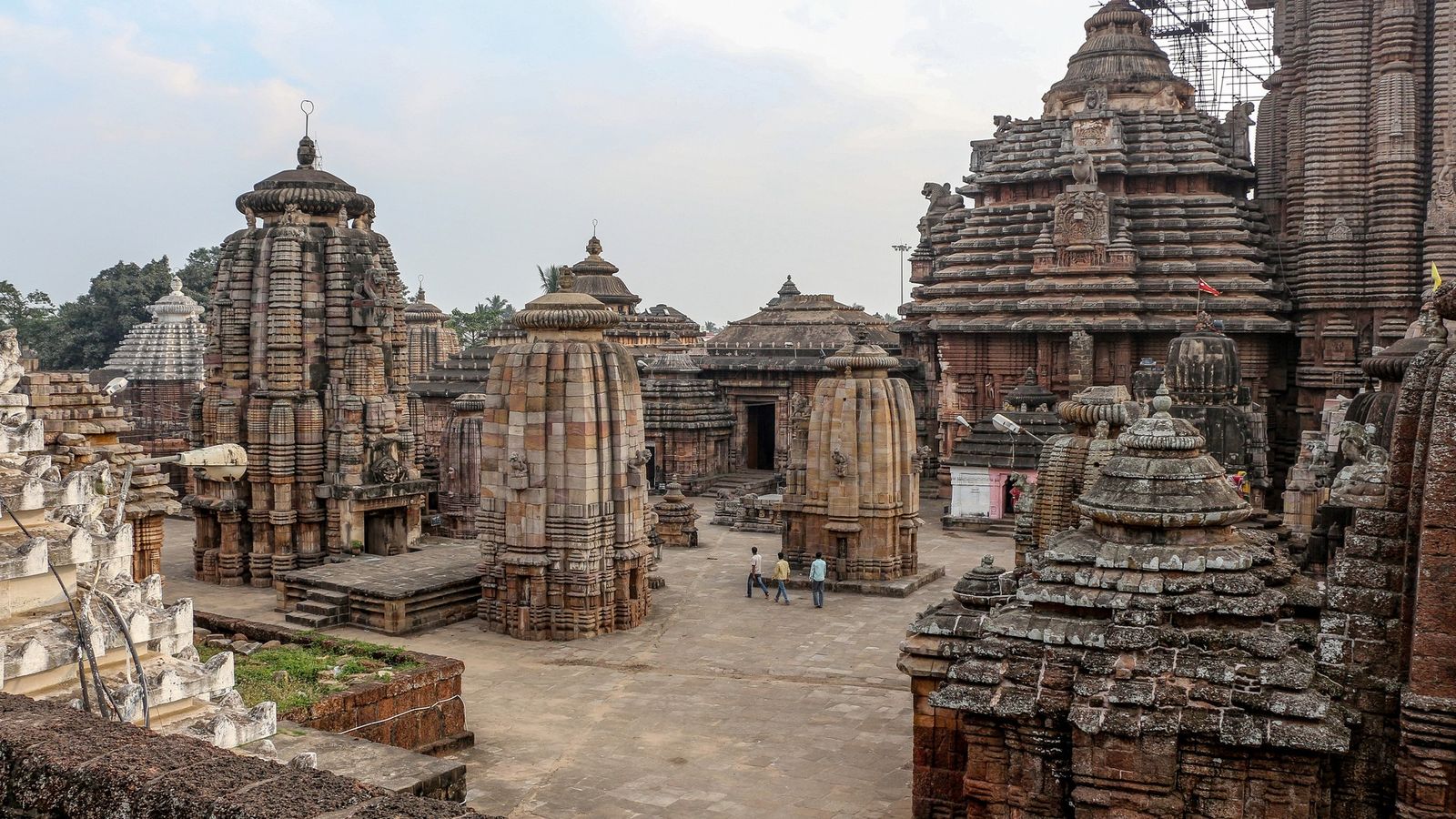
Photo: Bernard Gagnon, CC BY-SA 3.0 (cropped), via Wikimedia Commons

The spire of the Lingaraj temple above the rooftops of old Bhubaneswar, early on a winter morning.
Odisha's cities are few and far apart: a capital and its older twin on the delta, a pilgrim town on the sea, and steel and dam towns far inland.
Bhubaneswar and Cuttack, the twin cities
Bhubaneswar is the capital and the largest city, with about 885,000 people in the 2011 Census. It took over from Cuttack in 1948 and was laid out as a new town beside an old quarter of stone temples. The Lingaraj is open to Hindus only; other visitors see its spire from outside the wall, and the smaller Mukteswara and Rajarani temples are open to all. Mo Bus city buses and app cabs are the easiest way around. A metro was planned, but in April 2026 the state put it on hold.
Cuttack, about 30 km north, is the old capital, built on a spit of land between the Mahanadi and Kathajodi rivers. The ruins of Barabati Fort, first built in 987, are open from 6 am to 6 pm without a fee. Subhas Chandra Bose was born here, and his family house is now a museum, closed on Mondays. The shops of the old city sell tarakasi, the fine silver filigree that Cuttack is known for.
Puri and the coast towns
Puri, about 60 km south of Bhubaneswar, had about 200,000 people in 2011 and is a pilgrim town and a seaside resort at once. The Jagannath Temple is open to Hindus only, and the beach is the town's other centre. Konark is about 35 km up the coast. For the town outside festival time, read Puri on an ordinary morning. A new airport for Puri received its environmental clearance on 30 September 2026, but building has not begun; fly into Bhubaneswar.
Brahmapur, often spelt Berhampur, is the main town of the south, a trading city known for silk saris. Gopalpur-on-Sea, a quiet beach, is 16 km away. In the north, Balasore is the town for Chandipur, where the sea draws back several kilometres at low tide.
Sambalpur, Jharsuguda and Rourkela in the west
Sambalpur is the main town of western Odisha, home of Sambalpuri ikat, cloth in which the threads are tie-dyed before weaving, and of the Samaleswari temple. Hirakud Dam is about 15 km north, with a reservoir of 746 sq km, and the Gandhi Minar tower gives the view over it. The leaning Shiva temple at Huma is 23 km south. The nearest airport is at Jharsuguda, about 50 km away, a mining and power town with little else to keep a visitor.
Rourkela, in the far north-west, is Odisha's third city, about 550,000 people in 2011, built around the Rourkela Steel Plant from the 1950s. Small aircraft fly to Bhubaneswar, and larger Alliance Air flights are due to return; check the schedule.
Baripada and Koraput, north and south
Baripada, in the north-east, is the town for Similipal Tiger Reserve, whose Pithabata gate is about 22 km away. The reserve closes for the monsoon, and in October 2026 its reopening date had not been announced. Baripada is also a home of Mayurbhanj Chhau, the form of the martial Chhau dance performed without masks.
Koraput and Jeypore lie on a plateau in the far south, among the villages of Odisha's tribal communities and their weekly markets (haats). Small daily flights link Jeypore with Bhubaneswar and Visakhapatnam, and the Koraput railway line comes up from the Andhra coast.
Three bases for a first trip
Most visitors use three bases. Bhubaneswar covers its own temples, Cuttack and the caves at Udayagiri. Puri covers the beach, Konark and the craft village of Raghurajpur. Sambalpur, about 300 km to the west by road or overnight train, covers Hirakud, Huma and the weaving villages around Bargarh.
Brahmapur and Gopalpur make a quieter southern add-on, about four hours by road or rail from Bhubaneswar along the Chilika lagoon. For festivals, food and crafts across the state, see Odisha.
Cities to know
- Bhubaneswar (Khordha): the capital and temple city, about 885,000 in the 2011 Census.
- Cuttack (Cuttack): the old capital between two rivers, about 663,000.
- Rourkela (Sundargarh): the steel city, about 552,000.
- Brahmapur (Ganjam): silk and the road to Gopalpur, about 357,000.
- Sambalpur (Sambalpur): ikat weaving and the Hirakud reservoir.
- Puri (Puri): the Jagannath Temple and the beach.
- Balasore (Balasore): the town for Chandipur's low-tide shore.
- Baripada (Mayurbhanj): the gateway to Similipal.
- Jeypore (Koraput): the airport town of the southern plateau.
Odisha keeps its oldest things in its smallest towns, and the cities are where the roads to them begin.
Plan your visit
| Best season | October to February. March to June is hot and humid on the coast and very hot in the west. Cyclones can strike the coast in October and November. |
|---|---|
| How to reach | Biju Patnaik International Airport in Bhubaneswar is the main gateway; Jharsuguda has flights for the west, and small aircraft serve Rourkela and Jeypore. Bhubaneswar, Cuttack, Puri and Brahmapur are on the main coastal railway. |
| Getting around | Trains and OSRTC buses between cities; Mo Bus and app cabs in Bhubaneswar and Cuttack; a car with driver for Konark, Hirakud and Similipal. |
| Where to stay | Bhubaneswar near the old town or Saheed Nagar; Puri on the beach road away from the temple crowds; Sambalpur near the town centre; Gopalpur rather than Brahmapur for the sea. |
| How long to spend | Two nights in Bhubaneswar, two or three in Puri, and two in Sambalpur if you go west. |
Questions people ask
Which is the largest city in Odisha?
Bhubaneswar, with about 885,000 people in the 2011 Census, the last completed count. Cuttack and Rourkela come next. The 2027 Census is under way.
Is there an official ranking of the most developed cities in Odisha?
No. There is no official list of 'developed' cities. This guide describes what each city offers a visitor instead.
Can non-Hindus enter the Jagannath and Lingaraj temples?
No. Both admit Hindus only. Non-Hindus can see the Lingaraj spire from outside, and most other temples in Bhubaneswar, such as Mukteswara and Rajarani, are open to all.
Does Bhubaneswar have a metro?
No. A metro line to Cuttack was begun in 2024, but in April 2026 the state cancelled the contract and put the project on hold while it plans a wider transport network. City buses and cabs are the way around.
Read next
Written by Muthu, editor of Aura of India. Sources: Odisha Tourism: Barabati Fort, Odisha Tourism: Cuttack, Sambalpur district: tourist attractions, Similipal Tiger Reserve: plan your visit, The Hindu: environmental and CRZ clearance for Puri's greenfield airport, New Indian Express: Bhubaneswar metro not scrapped, put on hold, IndiaOne Air: summer schedule 2026. Last verified: 15 October 2026.
Your turn: Have you travelled west of Bhubaneswar, to Sambalpur or Rourkela, and what did you find?
Comments
Post a Comment
Comments are always welcome, that will help us to motivate ourselves and improve our services. Thanks!!