Puri Travel Guide: Jagannath Temple, Grand Road and the Beach
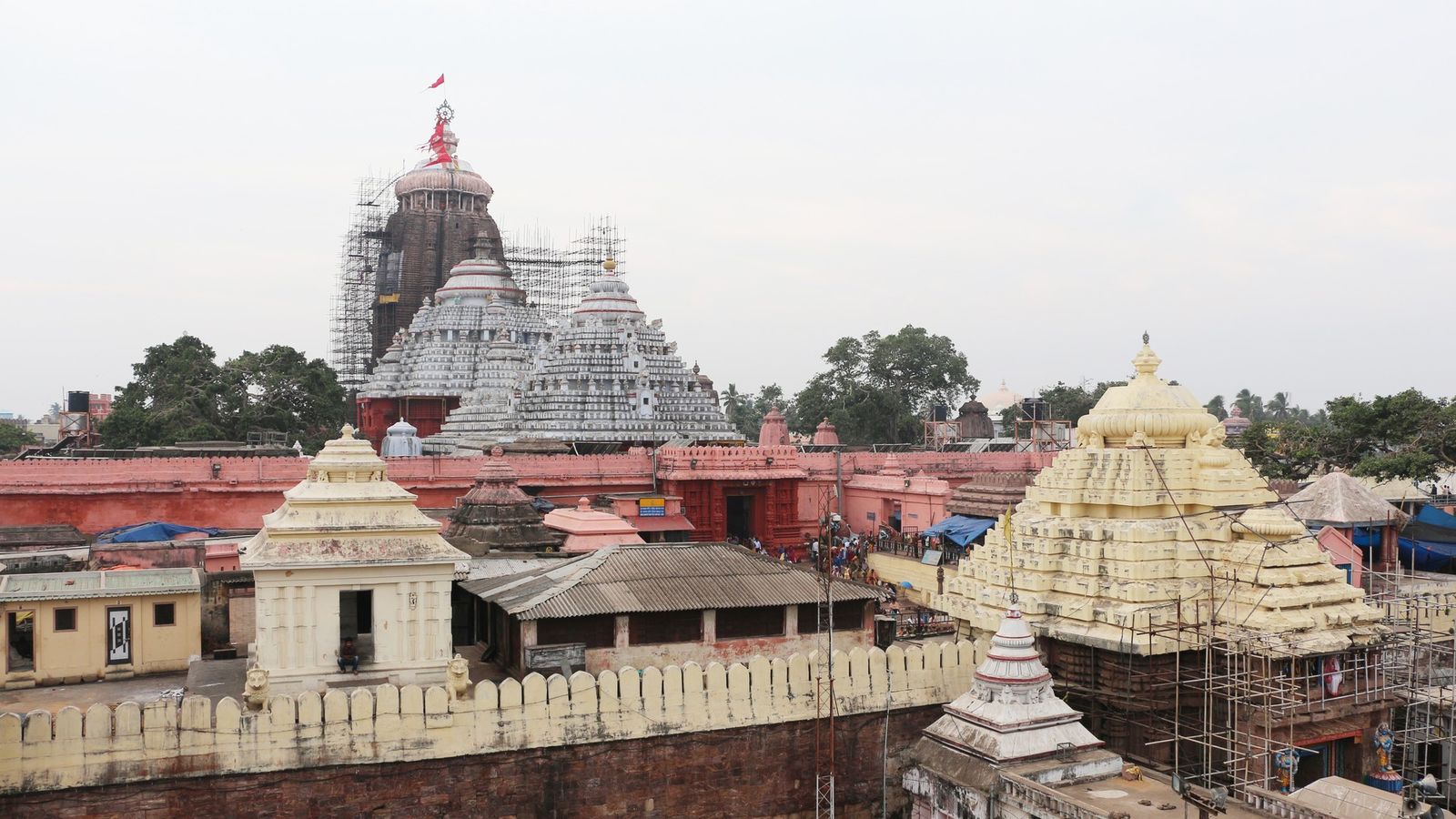
Photo: Bernard Gagnon, CC BY-SA 3.0 (cropped), via Wikimedia Commons

Puri, on the Odisha coast, on a day with no festival.
A town that lives around a temple, with the sea at the end of every street.
The temple and the town
Puri is built around the Jagannath temple, whose tower, about 65 metres tall, rises over the roofs and can be seen from almost anywhere in town. Jagannath, the lord of the universe, is a form of Krishna, worshipped here with his brother and sister. From the temple, the Grand Road, the Bada Danda, runs wide and straight to the Gundicha temple about three kilometres away. At the end of the side streets is the sea.
The morning in Puri
Early, the Grand Road fills with pilgrims, flower sellers, and stalls of khaja, a flaky layered sweet that is part of the temple’s offerings. The temple kitchen, one of the largest in the world, cooks for thousands every day in clay pots over wood fires, and the food is shared as mahaprasad, blessed food. On the beach, fishing boats come in at dawn with the catch, and families walk in the shallow surf.
Why people come
Puri is one of the char dham, the four holiest pilgrim towns for Hindus. Once a year, in June or July, the deities leave the temple for the Rath Yatra, the chariot festival, riding huge wooden chariots pulled by the crowd down the Grand Road. The English word juggernaut comes from Jagannath and those chariots. Visitors from abroad come for the beach, the town, and the festival if they can time it.
Getting there
Puri has a railway station with trains from Kolkata, Delhi and other cities. The nearest airport is Bhubaneswar, about 60 kilometres away, an hour and a half by road. In town, cycle rickshaws and autos run up and down the Grand Road and to the beach.
A day at the temple
The temple opens at about 5.30 am, after the first lamp of the day. Darshan pauses for over an hour later in the morning for a ritual offering, and the day continues in stages until about 9 pm, with breaks for each meal offered to the gods. On some days the queue moves close to the inner hall; at other times devotees see the deities from further back.
The Lion’s Gate on the east side is the only way in. Mahaprasad, the food first offered to Jagannath, is sold at the Ananda Bazaar in the north-east corner of the compound. Once a year, after the bathing festival on the full moon of Jyeshtha, the deities are said to fall ill, and there is no darshan for fifteen days before the Rath Yatra.
Around Puri
Raghurajpur, a short drive north, is a crafts village of pattachitra painters and palm-leaf engravers, and of gotipua, a dance performed by boys. Pipili, on the Bhubaneswar road, makes bright appliqué. Konark is about 35 kilometres up the coast, and Chilika lagoon lies to the south.
For lunch, look for an Odia thali with dalma and rice, the everyday dish that is also part of the temple’s offering.
In Puri
- The Jagannath temple is open to Hindus only. Everyone can see it from the Grand Road.
- Phones, cameras and leather items are not allowed inside the temple.
- Swim only where lifeguards are posted. The currents are strong.
- Swargadwar, on the beach, is a cremation ground. Leave it out of your photos.
Walk to the sea at the end of the day. The temple is behind you, and its bells carry over the waves.
Plan your visit
| Best season | October to March, when it is cooler. Rath Yatra, in June or July, is the great festival; expect very large crowds. |
|---|---|
| How to reach | Bhubaneswar airport is about 60 kilometres away by road. Puri station has trains from Kolkata, Delhi and other cities; the Howrah–Puri Vande Bharat Express takes under seven hours. |
| Getting around | Walk the Grand Road. Cycle rickshaws and autos run to the beach and the Gundicha temple. |
| Where to stay | Near the Grand Road for the temple; along the beach road for the sea. |
| Temple timings | Darshan from about 5.30 am to about 9 pm, with breaks for rituals. The daily schedule is posted on shreejagannatha.in; check before you go. |
| Dress and rules | Hindus only inside. No phones, cameras, footwear or leather items; there are free stands at the Lion’s Gate. Dress modestly. |
| How long to spend | Two days: one for the temple and the Grand Road, one for the beach and Raghurajpur or Konark. |
Questions people ask
Can non-Hindus enter the Jagannath temple?
No. Only Hindus are allowed inside. Others can see into the enclosure from the roof of the Emar Matha near the eastern gate, and the tower from the Grand Road.
What are the Jagannath temple darshan timings?
The temple usually opens at about 5.30 am, and darshan continues, with breaks for rituals, until about 9 pm. Timings change on festival days.
Are mobile phones allowed in the Jagannath temple?
No. Phones, cameras, footwear and leather items are not allowed. Leave them at the free stands near the Lion’s Gate.
When is the Rath Yatra?
On the second day of the bright fortnight of Ashadha, which falls in June or July. The deities stay at the Gundicha temple for nine days before the return journey.
Read next
Written by Muthu, editor of Aura of India. Sources: Shree Jagannatha Temple Administration: Visitor Services, Shree Jagannatha Temple Administration: FAQs, Shree Jagannatha Temple Administration: Puri at a Glance, Odisha Tourism: Konark Festival (Raghurajpur, Pipili). Last verified: 13 October 2026.
Your turn: What did you do in Puri on a day with no festival? Did the Grand Road or the beach come first?
Comments
Post a Comment
Comments are always welcome, that will help us to motivate ourselves and improve our services. Thanks!!