Kerala's 14 Districts: What to See in Each, South to North
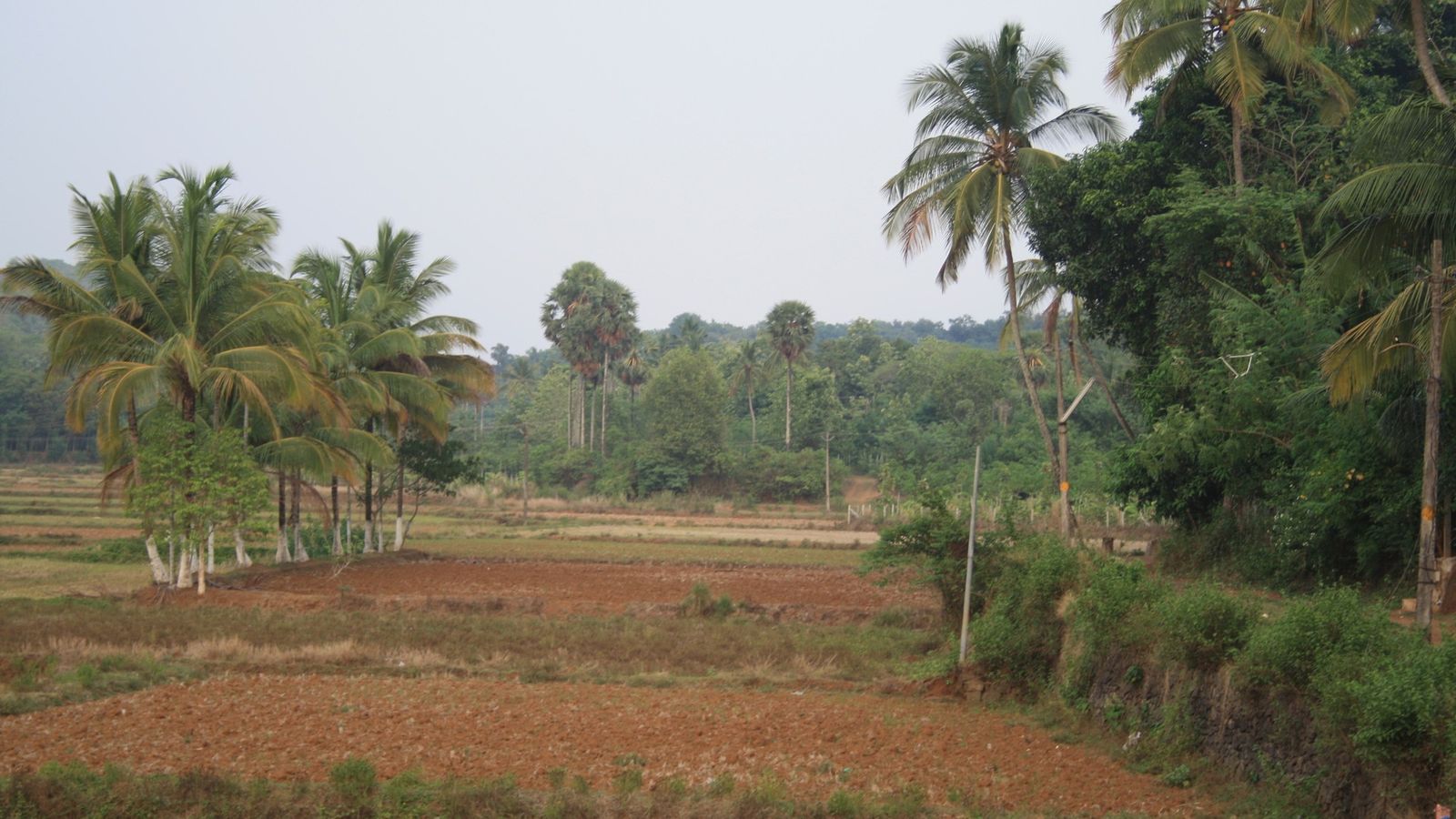
Photo: Effulgence108, CC0 (cropped), via Wikimedia Commons

Kerala from a slow train, between the coconut palms and the paddy fields.
Kerala is long and narrow: the sea on one side, the mountains on the other, and fourteen districts in between.
The south
Kerala's fourteen districts run from Thiruvananthapuram in the south to Kasaragod in the north. Thiruvananthapuram, the capital, has the Padmanabhaswamy temple and the beaches of Kovalam nearby. Kollam is the southern gateway to the backwaters. Pathanamthitta, inland, is home to the hill shrine of Sabarimala, visited by millions of pilgrims each winter. Alappuzha is the heart of the backwaters, where houseboats drift along canals past villages and rice fields below sea level.
The centre
Kottayam is a town of churches, rubber estates and newspapers. Idukki rises into the Western Ghats, with the tea hills of Munnar and the forests of Periyar at Thekkady. Ernakulam holds Kochi, a port city where Fort Kochi's old streets, Chinese fishing nets and the Jewish quarter at Mattancherry sit across the water from the modern city. Thrissur, the cultural capital, is famous for the Thrissur Pooram, a festival of caparisoned elephants and drums held in April or May.
The north
Palakkad lies in a gap in the mountains, with paddy fields and palm-lined villages. Malappuram and Kozhikode are known for their food: biryani, fish curries and snacks made with banana and rice. Near Kozhikode, a monument at Kappad marks where Vasco da Gama is said to have landed in 1498. Wayanad is a green upland of spice and coffee estates. Kannur and Kasaragod, in the far north, are the home of theyyam, a ritual performance in which dancers become gods, mostly between November and May.
Getting around
Kerala has international airports at Thiruvananthapuram, Kochi, Kozhikode and Kannur, and a railway line runs the length of the coast. Distances are short on the map but slow on the road. The monsoon arrives in June and brings heavy rain until September; October to March is the easiest time to travel.
Up the coast by train
The railway is the simplest way to read the map. From Thiruvananthapuram the line runs north through Kollam, then splits at Kayamkulam: one branch hugs the coast through Alappuzha, the other runs inland through Kottayam. The two meet again at Ernakulam. From there the line runs on through Thrissur and Shoranur to Kozhikode, Kannur and Kasaragod, with the sea seldom far from the window.
Idukki and Wayanad have no railway. For the hills you change to the road at Ernakulam or Kottayam for Munnar and Thekkady, and at Kozhikode for Wayanad. Allow a full day for each of these climbs, whatever the distance looks like.
Three short trips
The south, in four or five days: Thiruvananthapuram and its temple, the cliffs at Varkala and the beach at Kovalam, then Kollam and a day on the water.
The centre, in a week: Kochi, the tea hills of Munnar, the forest at Thekkady and a night on the Alappuzha backwaters. This is the route most first-time visitors take; see ten days on the coast and in the hills.
The north, in a week, best between December and March: Kozhikode for food and the beach at Kappad, about sixteen kilometres north of the town; Wayanad for the uplands; then Kannur and Kasaragod for theyyam, which is performed at village shrines, often through the night. For the temples further south, see Kerala's great temples.
Districts to know
- Thiruvananthapuram: the capital, the Padmanabhaswamy temple, Kovalam.
- Alappuzha: houseboats and the backwaters.
- Idukki: Munnar's tea hills and Periyar.
- Ernakulam: Kochi, Fort Kochi and Mattancherry.
- Thrissur: the Pooram festival and temple arts.
- Wayanad: forests, spices and coffee.
- Kannur: theyyam season and quiet beaches.
Wherever you are in Kerala, you are rarely more than a few hours from both the sea and the hills.
Plan your visit
| Best season | October to March. The south-west monsoon brings heavy rain from June to September; theyyam is mostly from November to May. |
|---|---|
| How to reach | International airports at Thiruvananthapuram, Kochi, Kozhikode and Kannur. Trains from Chennai, Bengaluru and Mangaluru, and along the Konkan line from Mumbai and Goa. |
| Getting around | Trains along the coast; buses and taxis to the hills. Ferries and houseboats on the backwaters between Kollam, Alappuzha and Kottayam. |
| Where to stay | Fort Kochi or Ernakulam for the centre; Kovalam or Varkala in the south; Munnar town or Kumily for the hills; Kozhikode or Kannur town in the north. |
| How long to spend | A week covers one region well. Two weeks lets you go from Thiruvananthapuram to Kannur. More on the state in the Kerala guide. |
Questions people ask
How many districts are there in Kerala?
Fourteen. From south to north: Thiruvananthapuram, Kollam, Pathanamthitta, Alappuzha, Kottayam, Idukki, Ernakulam, Thrissur, Palakkad, Malappuram, Kozhikode, Wayanad, Kannur and Kasaragod.
Did Vasco da Gama land at Kappad?
A monument at Kappad, near Kozhikode, marks the landing of May 1498, but Kerala's archaeology department calls the exact spot debatable. Many historians think his ships anchored off Kappad and he came ashore at Panthalayani Kollam, near today's Koyilandy.
When and where can I see theyyam?
Mostly between November and May, in Kannur and Kasaragod districts, at village shrines and family houses. Dates follow the Malayalam calendar and change each year, so check Kerala Tourism's theyyam calendar and confirm locally.
Which district is best for the backwaters?
Alappuzha, for houseboats and the public ferry. Kollam and Kottayam (for Kumarakom) also give access to the backwaters.
Read next
Written by Muthu, editor of Aura of India. Sources: Kerala Tourism: Kappad Beach, Department of Archaeology, Government of Kerala: Vasco da Gama Monument, Kappad, The Hindu: Vasco da Gama never landed at Kappad, says MGS, Kerala Tourism: Kannur theyyam calendar. Last verified: 13 October 2026.
Your turn: Which Kerala district surprised you most, and how did you get there?
Comments
Post a Comment
Comments are always welcome, that will help us to motivate ourselves and improve our services. Thanks!!