Kerala Temples: Dress Code, Entry Rules and Famous Temples
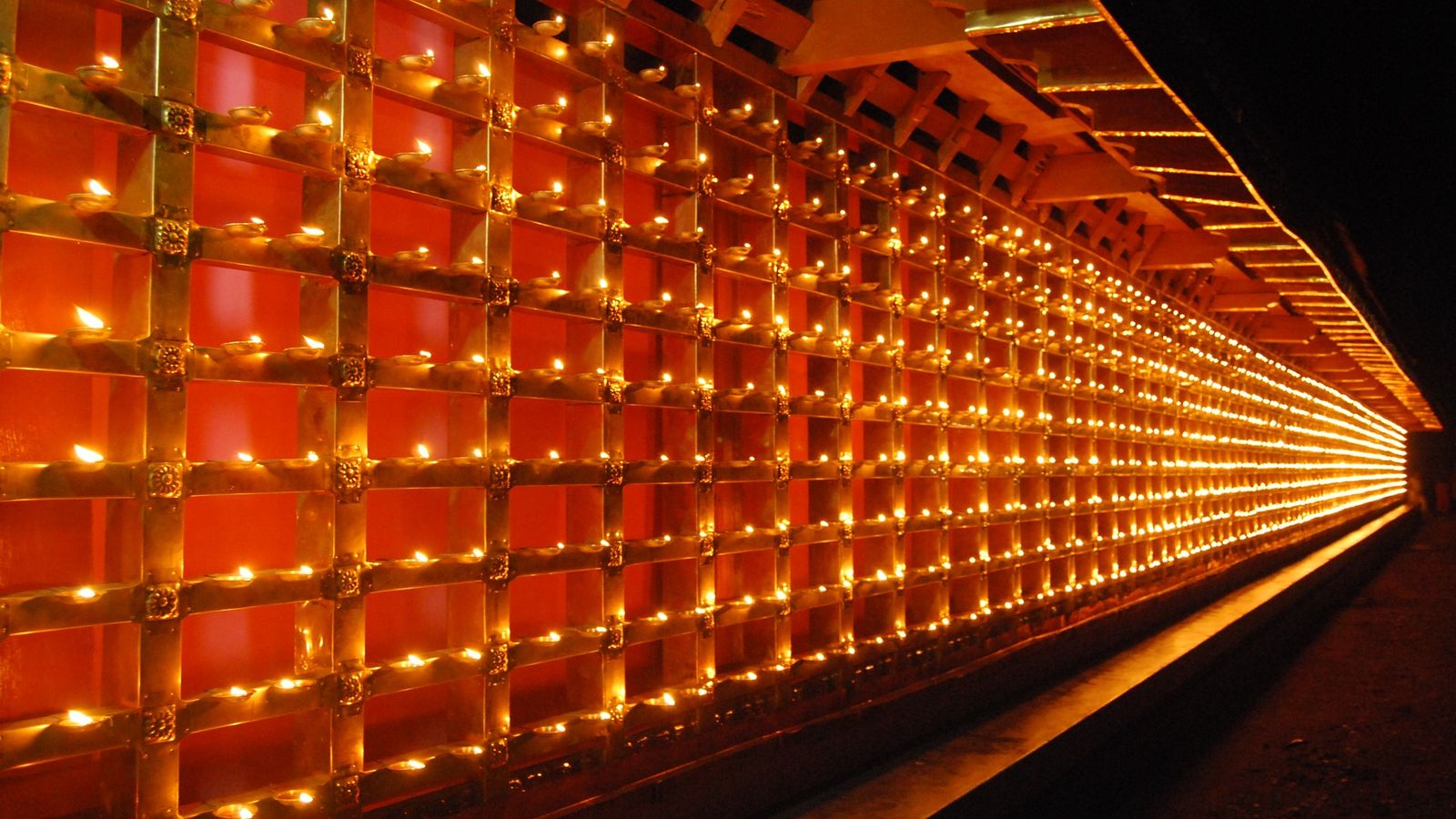
Photo: Argopal at ml.wikipedia, Public domain (cropped), via Wikimedia Commons

A temple courtyard in Kerala, at the evening lamp.
In Kerala, the temple is lit by hundreds of small brass lamps, not by a single bulb.
Wood, copper and lamps
Kerala's temples don't look like those of the rest of South India. There are few tall towers. Instead, a low wall encloses a courtyard, and inside it stand shrines with sloping roofs of copper or tile, built for monsoon rain. The walls are hung with rows of small brass lamps, and at dusk, when they are lit, the whole temple glows. Many temples keep elephants for festivals, and the drummers of the chenda, a loud cylinder drum, play during processions.
The great temples
In Thiruvananthapuram, the Sree Padmanabhaswamy temple holds an image of Vishnu reclining on a serpent, so long that it is seen through three doors. The temple's vaults made news in 2011, when an inventory found treasure worth billions. Guruvayur, near Thrissur, is Kerala's great Krishna temple, where thousands of weddings are held every year. In Thrissur itself, the Vadakkunnathan temple of Shiva is the setting for Thrissur Pooram, a festival of decorated elephants and hours of drumming, usually in April or May.
Why people come
Sabarimala, in the forested hills of Pathanamthitta, is the shrine of Ayyappa, and millions of pilgrims walk its hill path each season, from November to January, after weeks of fasting and wearing black. In Thiruvananthapuram, the Attukal Pongala, when women cook a sweet offering on the streets in their hundreds of thousands, has been called one of the largest gatherings of women in the world. Visitors come for the lamps, the drums and the temple arts: Kathakali and Koodiyattam, a Sanskrit theatre tradition, grew up in temple halls.
Visiting
Many Kerala temples are open to Hindus only, including Padmanabhaswamy and Guruvayur. Others welcome everyone to the outer courtyard. Men are often asked to remove their shirts before entering and wear a mundu, the white wrap-around cloth. Women wear a sari, or a mundu wrapped over trousers; rules vary from temple to temple. Thiruvananthapuram and Kochi have international airports, and Thrissur is about an hour and a half north of Kochi by road or train.
How a Kerala temple is laid out
Inside the outer wall, the first thing you meet is the tall flagstaff, the kodimaram, often sheathed in brass or gold, and beside it the balikkallu, the great altar stone. Worshippers take care not to touch it with their feet. Beyond them a low cloister called the nalambalam runs around all four sides of the shrine, and inside that stands the sreekovil, the sanctum, square or round, under its sloping copper roof.
Most of the life of the temple happens in the space between the outer wall and the nalambalam: the lamp-lit walkway, the elephants on festival days, the drummers. Where non-Hindus are allowed in at all, it is usually only this far.
The temple year
Sabarimala opens for its main season on 16 November 2026, closes after the Mandala Pooja on 27 December, reopens on 30 December for Makaravilakku in mid-January and closes on 20 January 2027. Every pilgrim must book a slot in advance on the Travancore Devaswom Board's virtual queue. The shrine also opens for the first few days of each Malayalam month.
In Thiruvananthapuram, the Padmanabhaswamy temple holds its Alpasi festival from 11 to 20 October 2026, and the Attukal Pongala falls in February or March. Thrissur Pooram comes in April or May, in the Malayalam month of Medam. To the north, the theyyam season in Kannur and Kasaragod runs from about November to May; see Kerala's districts for where to go.
Temples to know
- Sree Padmanabhaswamy, Thiruvananthapuram: Vishnu on the serpent.
- Guruvayur, Thrissur district: Kerala's great Krishna temple.
- Sabarimala, Pathanamthitta: the hill shrine of Ayyappa.
- Vadakkunnathan, Thrissur: the home of Thrissur Pooram.
- Attukal Bhagavathy, Thiruvananthapuram: the temple of the Pongala.
- Chottanikkara, near Kochi: a goddess temple famous for healing.
- Mannarasala, Alappuzha district: a serpent shrine in a grove.
- Ambalappuzha, Alappuzha district: a Krishna temple known for its sweet milk payasam.
- Parassinikkadavu, Kannur: a riverside shrine where Theyyam, a ritual dance, is performed daily.
Stay for the lamps. The courtyard is only half the temple until they are lit.
Plan your visit
| Entry fee | General darshan is free at the major temples. Some, including Guruvayur and Padmanabhaswamy, sell paid special-darshan tickets: check before you go. |
|---|---|
| Opening hours | Temples open before dawn and close for a few hours in the afternoon. Padmanabhaswamy has set darshan windows from 3.30 am, with evening darshan from 4.30 to 6.15 pm and 6.45 to 7.20 pm (as of October 2026); hours change at festivals. Check each temple before you go. |
| Best time | October to March for the weather; the festival you want for the spectacle. Arrive for the evening lamps. |
| How to reach | Thiruvananthapuram and Kochi have international airports. Guruvayur and Thrissur are about an hour and a half north of Kochi. |
| Dress and rules | Men: a mundu or dhoti, usually with the shirt removed. Women: a sari, a long skirt and blouse, or a mundu over trousers; Padmanabhaswamy does not allow salwar suits, Guruvayur allows a churidar with dupatta. No shoes, and at Guruvayur no phones inside. |
| Entry for non-Hindus | Padmanabhaswamy and Guruvayur admit Hindus only. Many other temples let all visitors into the outer courtyard. Ask at the gate. |
Open Sree Padmanabhaswamy Temple, Thiruvananthapuram, Kerala in Google Maps
Questions people ask
Can non-Hindus enter Kerala temples?
Not the major ones: Padmanabhaswamy and Guruvayur admit Hindus only. Many smaller temples let all visitors into the outer courtyard, and the evening lamps can often be seen from the gate.
What is the dress code at Padmanabhaswamy temple?
Men wear a dhoti, with an upper cloth if they like but no shirt, and nothing on the head. Women may wear a sari, a long skirt with blouse, or a dhoti wrapped over trousers. Salwar suits and other modern dress are not allowed. Mundus can be bought or hired near the gates.
Do I need to book for Sabarimala?
Yes. Every pilgrim must book a darshan slot on the Travancore Devaswom Board's virtual queue before travelling. Peak weeks fill quickly.
Can I take a phone into Kerala temples?
Usually not. Guruvayur asks devotees to deposit phones and cameras at counters before entering, and other large temples have similar rules. Photography inside is not allowed.
Read next
Written by Muthu, editor of Aura of India. Sources: Sree Padmanabha Swamy Temple: official site (dress code, darshan times), Guruvayur Devaswom: official site, Guruvayur temple visitor guide, Kerala Tourism: Kannur theyyam calendar. Last verified: 13 October 2026.
Your turn: Which Kerala temple did you see at lamp-lighting time, and how long did you stay?
Comments
Post a Comment
Comments are always welcome, that will help us to motivate ourselves and improve our services. Thanks!!