Chilika Lake, Odisha: Dolphins, Winter Birds and How to Visit
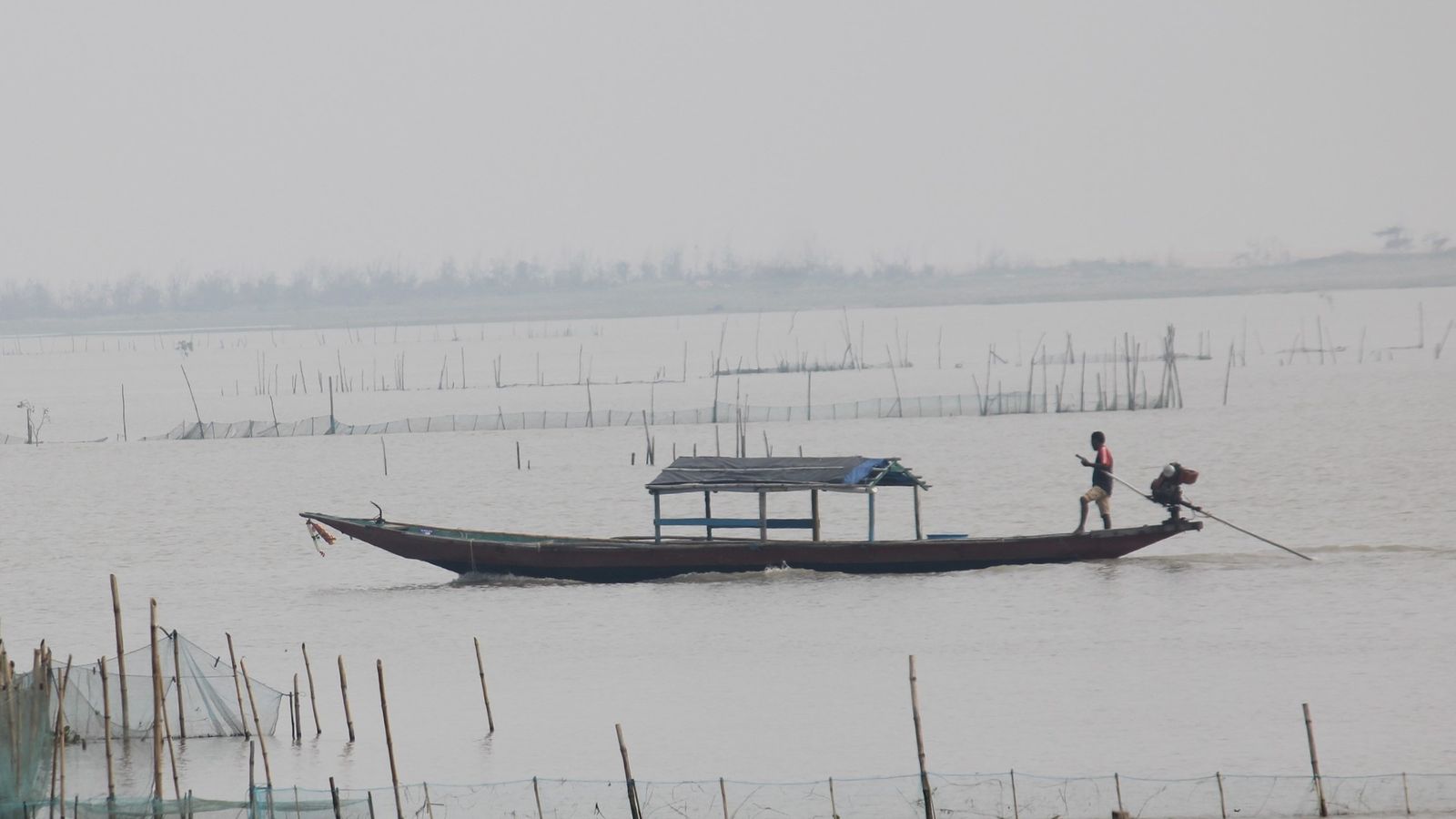
Photo: Phadke09, CC BY-SA 4.0 (cropped), via Wikimedia Commons

Chilika lagoon, on the Odisha coast, as the bird season begins.
Half sea, half river, and each winter more than a million birds call it home.
Water to the horizon
Chilika is a lagoon: shallow water on the Odisha coast, held back from the Bay of Bengal by a long bar of sand and joined to it by a narrow mouth. River water and sea water mix in it, so it is brackish, a little salty. It is Asia’s largest brackish-water lagoon, about 906 square kilometres in the dry months and 1,165 in the rains. Low islands rise from it, and in the south the rocky hills of the Eastern Ghats come down to the shore.
A lagoon that feeds people
Chilika is a working lake before it is a view. Around two lakh fisherfolk, some 200,000 people, live from its fish, prawns and crabs, and their small wooden boats go out at first light. On a tiny island stands the temple of Kalijai, a goddess of the lake. Fishermen bow to her before they set out, and boats carry pilgrims across, most of all at Makar Sankranti in January.
Birds and dolphins
Chilika is the largest wintering ground for migratory waterbirds on the Indian subcontinent. Ducks, waders and flamingos fly in from as far as the Caspian Sea, Lake Baikal and Central Asia. The first flocks arrive in October, and numbers peak from December to February. The January 2026 count recorded more than 11 lakh birds, about 1.1 million, of 196 species. Near Satapada, in the channel that leads to the sea, live Irrawaddy dolphins, grey, with a rounded head and no beak. The same winter’s census counted 159 in the lagoon. They surface briefly and rarely leap: a back and a small fin are what most people see.
Ways onto the water
Chilika has several doors. Satapada, on the eastern side about 50 kilometres from Puri, is the place for dolphins and the sea mouth. Barkul and Balugaon, on the western shore along the highway south of Bhubaneswar, are the jetties for Kalijai and the Nalabana bird sanctuary. Rambha, at the southern end, is the quietest, with rocky islands in its bay. Mangalajodi, on the northern edge about 75 kilometres from Bhubaneswar, is the place to see birds up close.
Mangalajodi and Nalabana
Mangalajodi is a village of marsh and reed beds on Chilika’s northern edge. Until the late 1990s many of its men shot and trapped birds for the market. A local conservation group persuaded them to stop, and with help from the Chilika Development Authority and the forest department, the former hunters became guides and boatmen. Today the village’s ecotourism trust runs the boats, and Odisha Tourism calls it one of India’s finest community-led conservation stories.
The boats at Mangalajodi have no engines. A boatman pushes a flat wooden boat through the channels with a long pole, so the birds stay close: ducks, godwits, sandpipers, avocets, and rarer birds such as the grey-headed lapwing. Go at first light, when the birds feed and the air is still.
Nalabana, an island of about 15.5 square kilometres in the middle of the lagoon, has been a bird sanctuary since 1987. Boats watch from outside its boundary pillars; landing needs permission from the wildlife division. The one regular exception is the National Chilika Bird Festival, held by Odisha Tourism in winter, when guided groups visit the island. Check the festival dates on the Odisha Tourism website.
How the lagoon was saved
On 1 October 1981, Chilika became one of India’s first two wetlands listed under the Ramsar Convention, the treaty that protects wetlands of international importance. Within a decade it was in trouble. Silt choked the channel to the sea, the mouth shifted north, the water turned fresher, weeds spread and the catch fell. In 1993 the lagoon was put on the Montreux Record, the Ramsar list of sites in danger.
The Government of Odisha set up the Chilika Development Authority in the early 1990s to restore it. On 23 September 2000 a new mouth was cut through the sand bar, shortening the channel to the sea by 18 kilometres. Salt water returned, and with it the fish, the prawns and the dolphins. In November 2002 Chilika was taken off the Montreux Record, the first site in Asia to be removed. The authority’s centre at Satapada explains the lagoon, its fishing and its birds, and is worth half an hour before the boat.
Satapada is an easy day from Puri, and Chilika fits well at the end of a trip along the Odisha coast. For the rest of the state, see the Odisha guide.
On the water
- Go early. The water is calmer, and the birds are busier.
- Agree the route and the length of the trip at the counter before you board.
- When dolphins surface, ask the boatman to cut the engine. Do not chase them.
- Wear the life jacket, and carry binoculars, a hat and water.
Out in the middle, the shores fade, and a line of birds crosses where the horizon should be.
Plan your visit
| Best time | November to February for migratory birds, at their peak from December to February; the first flocks arrive in October. Dolphins live in the lagoon all year. Mornings are calmer on the water. |
|---|---|
| Boats and timings | Boats leave in daylight from jetties at Satapada, Barkul, Rambha and Mangalajodi. OTDC, the state tourism corporation, runs boats at Barkul and Rambha; fares are per boat or per seat, posted at the counters, and change from season to season. Check locally. |
| How to reach | Satapada is about 50 km from Puri. Barkul is about 105 km, Rambha about 130 km and Mangalajodi about 75 km from Bhubaneswar, all along the highway south. Odisha Tourism runs day coach tours, 7 am to 7 pm, from Puri to Satapada (₹355 per head) and from Bhubaneswar to Barkul (₹465); boat tickets and entry fees are extra. As listed in October 2026. |
| Nearest airport and station | Biju Patnaik International Airport, Bhubaneswar. Puri station for Satapada; Balugaon (6 km) for Barkul; Rambha has its own station. |
| Where to stay | Barkul or Rambha, by the water; Satapada; village stays at Mangalajodi for early birding; or Puri, for a day trip to Satapada. |
| Time needed | Half a day for Satapada from Puri. A full day for Barkul and Kalijai. A dawn and a morning at Mangalajodi. |
| Rules | Nalabana is a sanctuary: boats stay outside its boundary, and landing needs permission. Do not feed or chase birds or dolphins. |
Questions people ask
Where can I see dolphins in Chilika?
At Satapada, in the outer channel near the sea mouth. The dolphins are Irrawaddy dolphins, shy and slow; usually only the head, back or tail shows. The January 2026 census counted 159 in the lagoon.
When is the best time to see birds at Chilika?
December to February, when the migrants are at their peak. The first flocks arrive in October, and the season runs to about March. Mangalajodi and the waters around Nalabana are the best places.
Can tourists enter Nalabana Bird Sanctuary?
Not as a rule. Boats watch from outside the boundary pillars, and landing needs permission from the wildlife division. Guided visits are part of the National Chilika Bird Festival in winter.
Is Chilika a lake or a lagoon?
A lagoon. It is joined to the Bay of Bengal by a narrow mouth, and its water is brackish, a mix of sea water and river water. Its official name is still Chilika Lake.
How far is Chilika from Puri?
Satapada, the nearest part of the lagoon, is about 50 km from Puri by road. Barkul and Rambha are reached from the Bhubaneswar side, more than 100 km from Puri.
Read next
Written by Muthu, editor of Aura of India. Sources: Chilika Development Authority: Chilika Lake, Chilika Development Authority: Satapada, Chilika Development Authority: Nalabana Island, Chilika Development Authority: Eco-restoration, Chilika Development Authority: How to reach, Odisha Tourism: National Chilika Bird Festival, Odisha Tourism: Chilika Lake Satapada day tour, Puri District Administration: Chilika (Satpada). Last verified: 14 October 2026.
Your turn: Did you go to Chilika for the birds or the dolphins, and which jetty did you set out from?
Comments
Post a Comment
Comments are always welcome, that will help us to motivate ourselves and improve our services. Thanks!!