Dalma of Odisha: How It’s Cooked and Where to Eat It
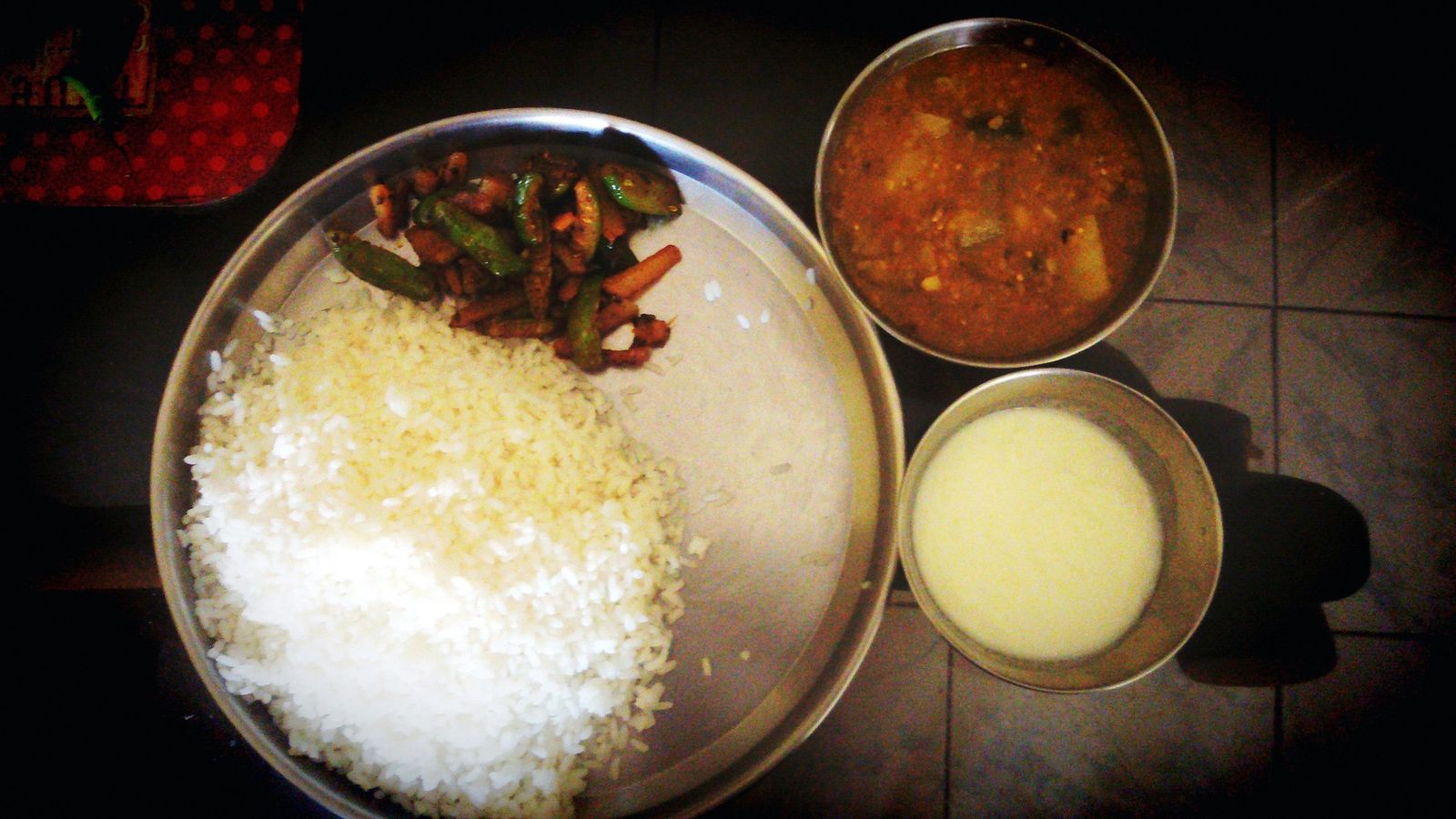
Photo: SoumyaSarangi, CC BY-SA 4.0 (cropped), via Wikimedia Commons

An everyday lunch in Odisha, served on a steel plate.
Dal and vegetables, cooked together until they agree.
A pot of dal and vegetables
Dalma is Odisha’s everyday dal. Split pigeon peas or yellow lentils are cooked with chunks of vegetables: raw papaya, green banana, pumpkin, aubergine, yam and drumstick. It is finished with a tempering of ghee and panch phoron, a five-spice mix of cumin, fennel, mustard, fenugreek and nigella seeds, then sprinkled with roasted cumin and red chilli powder. Some cooks add grated coconut. It is thick, mild and golden.
How it is eaten
Dalma is served with plain rice, never on its own. On the plate beside it you may find a fried vegetable called bhaja, a spoon of chutney, a little curd and a slice of lemon. It is lunch food, eaten at home, in office canteens and at roadside eating houses. Mix the dalma into the rice with your fingers, a little at a time.
Why it matters
Dalma is one of the dishes offered every day at the Jagannath temple in Puri. There it is cooked in clay pots over wood fires, without onion or garlic, and shared afterwards as mahaprasad, food blessed by the god. At home, it is the dish Odia families miss most when they live away. A good dalma is a test of a cook: the vegetables should hold their shape, and the dal should taste of them.
Where to try it
Bhubaneswar, Puri and Cuttack have many small restaurants that serve an Odia thali at lunch, with dalma on it. Look for places full of office workers between one and two. In Puri, the Ananda Bazar inside the temple sells mahaprasad, but only Hindus may enter. Outside the temple, any local eating house will serve dalma bhata, dalma and rice.
In the temple, at home and on the plate
In Puri, dalma is cooked in the temple kitchen, one of the largest in the world, in earthen pots over wood fires. It is offered to Jagannath and then shared as mahaprasad. Odisha Tourism describes the meal as one where thousands eat together as equals.
Home dalma changes with the season and the family. Some cooks add grated coconut or a spoon of ghee at the end; others leave it plain. Outside lunch, it turns up with chakuli pitha, a thin rice pancake, or with vada. Mangsa dalma, cooked with mutton, is a heavier cousin.
Dalma is rarely eaten alone. A plain Odia lunch puts a mound of rice in the middle, with dalma poured beside it, a dry vegetable or a saga of cooked greens, and one or two bhaja, slices of aubergine or potato fried crisp. A sweet-sour khatta, of tomato or raw mango, often comes last.
The dalma is the part that ties the plate together: thick enough to hold on the rice, mild enough to carry the fried and sour things around it. Eat with the right hand, mixing a little rice with dalma for each mouthful.
Making it at home
Boil split pigeon peas with turmeric and salt until soft. Add vegetables in chunks, the firmest first: raw papaya, green banana and yam, then pumpkin and aubergine. Cook until tender but whole.
For the tempering, heat ghee, add panch phoron, a dried red chilli and a bay leaf, and pour it over the pot. Finish with a pinch of roasted, ground cumin and chilli, and a little grated coconut. Serve hot with rice, as in Puri and across Odisha.
Before you eat
- Ask for dalma bhata. It is the plainest and best way to try it.
- Most plates are refilled free. Say so if you have had enough.
- Eat it hot. Dalma thickens as it cools.
- Try the temple-style version too. It is milder, with no onion or garlic.
A plate of dalma and rice will not photograph well. It will keep you going until evening.
Plan your visit
| Where to eat it | Odia eating houses and restaurants serving a lunchtime thali in Bhubaneswar, Puri and Cuttack. |
|---|---|
| Price guide | Inexpensive at local eating houses, where plates are often refilled. Prices vary; check the board. |
| When it is served | Mostly at lunch, with rice. Also with chakuli pitha or vada at breakfast. |
| Try it with | Plain rice, a bhaja (fried vegetable) and a squeeze of lemon. Finish with chhena poda, the baked cheese sweet. |
| Temple dalma | Mahaprasad is sold at the Ananda Bazaar inside the Jagannath temple in Puri, which admits Hindus only. |
Questions people ask
What is dalma made of?
Split pigeon peas cooked with vegetables such as raw papaya, green banana, pumpkin, aubergine and yam, finished with a ghee tempering of panch phoron and roasted cumin.
Is dalma vegetarian?
Yes, the usual dalma is vegetarian. It is tempered with ghee, so ask for oil if you eat vegan. Mangsa dalma, with mutton, is the exception.
What is panch phoron?
A mix of five whole seeds, usually cumin, fennel, mustard, fenugreek and nigella, fried in hot fat. It is used across Odisha and Bengal.
Can non-Hindus eat Puri mahaprasad?
The Ananda Bazaar, where mahaprasad is sold, is inside the temple, which admits Hindus only. Outside, many local eating houses serve dalma in the temple style.
Read next
Written by Muthu, editor of Aura of India. Sources: Odisha Tourism: Cuisine and Culinary Trails, Odisha Tourism: Konark Festival (dalma, chhena poda), Shree Jagannatha Temple Administration: Visitor Services. Last verified: 13 October 2026.
Your turn: Who makes the best dalma you have eaten, and which vegetables went into it?
Comments
Post a Comment
Comments are always welcome, that will help us to motivate ourselves and improve our services. Thanks!!