Dhokla and Chaas: Gujarat’s Steamed Snack and Spiced Buttermilk
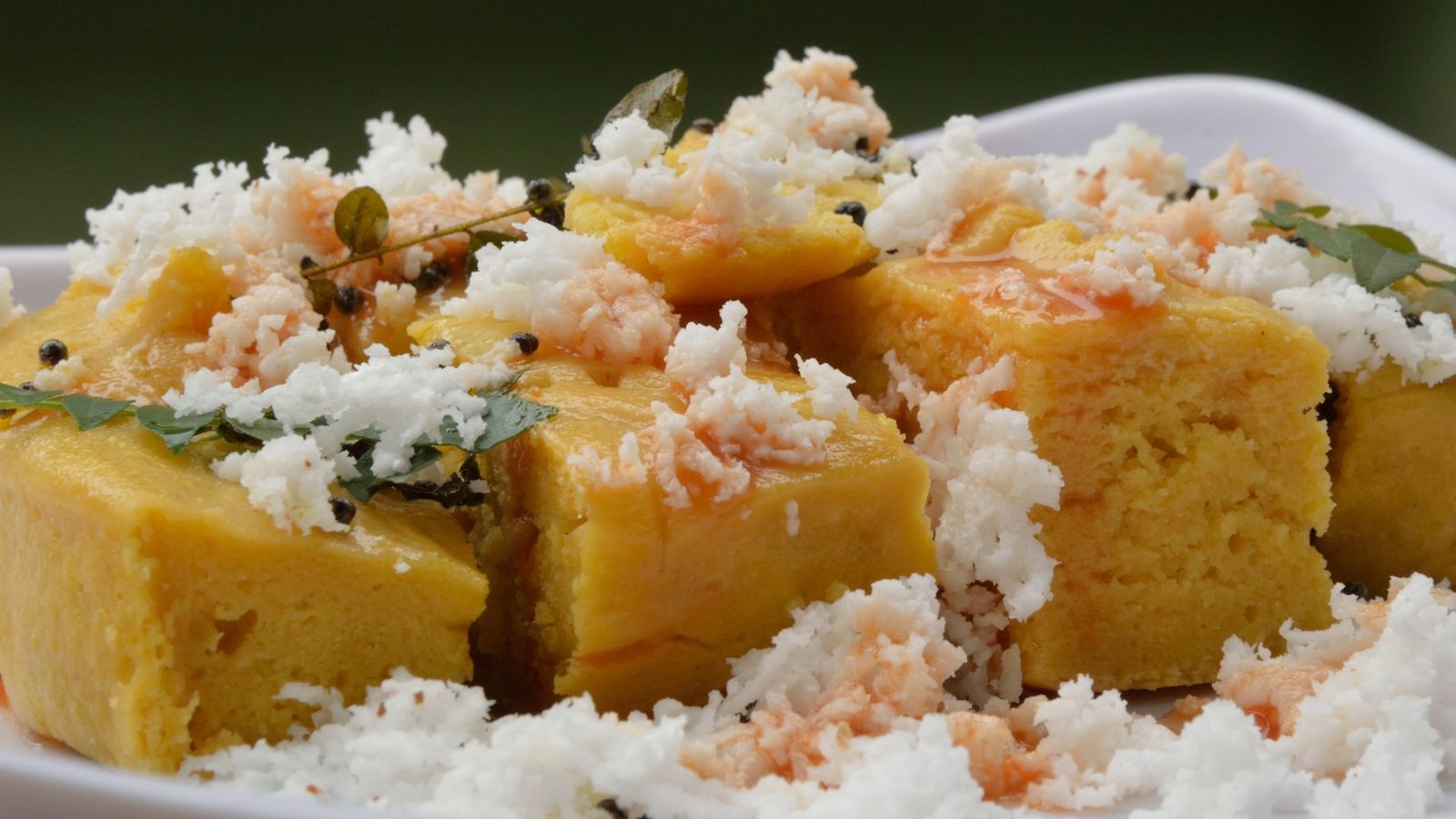
Photo: Biswarup Ganguly, CC BY 3.0 (cropped), via Wikimedia Commons

A farsan shop in Ahmedabad, mid-morning.
It should look light and taste a little sour.
A steamed yellow cake
Dhokla is a savoury cake from Gujarat, made from a fermented batter and steamed, not baked. The bright yellow, spongy version most people know is strictly called khaman, made from gram flour, which is ground chickpeas. Traditional dhokla uses rice and lentils and is paler. Either way it is cut into squares and finished with a tempering: hot oil with mustard seeds, curry leaves and green chilli poured over the top, then a little sugar water, fresh coriander and grated coconut.
How it is eaten
Dhokla is farsan, the Gujarati word for savoury snacks, eaten at breakfast, at tea, and on a thali, the big plate of many small dishes. It comes with a green chutney of coriander and a sweet one of tamarind. Beside it goes a glass of chaas, thin buttermilk churned with water, salt, roasted cumin and ginger. Chaas cools the body in Gujarat’s heat, and many people drink it with every meal.
Why people come for it
Gujarati food is mostly vegetarian and often sweet, sour and spicy at once, and farsan shops are part of every morning. For many Indians, dhokla was their first taste of Gujarat, and eating it fresh and still warm in Ahmedabad is reason enough to find a good shop. Visitors from abroad often find Gujarat the easiest state in India to eat well as a vegetarian.
Where to try it
Every neighbourhood in Ahmedabad has a farsan shop. The busiest open early and sell by weight. For a sit-down meal, order a Gujarati thali, which is usually unlimited: waiters keep refilling until you stop them. Manek Chowk’s night market has khaman and much else. Gujarat is a dry state, so chaas and lassi are what go with the food.
Dhokla, khaman and their cousins
Shops use the names loosely, but there is a difference. Traditional dhokla starts with rice and split chickpeas, soaked, ground and left overnight to ferment. The result is pale, close-grained and gently sour. Khaman is made from gram flour alone, raised quickly, and is softer, yellower and a little sweeter. Most of what is sold as dhokla is khaman.
The same counter holds the rest of the family. Khandvi is gram flour cooked with buttermilk, spread thin, rolled and tempered. Patra is a colocasia leaf spread with spiced gram-flour paste, rolled, steamed and sliced. Handvo is a thicker savoury cake of rice, lentils and vegetables, crisp at the edges. Gujarat Tourism lists all of these among the farsan, the snacks that sit beside a Gujarati meal.
How chaas is made
Chaas starts with curd, thinned with plenty of water and churned until it froths. It is seasoned with salt and roasted cumin, and often with ginger, green chilli and chopped coriander or mint. Some cooks add a tempering of mustard seed and curry leaves. It is thinner than lassi and never sweet.
At a thali it comes in a steel glass and is refilled with everything else. In Ahmedabad, after a morning in the pols, a plate from a farsan shop and a glass of chaas make the simplest lunch in Gujarat.
At the counter
- Buy by weight. A quarter kilo is plenty for two.
- Eat it the same day. It dries out by evening.
- At a thali, cover your plate with your hand when you have had enough.
- Try khandvi too: thin rolls of gram flour with the same tempering.
Soft, sour, a little sweet, and gone in four bites. The glass of chaas lasts longer.
Plan your visit
| Where to eat it | Farsan shops in every Ahmedabad neighbourhood, busiest in the morning; Gujarati thali restaurants at lunch and dinner; the Manek Chowk night market after dark. |
|---|---|
| Price guide | Inexpensive. Farsan is sold by weight and prices vary from shop to shop, so check the board. A thali costs more, but is usually unlimited. |
| When it is served | Breakfast and tea time from the farsan shops, freshest in the morning; as one of the farsan on a thali at lunch and dinner. |
| Try it with | Green coriander chutney, sweet tamarind chutney, a fried green chilli, and a glass of chaas. |
Questions people ask
What is the difference between dhokla and khaman?
Dhokla is made from a fermented rice and lentil batter and is pale and slightly sour. Khaman is made from gram flour, is bright yellow and spongier, and is what most shops sell as dhokla.
Is dhokla gluten-free?
The batter has no wheat, so it is usually gluten-free. But the asafoetida in the tempering is often blended with wheat flour, so ask if you need to be strict.
What is chaas?
Chaas is thin, savoury buttermilk: curd churned with water, salt and roasted cumin, often with ginger, chilli and coriander. It is drunk with meals across Gujarat, especially in the heat.
Is Gujarati food all vegetarian?
Mostly. Gujarat Tourism describes the state’s cooking as largely vegetarian, with meat dishes in Muslim communities such as the Bohras and Khojas. Gujarati thali restaurants are vegetarian.
Read next
Written by Muthu, editor of Aura of India. Sources: Gujarat Tourism: Gujarati Cuisine, Gujarat Tourism: Manek Chowk. Last verified: 13 October 2026.
Your turn: Where did you eat your best dhokla? Was it the pale fermented kind or yellow khaman?
Comments
Post a Comment
Comments are always welcome, that will help us to motivate ourselves and improve our services. Thanks!!