Gujarat Travel Guide: Where to Go, When to Visit, How to Reach
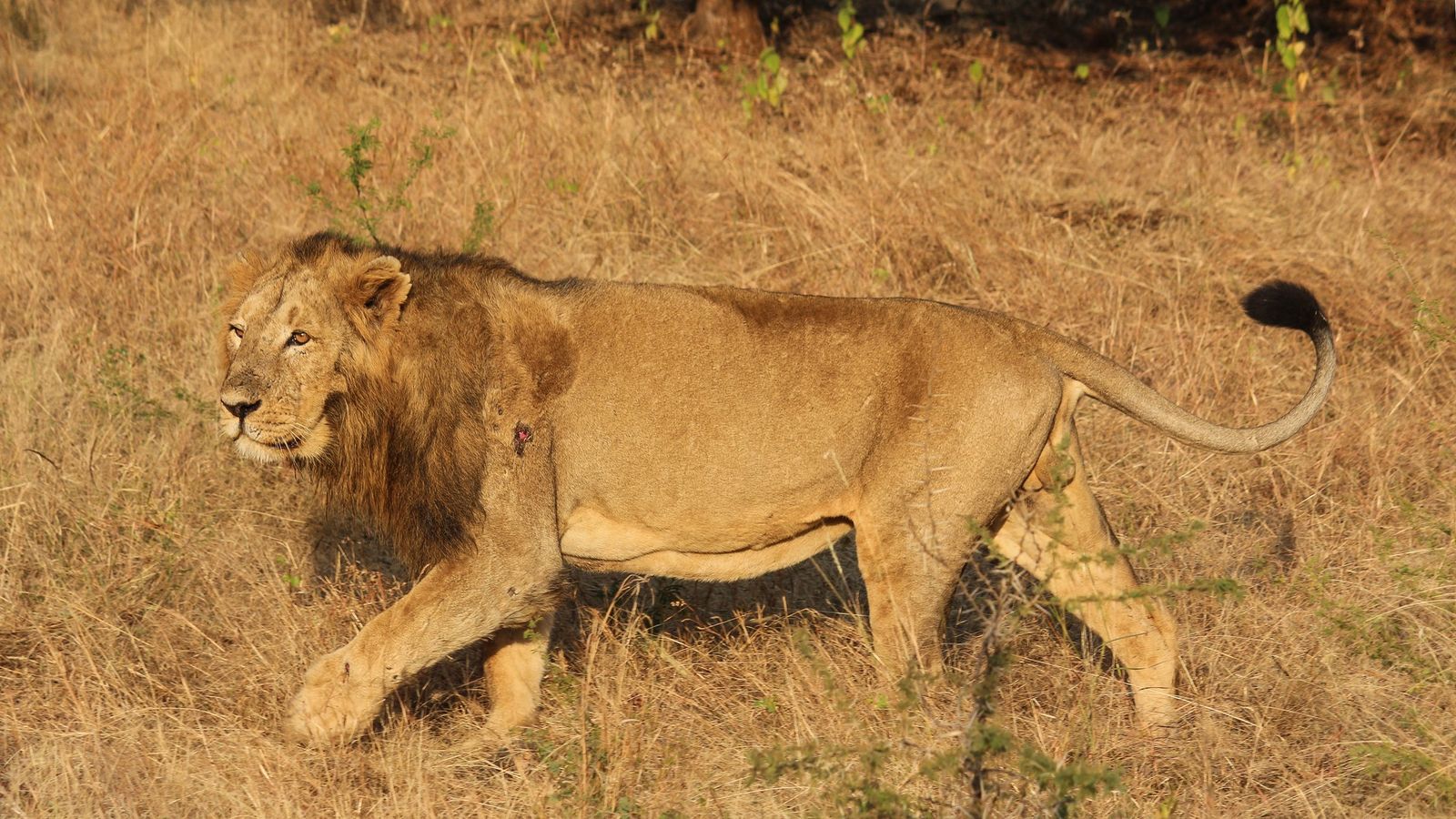
Photo: Bernard Gagnon, CC BY-SA 3.0 (cropped), via Wikimedia Commons

Gujarat is India's western edge: a long coast, a salt desert in the north-west and the dry forests of Saurashtra, where the Asiatic lion still lives in the wild. Travellers come for temples by the sea, carved stepwells, craft villages and festivals that run through the night. Distances are long, so most trips choose one region: Ahmedabad and the north, Kutch, or Saurashtra.
Salt, stone and lamplight, and the space to see them slowly.
Where to go
- Ahmedabad: the walled city's old pols, lanes of carved wooden houses in India's first UNESCO World Heritage City, and Gandhi's Sabarmati Ashram.
- The White Rann of Kutch: a flat sheet of salt near Dhordo that turns white after the monsoon dries out, best on a full-moon night in winter. See the Rann and the coast.
- Bhuj and the craft villages: the base for Kutch, with embroidery, block printing and bandhani, the tie-dye of the region, made in the villages around it.
- Dholavira: a Harappan city of stone reservoirs and streets on an island in the Great Rann, a UNESCO World Heritage Site since 2021.
- Gir National Park: dry teak forest around Sasan Gir and the only wild home of the Asiatic lion. Safaris run from mid-October to mid-June.
- Somnath and Dwarka: two old temple towns on the Saurashtra coast. Somnath faces the open sea; Dwarka is linked with Krishna.
- Patan and Modhera: Rani ki Vav, the finest of Gujarat's stepwells, and the Sun Temple at Modhera, a short drive apart.
- Champaner-Pavagadh: stone mosques and city walls below a pilgrimage hill near Vadodara, a UNESCO World Heritage Site.
- Junagadh and Palitana: Junagadh sits below the sacred Girnar; Palitana's Shatrunjaya hill is covered in Jain temples reached by a long stepped climb.
Main cities
Gandhinagar is the capital, a planned green city just north of Ahmedabad; most visitors go for the Akshardham temple. The other cities are bases for the regions around them.
- Ahmedabad: the old city on foot in the early morning, the riverfront, and food streets in the evening.
- Vadodara: the Laxmi Vilas Palace, large garba grounds at Navratri, and the base for Champaner.
- Surat: a textile and diamond city on the Tapi, known in Gujarat for its street food.
- Rajkot: the gateway to Saurashtra, and Gandhi's boyhood home, Kaba Gandhi no Delo.
- Bhuj: the old palaces of the Kutch rulers and the road north to the Rann.
- Jamnagar: Lakhota Lake, bandhani workshops and the road west to Dwarka.
- Bhavnagar: the base for Palitana and the Velavadar grasslands, home of the blackbuck.
Hill stations
Gujarat is mostly plain, desert and coast, and it has very few hill stations. Gujarat Tourism calls Saputara the state's only hill station. It sits at about 1,000 metres in the Sahyadri hills of Dang district, with a lake, sunrise from Gandhi Shikhar and thick forest that turns green in the monsoon.
Wilson Hills, near Dharampur in Valsad district, is a smaller forested ridge at about 750 metres beside the Pangarbari Wildlife Sanctuary, cooler than the coast in summer. Girnar, above Junagadh, is a sacred mountain rather than a resort: Hindu and Jain temples climb its slopes, and a ropeway from Bhavnath Taleti reaches the Ambaji temple in under ten minutes. Pavagadh is a pilgrimage hill, not a place to stay for the cool air.
For true hill weather, go to Mount Abu, just over the border in Rajasthan, or the Sahyadri hill towns of Maharashtra.
Festivals
- Uttarayan (mid-January, usually 14 January): the kite festival, when the roofs of Ahmedabad fill from dawn.
- Tarnetar Fair (August or September): a four-day rural fair at the Trinetreshwar temple in Surendranagar district, with folk dance and embroidered umbrellas.
- Navratri (September or October): nine nights of garba and dandiya raas. See a garba ground before it fills.
- Rann Utsav (November to early March): the winter festival and tent camp at Dhordo on the White Rann.
Festival dates follow the Hindu calendar and can shift by a day or more; check before you go.
Food to try
- Dhokla: a soft steamed cake of fermented gram flour, often eaten with a glass of chaas.
- Gujarati thali: a steel plate of dal, kadhi, vegetables, rotli and rice, sweet and sour at once.
- Undhiyu: a winter dish of mixed vegetables cooked slowly with spices, eaten around Uttarayan.
- Thepla: thin spiced flatbread with fenugreek leaves, the food Gujaratis carry on journeys.
- Fafda and jalebi: crisp gram-flour strips with hot syrupy jalebi, a weekend breakfast.
- Dabeli: a Kutchi bun filled with spiced potato, pomegranate and roasted peanuts.
Stories from Gujarat
- Ahmedabad Pols: Heritage Walk, Sabarmati Ashram and Old City
- Dhokla and Chaas: Gujarat’s Steamed Snack and Spiced Buttermilk
- Rani ki Vav and Adalaj: Gujarat’s Stepwells and How to Visit
- Gujarat Road Trip: From the Rann of Kutch to the Saurashtra Coast
- Somnath Temple: Aarti Timings, Rules and How to Get There
- Bandhani of Kutch: How It’s Made and Where to Buy
- Garba in Gujarat for Navratri 2026: Where and How to Join
- Gujarat Temples: Somnath, Dwarka, Modhera and How to Visit
- Gujarat Hill Stations: Saputara, Don, Wilson Hills and Girnar
- Cities in Gujarat: Ahmedabad, Vadodara, Surat and More to Visit
Plan your visit
| Best season | October to March is cool and dry. The White Rann is at its best from November to February; Gir is open from 16 October to 15 June. April to June is very hot. The monsoon (July to September) is the time for Saputara, when the hills turn green. |
|---|---|
| How to reach | Fly into Sardar Vallabhbhai Patel International Airport, Ahmedabad; there are also airports at Surat, Vadodara, Rajkot (Hirasar) and Bhuj. The main railway stations are Ahmedabad Junction, Vadodara Junction, Surat and Rajkot Junction, with trains on to Bhuj, Junagadh and Veraval. |
| Getting around | Trains link the main cities, and state buses (GSRTC) reach most towns. For Kutch and Saurashtra a car with a driver saves time, as the sights are far apart. Ahmedabad has a metro and auto-rickshaws. |
| Where to stay | Ahmedabad near the old city or the Sabarmati riverfront; Bhuj, or the tented camps around Dhordo, for Kutch; Sasan Gir for the lions; Somnath, Dwarka and Junagadh along the Saurashtra coast; Saputara town for the hills. |
| How long to spend | Three or four days for one region. Seven to ten days for Ahmedabad, Kutch and Saurashtra together. |
| Permits | Every visitor to the White Rann at Dhordo needs an entry permit, booked on the Kutch district portal (rannpermit.gujarat.gov.in) or at the Bhirandiyara check post. Gir safari permits are sold only online at girlion.gujarat.gov.in, opening three months ahead. Gujarat is a dry state: visitors from outside can apply for a liquor permit on the state e-permit portal (eps.gujarat.gov.in). Check fees and rules before you go. |
Questions people ask
What is the best time to visit Gujarat?
October to March, when the days are mild. Plan Kutch for November to February, when the White Rann is dry and the Rann Utsav is on.
How many days do I need for Gujarat?
Seven to ten days covers Ahmedabad, Kutch and the Saurashtra coast with Gir. With three or four days, choose one region.
Do I need a permit to visit the White Rann of Kutch?
Yes. Every visitor, Indian or foreign, needs an entry permit for the White Rann near Dhordo. Book it online on the official Kutch portal or get it at the Bhirandiyara check post on the road from Bhuj.
Is Gir National Park open in the monsoon?
No. The Gir Jungle Safari is closed from 16 June to 15 October every year. Book permits on the official site, girlion.gujarat.gov.in, up to three months ahead.
How do I reach the Rann of Kutch?
Fly or take a train to Bhuj, then drive about 85 km north to Dhordo, roughly one and a half to two hours by road.
Written by Muthu, editor of Aura of India. Sources: Gujarat Tourism: Saputara, Gujarat Tourism: Great Rann of Kutch, Gir Jungle Safari: timings and permit charges, Gujarat Forest Department. Last verified: 13 October 2026.
Your turn: Did you see the White Rann under a full moon, or in daylight? Which would you choose again?
Comments
Post a Comment
Comments are always welcome, that will help us to motivate ourselves and improve our services. Thanks!!