Gateway of India, Mumbai: Elephanta Ferry, Timings and History
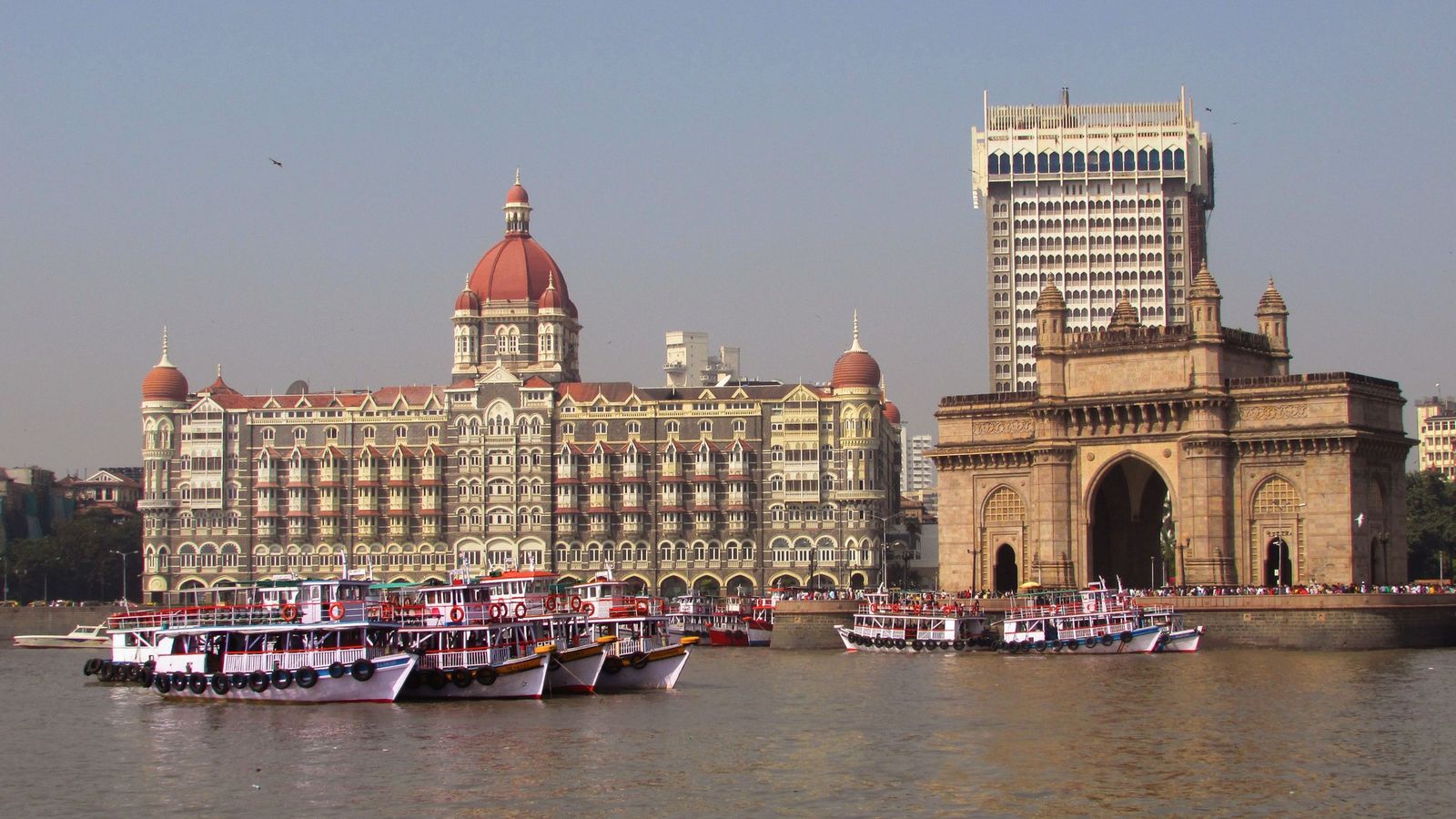
Photo: Yamini vijay lawhate, CC BY-SA 4.0 (cropped), via Wikimedia Commons

The Gateway of India and Mumbai harbour, early morning.
The stone arch is the ceremony; the harbour behind it is the work.
An arch at the edge of the island
The Gateway of India stands on Apollo Bunder, near the southern tip of the island city. It is an arch of yellow basalt, 26 metres high, in the Indo-Saracenic style, a mix of Indian, Islamic and European forms. Its carving borrows from the buildings of sixteenth-century Gujarat. In front is a paved plaza and an equestrian statue of Chhatrapati Shivaji Maharaj. Beside it rises the Taj Mahal Palace hotel. Behind the arch, the harbour is full of wooden ferries and small boats and, further out, the grey shapes of naval ships.
A place to catch a boat
The Gateway is a monument, but most people on the sea wall are waiting for a boat. Five jetties here serve ferries to Elephanta Island, to Mandwa on the mainland for Alibag, and short rides around the harbour. Since a ferry accident in December 2024, every passenger must wear a life jacket on boats leaving from here. On the plaza, families sit along the wall and watch the boats.
Built for an arrival
King George V and Queen Mary landed at Apollo Bunder in December 1911. He was the first British monarch to visit India. The permanent arch, by the architect George Wittet, took longer. His design was approved in 1914, land was reclaimed from the sea, and the Gateway opened on 4 December 1924. In February 1948 the last British troops to leave India marched out through it. The arch built to welcome an empire became the door it left by.
How to get there
The Gateway is in Colaba, in South Mumbai. Churchgate and Chhatrapati Shivaji Maharaj Terminus (CSMT) stations are each about two kilometres away, a short taxi ride or a half-hour walk through the old Fort area. Come early. Morning light comes off the water and the plaza is quiet. By evening it is a crowd.
Across the water to Elephanta
Elephanta, called Gharapuri by its own people, is an island about ten kilometres out in the harbour. The ferry from the Gateway takes about an hour. The Portuguese named the island after a large stone elephant they found near the shore; the elephant now stands in Jijamata Udyan, the city’s zoo garden at Byculla. From the jetty, a toy train or a path leads to a long flight of steps up to the caves.
There are seven caves. The great Cave 1 is a Shiva temple cut into the basalt hill, its hall held up by rows of carved pillars. Facing the entrance is the Sadashiva, a bust about seven metres high that shows three faces of Shiva: fierce, calm and gentle. Around the walls are large panels of Shiva dancing, of Shiva’s marriage to Parvati, and of Ravana shaking Mount Kailasa. UNESCO dates the caves to about the fifth and sixth centuries and listed them as a World Heritage Site in 1987. The Archaeological Survey of India looks after them.
The caves are closed on Mondays. Take an early boat, wear shoes with grip and carry water. When you land, check the time of the last boat back.
Colaba and Sassoon Dock
Colaba Causeway runs south from the Gateway area, past cafés and pavement stalls. Near its far end is Sassoon Dock, opened in 1875 by the trading house of David Sassoon. It was Bombay’s first wet dock, an enclosed basin with gates that keep the water in at low tide. It was built for trade; today it is a fishing harbour owned by the Mumbai Port Authority, and one of the few working docks in the city open to the public.
Boats come in before dawn, and the catch is landed, sorted and auctioned in the early hours. Many of the people at work are Kolis, the fishing community that lived on Bombay’s islands long before the city. Go early, wear closed shoes and keep clear of the carts. Photography in port areas is restricted, so ask before taking pictures, of people above all. During the monsoon fishing ban, which in 2026 ran from June to the middle of August, the mechanised boats stay in harbour.
See also the Maharashtra guide, and the Mumbai local, the trains that bring most people to South Mumbai.
Along the waterfront
- Gateway of India: the arch and its plaza, open all day.
- Apollo Bunder jetties: ferries to Elephanta and Mandwa, and harbour rides.
- Elephanta Caves: rock-cut Shiva temples, an hour away by boat. Closed on Mondays.
- Colaba Causeway: the long street of shops, cafés and stalls a few minutes inland.
- Sassoon Dock: Mumbai’s old fishing harbour at the end of Colaba, busiest at dawn.
Stand to one side of the arch, and the picture is not the stone but the boats going out behind it.
Plan your visit
| Entry fee | No ticket for the Gateway plaza. Elephanta Caves (ASI): ₹40 for Indian, SAARC and BIMSTEC visitors (₹35 online), ₹600 for other foreign visitors (₹550 online); children under 15 free. Ferry fares are separate; check at the counter. As of October 2026. |
|---|---|
| Opening hours | The Gateway plaza is open all day. Elephanta Caves 9 am to 5 pm, closed on Mondays. Outbound ferries run from morning to early afternoon; confirm the last return boat at the jetty. |
| Best time | November to February for the crossing. Early morning at the Gateway for soft light and space. The sea is rough in the monsoon, from June to September. |
| How to reach | Churchgate or CSMT station, then a short taxi ride or a half-hour walk. Elephanta ferries leave from the jetties beside the Gateway; buy tickets at the counters on the waterfront. Life jackets are compulsory on board. |
| Where to stay | Colaba, Fort and the streets around Churchgate. |
| Time needed | An hour for the Gateway and the waterfront. Half a day for Elephanta, including about an hour each way by boat. Sassoon Dock is a dawn visit of an hour or so. |
Open Gateway of India, Apollo Bunder, Colaba, Mumbai in Google Maps
Questions people ask
Are the Elephanta Caves open on Monday?
No. The Archaeological Survey of India lists the caves as open from 9 am to 5 pm and closed on Mondays. Plan the crossing for any day from Tuesday to Sunday.
How long is the ferry from the Gateway of India to Elephanta?
About an hour each way. Boats leave from the jetties beside the Gateway, and every passenger must wear a life jacket. Allow half a day for the whole trip.
Is there an entry fee for the Gateway of India?
There is no ticket for the Gateway and its plaza. The Elephanta Caves charge ₹40 for Indian, SAARC and BIMSTEC visitors and ₹600 for other foreign visitors, less online, as of October 2026. Ferry tickets are extra.
Can visitors go to Sassoon Dock?
Yes. The Mumbai Port Authority, which owns the dock, notes that it is open to the public. Go at dawn, keep out of the way of the work, and ask before taking photographs.
Read next
Written by Muthu, editor of Aura of India. Sources: Archaeological Survey of India: Elephanta Caves (hours and fees), UNESCO World Heritage Centre: Elephanta Caves, Department of Tourism Maharashtra: Elephanta, Incredible India: The Gateway of India, Maharashtra State Gazetteers, Greater Bombay District: Places (Gateway of India), Mumbai Port Authority: History (Sassoon Dock, 1875), Mumbai Port Authority: Clarification on Sassoon Dock issues. Last verified: 14 October 2026.
Your turn: Did you take the boat to Elephanta from the Gateway, and which panel in Cave 1 held you longest?
Comments
Post a Comment
Comments are always welcome, that will help us to motivate ourselves and improve our services. Thanks!!