Annakut and Govardhan Puja 2026: Temple Food Offerings
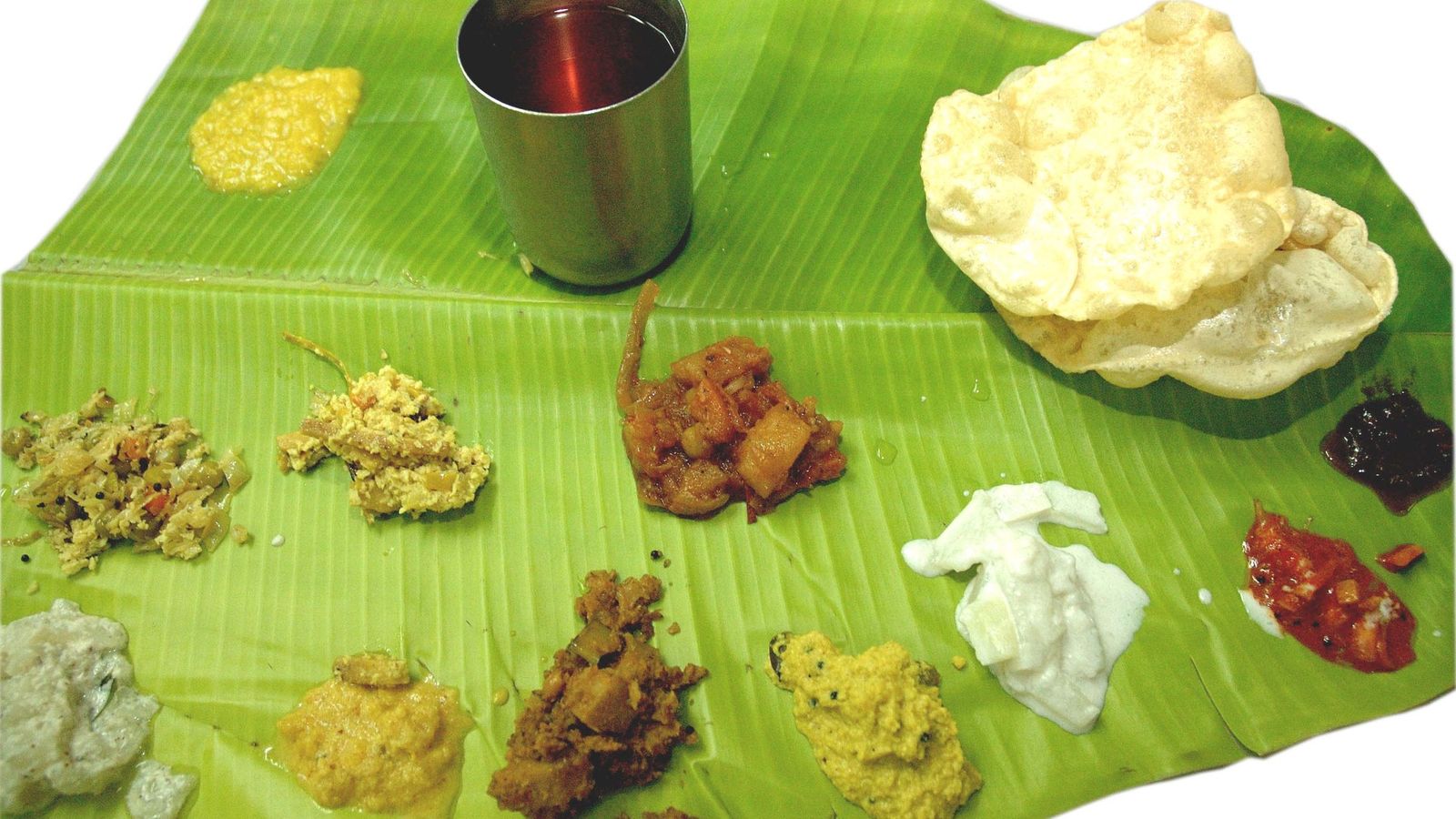
Photo: George Augustine, CC BY 2.0 (cropped), via Wikimedia Commons

Temple steps the morning after Diwali, plates of food built into a low mountain.
The day after the lamps is for a hill of cooked food set before the deity.
A mountain on the floor
Annakut means a heap of grain or food. On Govardhan Puja — widely kept on 9 November 2026, the day after Diwali’s main night, though some panchangs place the pratipada rites on 10 November — temples and homes arrange vegetarian dishes in tiers. Rice often forms the centre; around it sit dals, breads, vegetables without onion or garlic, sweets, fruit and milk sweets. In the fullest form the offering is called chhappan bhog, fifty-six dishes, recalling the story of Krishna holding up Govardhan hill. Regional calendars can shift the date by a day; check the temple notice where you go.
From the step you see brass plates, banana leaves and the crowd waiting for prasad after the offering. The focus is the food mountain and the queue, not a close stare at the image in the sanctum.
How visitors behave
Arrive in the morning if the temple opens early for Annakut; some large Vaishnava temples keep the display through the day. Join the line, keep shoes in the rack, and do not reach across the offering for a photograph. When prasad is distributed, take a modest share and move aside. Many places ask for a quiet donation toward the feast; follow the board, not a tout at the gate.
In Braj — Mathura, Vrindavan and the villages around Govardhan — the day is especially full. In Gujarat the same morning often marks the new year and large Annakut displays in Swaminarayan and other temples. Elsewhere a neighbourhood Krishna temple may set a smaller hill that still fills the courtyard.
Why the food hill
The story told with the day is of Krishna sheltering the cowherds under Govardhan when Indra sent a storm. The hill of food stands in for the hill itself: gratitude for land, cattle and the harvest that feeds a house. Govardhan Puja and Annakut are two names for the same observance in many places; Bali Pratipada or Padwa may be the name used the same morning in parts of the west and south.
Diwali’s lamps are the night before. This morning is slower, heavier with cooking smells, and built around sharing what has been offered.
Where to see it
Any city with an active Krishna or Swaminarayan temple will post Annakut hours on the noticeboard or social feed in the week before. In the north, ISKCON centres and older Vaishnava temples are reliable. In Gujarat, the large temple Annakuts are public draws. If you are in Agra or Mathura on a wider Uttar Pradesh trip, the Braj temples are the natural stop — see also the Uttar Pradesh guide for the wider state. Carry water, expect queues, and eat only what is given as prasad if you have a sensitive stomach.
Why the date can move
Govardhan Puja follows the pratipada after Diwali’s amavasya. Civil calendars often print Monday, 9 November 2026; some panchangs place the morning rites on Tuesday, 10 November when the tithi is current at sunrise. Temples post their own Annakut time — trust the notice at the gate.
Bali Pratipada, Padwa and the Gujarati new year can fall on the same morning under other names. The shared sight is the food hill and the prasad line.
Large temple Annakuts
Swaminarayan, ISKCON and older Vaishnava temples may display hundreds of dishes. Arrive when doors open if you want to see the hill intact before distribution. In Braj the day is especially crowded; combine only with a calm travel plan.
Do not treat the offering as a tasting buffet. Take prasad when it is given, then step aside.
At the temple step
- Timing: morning for most home and temple pujas; confirm 9 or 10 November locally.
- Dress: shoulders and knees covered; easy shoes for the rack.
- Photography: the plates and the queue from a distance; not the inner image as a close portrait.
- Prasad: accept what is offered; do not demand a full fifty-six tasting plate.
- Children: hold hands in the crush; the brass and the hot trays are not toys.
When the hill has been shared out, only banana leaves and empty plates mark where it stood.
Plan your visit
| 2026 dates | Widely 9 November 2026 (day after Diwali 8 November); some calendars use 10 November. Regional calendars can shift a day — check the temple. |
|---|---|
| Where to see it | Krishna, Swaminarayan and ISKCON temples; especially full in Mathura–Vrindavan and in Gujarat temple towns. |
| What to wear and bring | Modest dress, slip-off shoes, water, small notes for a donation box if you wish. |
| Best hours | Morning for most Annakut displays; some large temples keep the offering through the day. |
| Getting there | Local to whichever city you are in; for Braj, plan Mathura/Vrindavan transport separately from a rushed Agra Taj-only day. |
Questions people ask
When is Annakut / Govardhan Puja in 2026?
Often kept on 9 November 2026, the day after Diwali; some panchangs place it on 10 November. Confirm with your temple or local almanac.
What is chhappan bhog?
A traditional set of fifty-six vegetarian dishes offered as the fullest form of Annakut. Smaller temples and homes offer fewer dishes.
Can visitors eat the Annakut food?
After the offering, temples distribute prasad. Take a modest share from the line; do not help yourself from the display.
Is Annakut only in North India?
It is especially associated with Braj and with Vaishnava temples nationwide, including large displays in Gujarat. Local names for the same morning can differ.
Read next
Written by Muthu, editor of Aura of India. Sources: Office Holidays: Govardhan Puja 2026 in India, timeanddate: Diwali/Deepavali 2026 in India, Incredible India: Diwali (five-day framing). Last verified: 22 October 2026.
Your turn: Have you seen an Annakut hill in a temple courtyard, and how many dishes did they manage?
Comments
Post a Comment
Comments are always welcome, that will help us to motivate ourselves and improve our services. Thanks!!