Diwali Sweets Counter: Laddoos, Kaju Katli and How to Buy
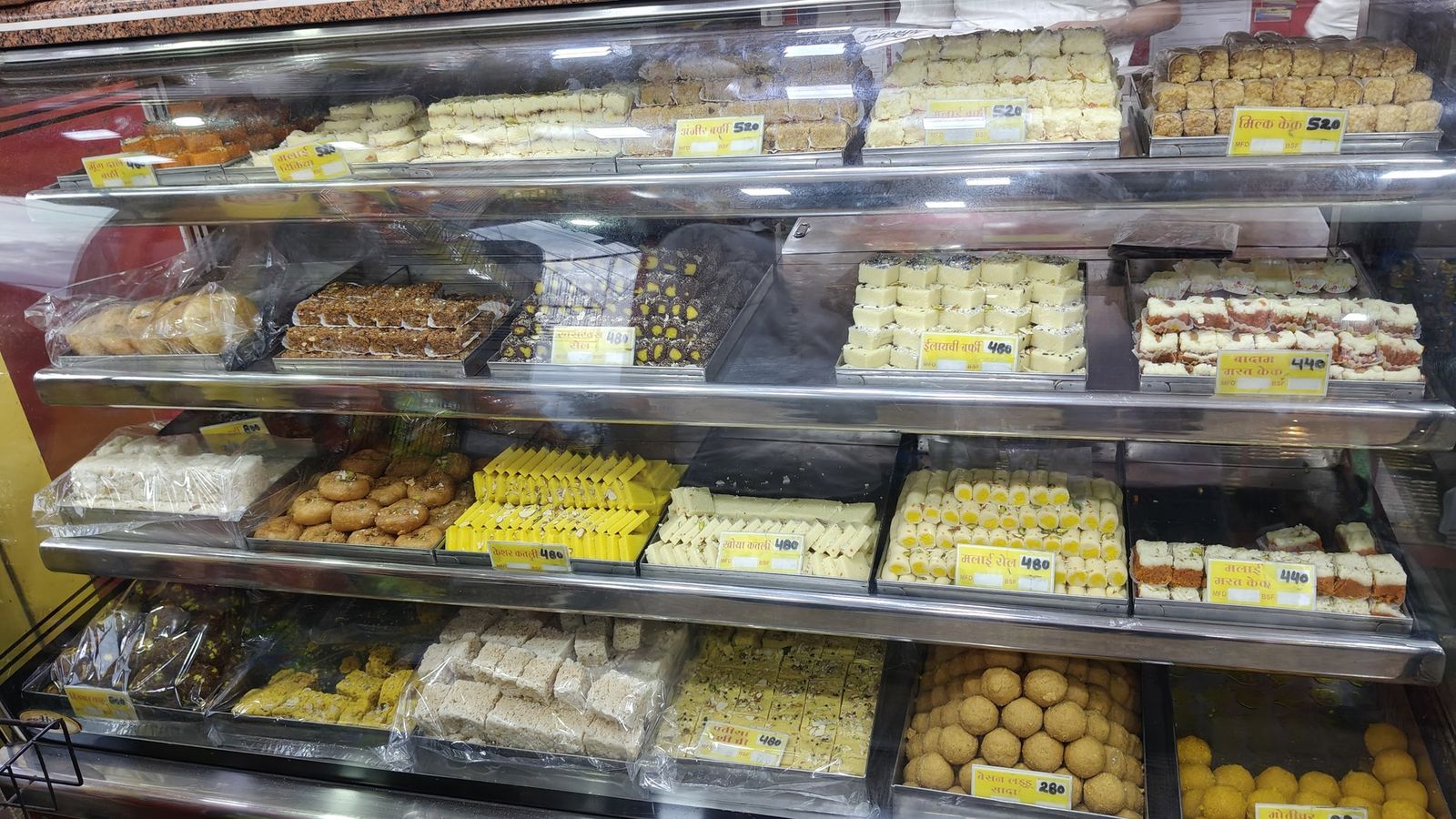
Photo: Anushka10patel, CC BY-SA 4.0 (cropped), via Wikimedia Commons

A mithai counter on Diwali morning, trays already half empty by nine.
The festival morning is measured in boxes of laddoo and kaju katli, not in another essay about lamps.
Trays under glass
By Diwali morning — 8 November 2026 in much of India; regional calendars can shift a day — the sweet shop is a working counter, not a showroom. Behind the glass sit laddoos stacked in pyramids, sheets of kaju katli cut into diamonds, barfi in pale slabs, soan papdi in crumbling blocks, and regional specials that change with the city: jalebi still hot in the north, mysore pak in the south, sandesh and pantua where Bengali kitchens set the tone.
People come with lists and empty boxes. The staff weigh, pack and tie with practised speed. The air is sugar, ghee and cardboard. This is the food half of the festival: gifts to carry, prasad to take home, and something sweet after the night’s lamps.
How the rush works
Serious buyers order days ahead. Walk-in customers take what is left and pay for freshness over choice. Ask for the day’s batch, not yesterday’s tray under the heat lamp. A mixed box is safer than five kilos of one item that will stale. If you are gifting, write names on the lids before you leave the shop; Diwali queues do not wait while you sort parcels on the pavement.
Prices rise in the festival week. Pay by weight, check the bill, and do not let anyone add “special packing” you did not ask for. Vegetarian shops will say so; if you need Jain or no-onion sweets, ask before they pack.
Why sweets travel
Sharing mithai at Diwali is older than any single recipe. Sugar and ghee keep well enough to move between houses; a sealed box is a portable blessing. Laddoos and barfi became the common language of the counter because they pack tight and look generous when the lid opens. Kaju katli — thin cashew sheets — signals a slightly dearer gift without needing explanation.
Each region keeps its own list. What matters on the morning is not collecting every name, but buying enough for the visits you will actually make, and eating the rest while it is still soft.
Where to stand in the queue
Neighbourhood sweet shops open early on the main day; mall counters open later and sell the same brands at a quieter pace. In large cities, old family shops in the bazaar still draw the longest lines — Chandni Chowk in Delhi, T. Nagar and Mylapore in Chennai, the lanes off Chowringhee and Gariahat in Kolkata, the old city counters of Lucknow and Jaipur. Go at opening if you need a large order; go mid-morning if you only need a small box. Carry cash and a UPI app; networks fail when the shop is full.
Reading the tray
Dry sweets (kaju katli, many barfis, soan papdi) travel better than milk-based pieces. If you are moving between cities the same day, choose the dry tray. If the gift will be opened that evening, soft laddoos and hot jalebi are fine.
Ask whether the shop uses vanaspati or ghee if that matters to you. Festival weeks bring more packaged brand boxes; a neighbourhood counter’s fresh tray is still the better gift when the queue is moving.
After you buy
Keep boxes out of direct sun. Refrigerate milk sweets the same day. Label gifts before you leave the shop. On 8 November 2026 many counters close once trays empty — do not plan a late-afternoon shop for a long list.
This post is the food morning; the terrace lamps piece covers the night without repeating the same essay.
Buying without waste
- Order ahead for big gifts; use the morning queue for last small boxes only.
- Choose by keep-time: kaju katli and dry barfi travel; milk sweets need a fridge the same day.
- One good box beats three mediocre ones that will be thrown away on Tuesday.
- Ask the price per kilo before they pack; festival mark-ups should still be on the board.
- Label gifts at the counter so you are not opening boxes in the car to remember who gets what.
By noon the trays show cardboard at the corners, and the next customer is already pointing at what is left.
Plan your visit
| When | Diwali morning 8 November 2026 in much of India; regional calendars can shift a day. Order large boxes earlier in the week. |
|---|---|
| Where to eat / buy | Neighbourhood mithai shops at opening; old bazaar counters in large cities; mall brand outlets for quieter, pricier packing. |
| Price guide | Festival rates vary by city and nut prices. Ask the rate per kilo before packing; expect a mark-up on the main morning. |
| Try it with | A small savoury (namak pare, mathri) if the shop sells both; plain water after rich milk sweets. |
| What to avoid | Buying more than you will gift or eat in two days; unmarked roadside piles without a bill. |
Questions people ask
What sweets are typically bought for Diwali?
Laddoos, kaju katli, barfi, soan papdi and regional specials. Dry sweets travel better; milk sweets need same-day cool storage.
Should I order Diwali mithai in advance?
Yes for large gifts. Use the morning queue for small last boxes only — popular trays empty by midday.
How do I avoid wasting sweets?
Buy for the visits you will actually make, choose dry items for travel, and label boxes at the counter.
Is Diwali morning a good time to try a new shop?
Only if you arrive at opening. For a first visit to a famous counter, go a day or two before the main date.
Read next
Written by Muthu, editor of Aura of India. Sources: timeanddate: Diwali/Deepavali 2026 in India, Incredible India: Diwali. Last verified: 22 October 2026.
Your turn: Which sweet always goes in your Diwali box first — laddoo, kaju katli, or something regional?
Comments
Post a Comment
Comments are always welcome, that will help us to motivate ourselves and improve our services. Thanks!!