Kochi Harbour: Fort Kochi Shore, Ferry and Chinese Nets
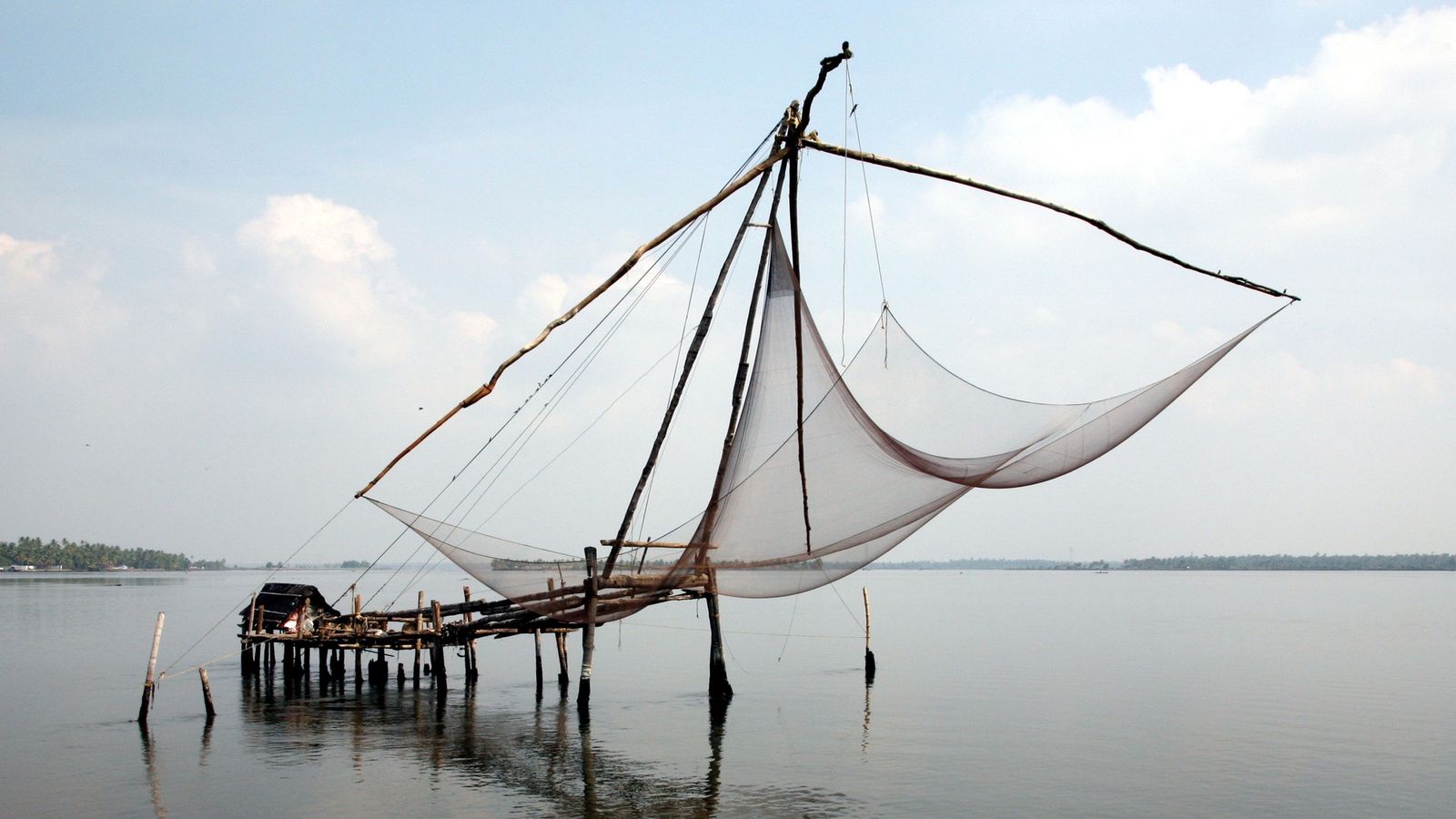
Photo: Hans A. Rosbach, CC BY-SA 3.0 (cropped), via Wikimedia Commons

Fort Kochi shore, late afternoon, as the ferry from Ernakulam cuts across the harbour.
The nets are not a postcard first; they are a working edge of a working harbour.
Light on the water, then the shore
From the Ernakulam side the harbour looks wide and flat. Container cranes stand on Willingdon Island. Tankers and fishing boats share the same water. On the Fort Kochi bank the Chinese fishing nets, cheena vala in Malayalam, rise in a line along Vasco da Gama Square: teak and bamboo cantilevers about ten metres high, each holding a square net that drops into the shallows. Kerala Tourism places their arrival on this shore between about 1350 and 1450. Counterweight stones hang on ropes. When a crew of four or more walks the plank, the net goes down; when they pull, the stones swing and the catch comes up, often small, sold on the spot.
How the city uses the water
Locals treat the shore as a promenade and a workplace at once. Morning and early evening are the usual fishing hours. Walkers stop to watch a raise, buy fried fish or tender coconut, then move on. The short passenger ferry from Ernakulam’s Customs or Main Jetty to Fort Kochi Jetty is still the cleanest way onto this peninsula: a few rupees, about fifteen to twenty-five minutes, services through the day into the evening. From the Fort Kochi jetty it is a short walk along the water to the first nets. The road route via Willingdon Island is longer and often stuck; the ferry is how the harbour itself becomes the approach.
A harbour before it was a silhouette
Kochi was a spice port long before the nets became the city’s signature photograph. Arabs, Chinese, Portuguese, Dutch and British all used this anchorage. The nets survive because crews still work them, not because a boardwalk invented them. Tourists are asked for money to stand on a platform and help pull; settle the amount at the foot of the steps, not at the top, and remember that watching from the walkway costs nothing. The point of coming is to see the harbour as a place that still earns its keep: salt air, boat traffic, the slow rhythm of a raise, and the mainland lights coming on across the water.
Getting there
Cochin International Airport is about 40 km from Fort Kochi by road. Ernakulam Junction and Ernakulam Town stations serve the mainland. From Marine Drive or the metro near Maharaja’s College, walk or take a short auto to the ferry jetty rather than fighting the road to Fort Kochi. November to February is the driest stretch; mornings are clearer for photography, evenings better for the silhouette. For the wider state map, see the Kerala guide; this story stays on the harbour, not the backwaters.
Reading a net raise
Stand behind the platform, not on the ropes. The net drops for only a few minutes. When the crew walks the beam, the counterweight stones lift and the frame leans toward the water; when they haul, the stones drop and the net comes up streaming. Kerala Tourism notes lights hung above some nets at night to draw fish. A small catch is normal. The sale at the adjoining stalls is part of the same economy as the raise.
If a crew invites visitors onto the platform, agree the tip or fee before climbing. Watching from Vasco da Gama Square needs no payment. Leave space for people carrying fish baskets.
Harbour, not backwaters
The Ernakulam–Fort Kochi ferry crosses a working harbour with ship channels and island wharves. It is not an Alappuzha houseboat afternoon. Keep bags closed against spray, hold the rail when the boat bumps the jetty, and follow the queue for tickets rather than boarding without one.
Mattancherry and the synagogue sit further along the same peninsula if a second stop fits. For canals and village ferries inland, use the separate backwaters story and the Kerala guide; this post stays with salt water and cargo light.
Before you go
- Ferry first: Customs Jetty (Ernakulam) to Fort Kochi; do not confuse it with the Mattancherry boats from other jetties.
- Watch free: the promenade is enough; platform “help” is optional and priced.
- Ask before photos: crews are working; step aside when a net is moving.
- Stay on shore: this is not a swimming beach; keep clear of ropes and counterweights.
- Combine lightly: St Francis Church and the Parade Ground sit a short walk inland if time remains.
When the last net hangs empty against the dusk, the harbour still moves: a ferry wake, a crane light, the smell of fried fish on the wind.
Plan your visit
| Best season | November to February for clearer evenings. Mornings and late afternoons for active nets. |
|---|---|
| Entry | Shore and promenade free. Paying to stand on a net platform is optional; agree the amount first. |
| Ferry | Passenger boats from Ernakulam Customs / Main Jetty to Fort Kochi Jetty; typically a few rupees, about 15–25 minutes, frequent through the day into evening. Confirm the last boat at the jetty. |
| How to reach | Cochin International Airport about 40 km by road. Rail to Ernakulam Junction or Town, then ferry. Metro: Maharaja’s College is the usual mainland stop near the jetties. |
| Where to stay | Fort Kochi for dawn on the shore; Ernakulam or Marine Drive if the ferry is part of the ritual. |
| How long to spend | One to two hours for ferry, nets and a short walk inland; half a day if adding churches and Mattancherry. |
Open Chinese Fishing Nets, Vasco da Gama Square, Fort Kochi, Kochi, Kerala in Google Maps
Questions people ask
How do you get from Ernakulam to the Chinese fishing nets?
Take the local passenger ferry from Ernakulam’s Customs or Main Jetty to Fort Kochi Jetty, then walk along the shore to Vasco da Gama Square. The road via Willingdon Island is longer in traffic.
Is there an entry fee for the Chinese fishing nets?
No. Watching from the promenade is free. Some crews charge if you step onto the platform to help pull; settle that before you climb.
When are the nets worked?
Most often in the morning and early evening. Kerala Tourism describes short dips of the net and a slow raise by a crew of more than four.
Are the nets originally from China?
Local tradition, repeated by Kerala Tourism, links them to Chinese contact in the age of Zheng He / the Yuan court, established on this shore between about 1350 and 1450. Historians also discuss other routes; the working structures are what remain.
Read next
Written by Muthu, editor of Aura of India. Sources: Kerala Tourism: Chinese fishing nets / Vasco da Gama Square, Kochi, Kerala Tourism: aqua tourism and Fort Kochi access, Ernakulam. Last verified: 22 October 2026.
Your turn: Did you arrive at the nets by ferry or by road, and which light felt more like the real harbour?
Comments
Post a Comment
Comments are always welcome, that will help us to motivate ourselves and improve our services. Thanks!!