Kolhapur Food: Tambda and Pandhra Rassa Plate
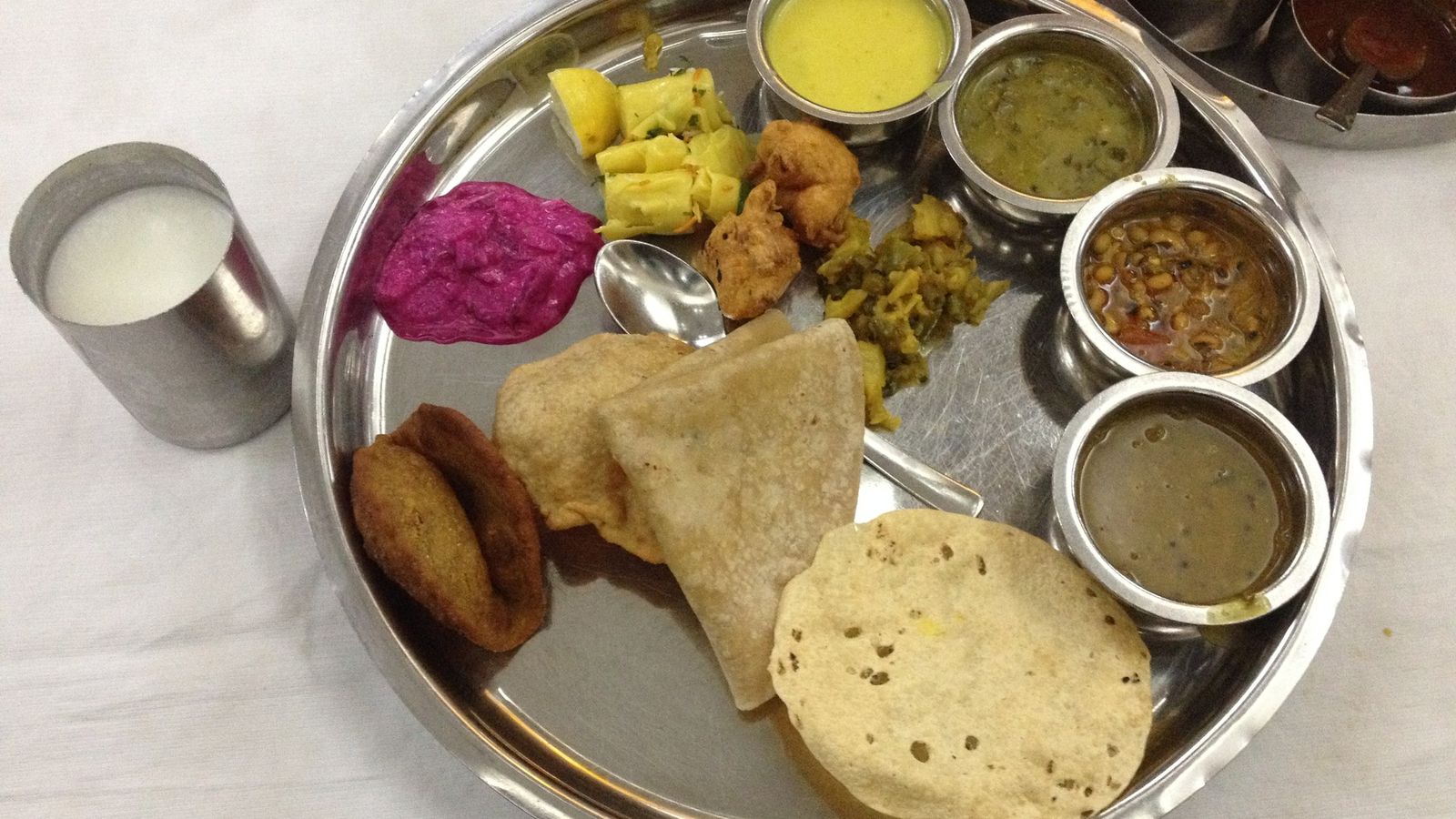
Photo: Advaitj11, CC BY-SA 4.0 (cropped), via Wikimedia Commons

A Kolhapur lunch table with tambda and pandhra rassa, early afternoon.
In Kolhapur the plate is judged by two gravies: one red, one white, both meant for bread and appetite.
Red gravy, white gravy
Tambda rassa is the deep red mutton gravy, coloured and heated with local masala; pandhra rassa is the paler, coconut-and-cashew side of the same kitchen. They arrive in small bowls beside bhakri or other bread, with dry mutton or chicken, sometimes a kheema, and the sharp edge of Kolhapuri chilli. The heat is real but not the only point; the pair is about contrast on one thali. Vegetarian tables lean on the same spice logic with paneer, vegetables and a thick gravy. Steel plates, quick service and a room that fills at one o’clock are part of the ritual.
How the old town eats
Lunch crowds gather in the lanes near the Mahalaxmi (Ambabai) temple and through the older market streets, where hotels and messes put out boards for rassa and thali. People order by heat level, ask for extra bhakri, and finish with buttermilk or a sweet if the spice has won. Evenings bring the same kitchens a second wave. The city also sells its spice mix and chutneys to take home; look for sealed packets with clear labels rather than unmarked powder if you are travelling on. This is a food story, not a second Pune walk: the plate is the reason to come.
Why Kolhapur keeps this table
Kolhapur’s cooking grew with a Maratha court town, a working market and a taste for mutton and strong masala. The Ambabai temple draws pilgrims year-round; festival days thicken the queues at nearby eateries, and regional calendars can shift a fair or procession by a day. The spicy plate is everyday food here, not a show dish for visitors alone. Travellers who know only milder coastal thalis meet a different Maharashtra at this table: inland, meat-forward when you want it, and unapologetic about chilli.
Getting there
Kolhapur Airport has limited flights; many people arrive by train at Chhatrapati Shahu Maharaj Terminus or by road from Pune, roughly 230 km north. Autos cover the old town. Eat at lunch for the fullest thali rhythm, or late morning if you want a quieter room. Prices vary by hotel; a rassa thali is everyday money by city standards, but check the board before you sit. Carry water. If chilli is a worry, say so when you order; kitchens often ease a plate on request without dropping the character of the gravy.
Ordering without guesswork
Ask for both rassas if you eat meat; the point is the pair. Say how hot you want the tambda. Vegetarian thalis use the same spice kitchen with different mains—still ask before the chilli assumes you are local.
Lunch is the surest sitting. Temple-side streets fill after darshan hours; festival days around Ambabai get denser, and regional calendars can shift a date by a day. This stays a food post, not a second Pune city walk. Wider state context: Maharashtra.
What to take home
Sealed Kolhapuri masala and chutney packets travel better than open powder. Check for a packed date and a maker’s name. Keep them in a bag away from clothes; the chilli oil scent is stubborn.
What to put on the table
- Tambda rassa: the red mutton gravy; mop it with bhakri.
- Pandhra rassa: the white counterpart; keep both bowls going together.
- Dry mutton or chicken: the roast-spice side that balances the gravies.
- Bhakri: the flatbread that belongs with this plate more than soft dinner rolls.
- Spice packet for later: buy sealed Kolhapuri masala if you want the heat at home.
When the bowls are empty, the steel plate still holds the smell of chilli and ghee.
Plan your visit
| Where to eat it | Old-town hotels and messes near the Mahalaxmi (Ambabai) temple and the denser market lanes; read the board for rassa thali before you sit. |
|---|---|
| When it is served | Lunch is the classic sitting; many rooms serve through the afternoon and again in the evening. |
| Price guide | Everyday thali money by city standards; prices vary by hotel—confirm on the board. Carry cash as well as a card. |
| Try it with | Bhakri, both rassas, a dry mutton or chicken piece, and buttermilk if the heat climbs. |
| How to reach | Train to Chhatrapati Shahu Maharaj Terminus, limited flights into Kolhapur, or road from Pune (about 230 km). |
| How long to spend | A long lunch and a walk; a night if you also want the temple and the palace museum on another morning. |
Open Mahalaxmi Temple area, Kolhapur, Maharashtra in Google Maps
Questions people ask
What is the difference between tambda and pandhra rassa?
Tambda is the red, chilli-forward mutton gravy; pandhra is the paler coconut-and-cashew gravy. They are meant to sit on the same table.
Is Kolhapuri food always extremely hot?
It can be. Say if you want it milder when you order; many kitchens adjust without emptying the masala character entirely.
Is this the same as a Pune misal lunch?
No. Misal is a different Maharashtra plate. Kolhapur’s signature here is the paired rassas with bhakri and dry meat or a vegetarian thali from the same spice tradition.
Can vegetarians eat well in Kolhapur?
Yes. Order a vegetarian thali and ask about gravy heat. The city’s reputation for spice is not limited to mutton rooms.
Read next
Written by Muthu, editor of Aura of India. Sources: Maharashtra Tourism: Kolhapur, Kolhapur district / Ambabai temple visitor information. Last verified: 22 October 2026.
Your turn: In Kolhapur, did you order both rassas, and how hot did you ask the kitchen to make the tambda?
Comments
Post a Comment
Comments are always welcome, that will help us to motivate ourselves and improve our services. Thanks!!