Nagpur Oranges and Zero Mile: Winter Fruit and City
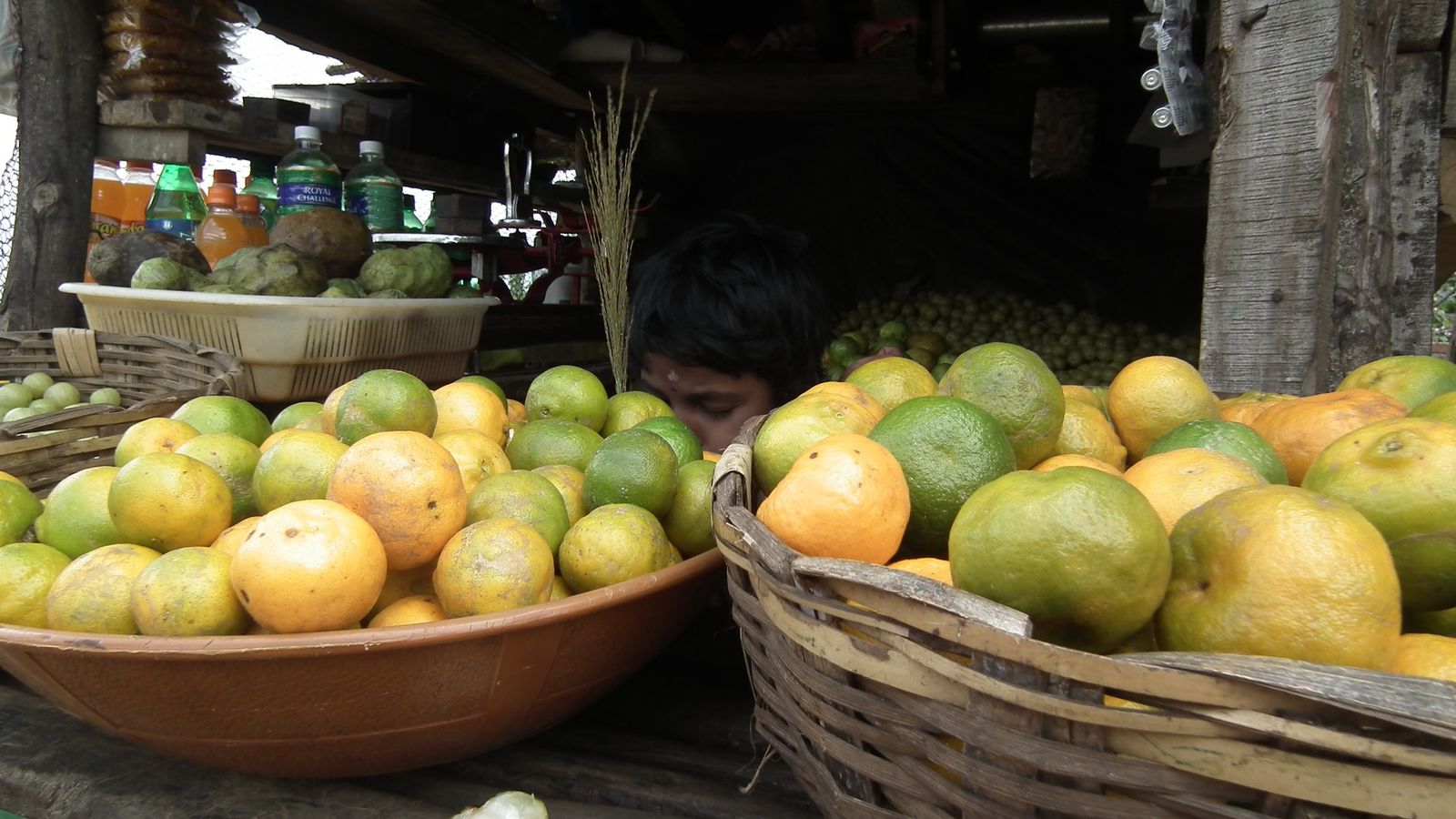
Photo: Rameshng, CC BY-SA 3.0 (cropped), via Wikimedia Commons

Heaps of Nagpur oranges at a winter stall near Sitabuldi, Maharashtra.
In winter Nagpur sells its name by the kilo: loose-skinned santra, and a stone that once marked a surveyed centre.
Fruit in season
Nagpur’s santra — a mandarin orange with loose skin and a sweet-tart juice — fills carts and shopfronts from late autumn into early spring. Incredible India notes a harvest window commonly given as December to March; growers also speak of an earlier Mrig Bahar flush from about October. Orchard belts around Katol, Saoner and Warud supply the city. On the street the fruit is sold by weight, often graded by size; juice stalls press it to order. Orange barfi appears in sweet shops as a local novelty.
Sitabuldi and the working centre
Sitabuldi is the commercial hillock at the middle of town: markets, cloth and electronics lanes, and the fort on the twin tekdis above the railway. The fort itself stays under army control and opens to the public only on a few national days each year; the bazaar around it is open daily. Zero Mile Stone stands in Civil Lines, a short auto ride away: a sandstone pillar with horse figures, raised in the British survey era as a reference point for distances across undivided India. Entry to the marker is free and open through the day.
Together the fruit season and these two landmarks give a compact city walk: buy santra in the market, stand at the mile stone, and leave the fort for a holiday when the gates open. Carry a bag for loose fruit; sellers pack quickly once the price per kilo is agreed.
Why the orange stuck
The Vidarbha citrus belt made Nagpur a wholesale hub; the nickname Orange City followed the trade, not a festival alone. Winter is when visitors notice it most — cooler air, full stalls, and less of the punishing pre-monsoon heat. The mile stone is a small monument with a large idea behind it: a surveyed zero for a subcontinent’s road book. Neither stop needs a ticket queue; both repay a slow look rather than a rushed photograph.
Getting there
Dr Babasaheb Ambedkar International Airport and Nagpur Junction put the centre within a short cab ride. The metro and autos cover Sitabuldi and Civil Lines. October to February is the comfortable sightseeing season and overlaps the best fruit months. For orchard visits outside the city, arrange a morning drive toward Katol or Saoner and confirm with the farm; city stalls are enough for most travellers.
Buying santra without fuss
Choose fruit that feels heavy for its size with bright, slightly loose skin. Sellers grade by size; juice stalls press to order. Peak street presence runs through the cool months; exact harvest weeks shift with the year, so trust what is actually on the cart that day.
Orange barfi and fresh juice are the easy city tastes. Orchard visits toward Katol or Saoner need a morning and a prior call to the farm — optional if the market already fills your bag.
Zero Mile and Sitabuldi in one loop
Start at Zero Mile Stone in Civil Lines for the survey pillar and horses, then move to Sitabuldi for stalls and lanes. Leave Sitabuldi Fort for Republic Day, Maharashtra Day or Independence Day unless you have confirmed another opening.
For the wider state, see Maharashtra.
Places to know
- Sitabuldi market: central shopping district below the fort hillocks.
- Zero Mile Stone: survey pillar in Civil Lines; free, quick stop.
- Orange stalls: densest in winter across Sitabuldi and neighbourhood markets.
- Sitabuldi Fort: army site; public entry mainly on 26 January, 1 May and 15 August.
- Orchard belt: Katol, Saoner and Warud for a half-day beyond the city.
By dusk the peel scent fades from the lanes, and the mile stone stands quiet under the street lamps.
Plan your visit
| Best season | October to February for weather; December to March is widely cited for orange harvest display in the city. |
|---|---|
| Zero Mile | Free entry in Civil Lines; a short stop in morning or late afternoon light. |
| Sitabuldi Fort | Army-controlled; public entry commonly limited to 26 January, 1 May and 15 August — confirm locally. |
| How to reach | Nagpur airport and Nagpur Junction. Metro and autos for Sitabuldi and Civil Lines. |
| Where to stay | Sitabuldi or Civil Lines for central walks; west or north suburbs if you plan orchard drives. |
| How long to spend | Half a day for fruit, Zero Mile and Sitabuldi lanes; a full day with an orchard detour. |
| What to buy | Loose santra by weight; confirm price per kilo before the vendor fills the bag. |
Questions people ask
When are Nagpur oranges in season?
Street stalls are fullest in the cool months. Incredible India commonly cites December to March for the harvest; an earlier flush can appear from about October depending on the year.
What is Zero Mile Stone?
A sandstone survey marker in Civil Lines, with horse figures, used historically as a reference point for distances. It is a small free monument, open through the day.
Can you visit Sitabuldi Fort any day?
Usually not. The fort is under army control and is generally opened to visitors on a few national days each year. The market below is open daily.
Where should you buy oranges in the city?
Neighbourhood and Sitabuldi fruit stalls in winter are the simplest. For orchard picking, arrange a morning toward Katol, Saoner or Warud.
Read next
Written by Muthu, editor of Aura of India. Sources: Incredible India: Nagpur gastronomy (orange season), Maharashtra Tourism. Last verified: 22 October 2026.
Your turn: Did you buy santra by the kilo in Sitabuldi, or take a morning out to the orchards?
Comments
Post a Comment
Comments are always welcome, that will help us to motivate ourselves and improve our services. Thanks!!