Rishikesh Walking Town: Jhula End, Cafes and Aarti
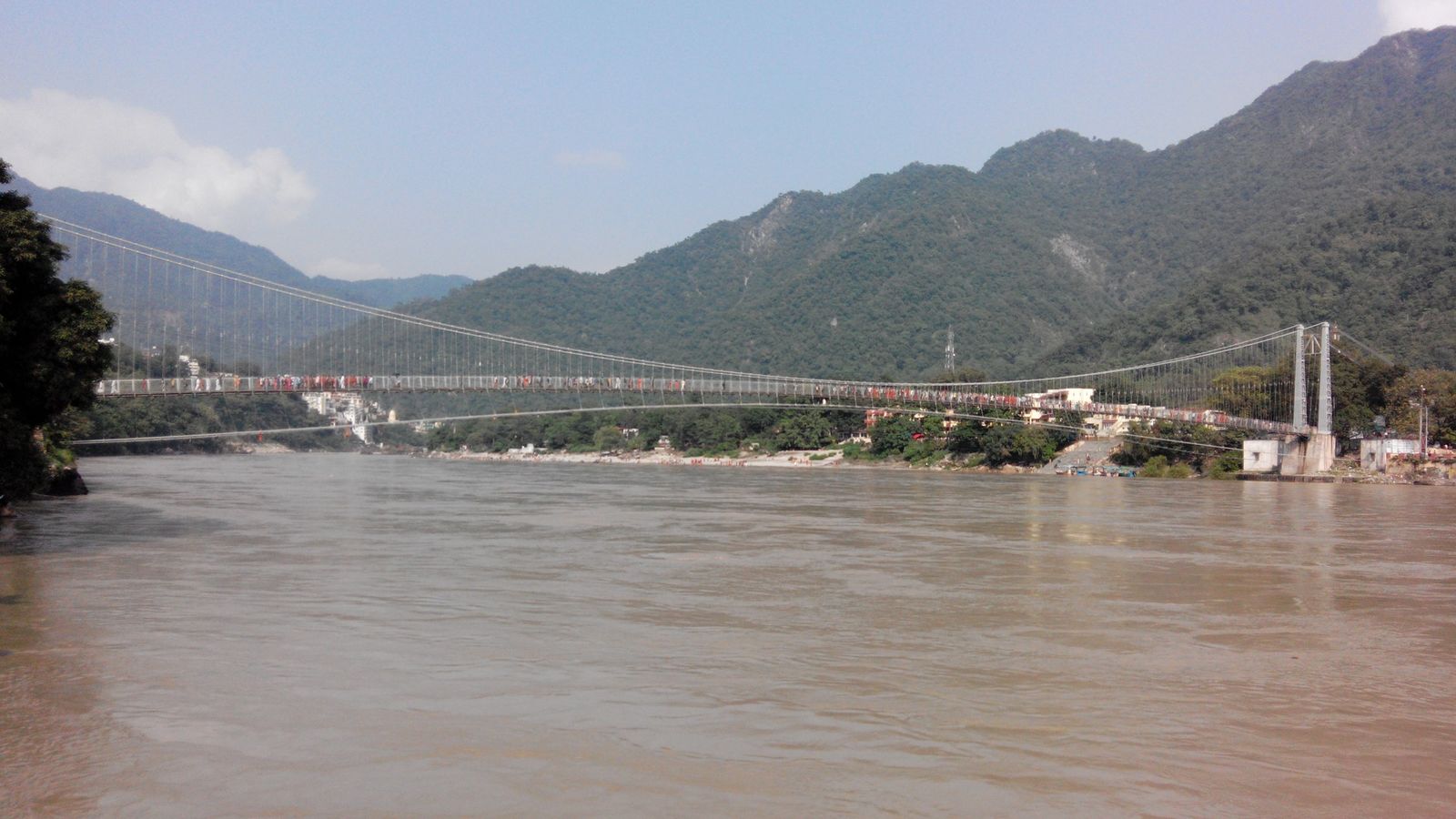
Photo: Deepanshu Mittall, CC BY-SA 4.0 (cropped), via Wikimedia Commons

The Laxman Jhula end of Rishikesh, late afternoon, cafes open above the Ganga and the evening aarti crowd still forming downstream.
Rishikesh is a walking town. The river is the corridor; the bridges are only punctuation.
At the Laxman Jhula end
The old iron Laxman Jhula has been closed for years on safety grounds. The neighbourhood still carries the name: Tapovan and Jonk sides, ashram lanes, guest houses stacked above the water, and the new Bajrang Setu nearby for crossing. Pedestrians and two-wheelers use the new span; glass walkway rules and any fee were still settling through 2026, so check the board on the day. The point of this end of town is not a single photo on a swaying bridge. It is the climb through cafe terraces, the sound of the river below, and the short walks between tea stalls and ghat steps.
Cafes, paths and the aarti craft
Between Laxman Jhula and Ram Jhula the east and west banks hold bakeries, yoga halls and simple restaurants. People walk more than they drive; shared autos fill the gaps. For evening aarti, two common choices sit in different moods: Parmarth Niketan’s larger riverside ceremony, and Triveni Ghat’s more local ghat gathering in the Muni Ki Reti area. Timings follow sunset — roughly early evening in November — so leave the Laxman Jhula end with time to spare. Arrive thirty to forty-five minutes early, remove shoes on the steps, and keep bags close. The craft is patience: find a step, stay put, let the lamps and chants pass without chasing a camera angle through the crowd.
Why the town works on foot
Rishikesh grew as a pilgrimage and ashram shore, then as a backpacker strip, without a wide grid of roads at the river edge. Walking is not a style choice; it is how the slope and the ban on heavy traffic near the ghats force the day. The Ganga here is clearer and colder than on the plains. Hills close the view. The town rewards anyone who picks one bank stretch and learns its turns rather than racing every viewpoint in a cab.
How to spend a walking day
Sleep near Laxman Jhula or Ram Jhula if you want dawn river light without a long ride. Walk one bank in the morning, cross by the open bridge, and keep the afternoon for cafes. Aim for aarti with a buffer for auto queues. Jolly Grant airport near Dehradun serves the area; Haridwar junction connects by road in under an hour when traffic behaves. This is not a Char Dham staging essay — stay with the walking town. For the hills beyond, see the Uttarakhand guide.
Bridges and the closed jhula
The historic Laxman Jhula iron bridge has been closed on safety grounds; news reports through 2025–26 describe Bajrang Setu as the replacement crossing near that end of town, with a central deck for ordinary use and glass walkways subject to timed access and a forthcoming user fee.
Treat “Laxman Jhula” as a neighbourhood name: cafes, guest houses and river paths still define the walk even when the old span cannot be crossed.
Choosing an aarti
Parmarth Niketan’s riverside aarti is larger and draws many visitors. Triveni Ghat’s evening gathering is more local in feel. Both follow sunset; November starts earlier than May. Leave the Laxman Jhula end with an auto or walking buffer.
This post stays with the walking town, not Char Dham logistics. For the state, see Uttarakhand.
Walking notes
- Old Laxman Jhula: closed; use Bajrang Setu or Ram Jhula and confirm crossing rules locally.
- Aarti: Parmarth or Triveni — pick one evening; both run near sunset.
- Shoes: off on ghat steps; keep a pair you can slip quickly.
- Bags: small and zipped in evening crowds.
- Pace: half a day on foot beats three rushed viewpoints by taxi.
After aarti the walk back is quieter, lamps still on the water, and the town returns to footsteps and cafe chairs.
Plan your visit
| Best season | October to March for cool walking. Monsoon means slippery paths and heavy river flow. |
|---|---|
| Getting around | Walk the river banks; use shared autos between Laxman Jhula, Ram Jhula and Triveni Ghat. |
| Crossing the Ganga | Old Laxman Jhula closed. Use Bajrang Setu or Ram Jhula; confirm glass-walk fees and hours on the day. |
| Evening aarti | Parmarth Niketan or Triveni Ghat near sunset; arrive 30–45 minutes early. Exact start shifts with the sun. |
| How to reach | Jolly Grant Airport (Dehradun); Haridwar Junction then road up the Ganga; Rishikesh road/rail links. |
| Where to stay | Laxman Jhula / Tapovan end for cafe walks; Ram Jhula or Muni Ki Reti for easier aarti access. |
| How long to spend | One full walking day, or two nights to take aarti without a rush. |
Questions people ask
Can you still cross the old Laxman Jhula?
No. The old iron bridge has been closed for safety. Use Bajrang Setu nearby or Ram Jhula, and check current crossing rules when you arrive.
Where should first-time visitors watch aarti?
Parmarth Niketan for a larger riverside ceremony, or Triveni Ghat for a more local ghat gathering. Both run in the evening around sunset.
Is Rishikesh best explored by taxi?
Not along the river. The town works on foot between cafes, bridges and ghats; autos fill longer gaps.
How far is Rishikesh from Haridwar?
About 20–25 km by road, often under an hour when traffic is light — longer on weekends and festival days.
Read next
Written by Muthu, editor of Aura of India. Sources: NDTV Travel: Bajrang Setu glass skywalk and Laxman Jhula context, Times of India: Bajrang Setu fee/timings; old Lakshman Jhula closed 2022, Uttarakhand / Rishikesh tourism context via state hub. Last verified: 22 October 2026.
Your turn: Did you base yourself at the Laxman Jhula end or nearer Triveni Ghat, and which aarti did you choose?
Comments
Post a Comment
Comments are always welcome, that will help us to motivate ourselves and improve our services. Thanks!!