Syrian Christian Kitchen, Kottayam: Stew, Appam, Table
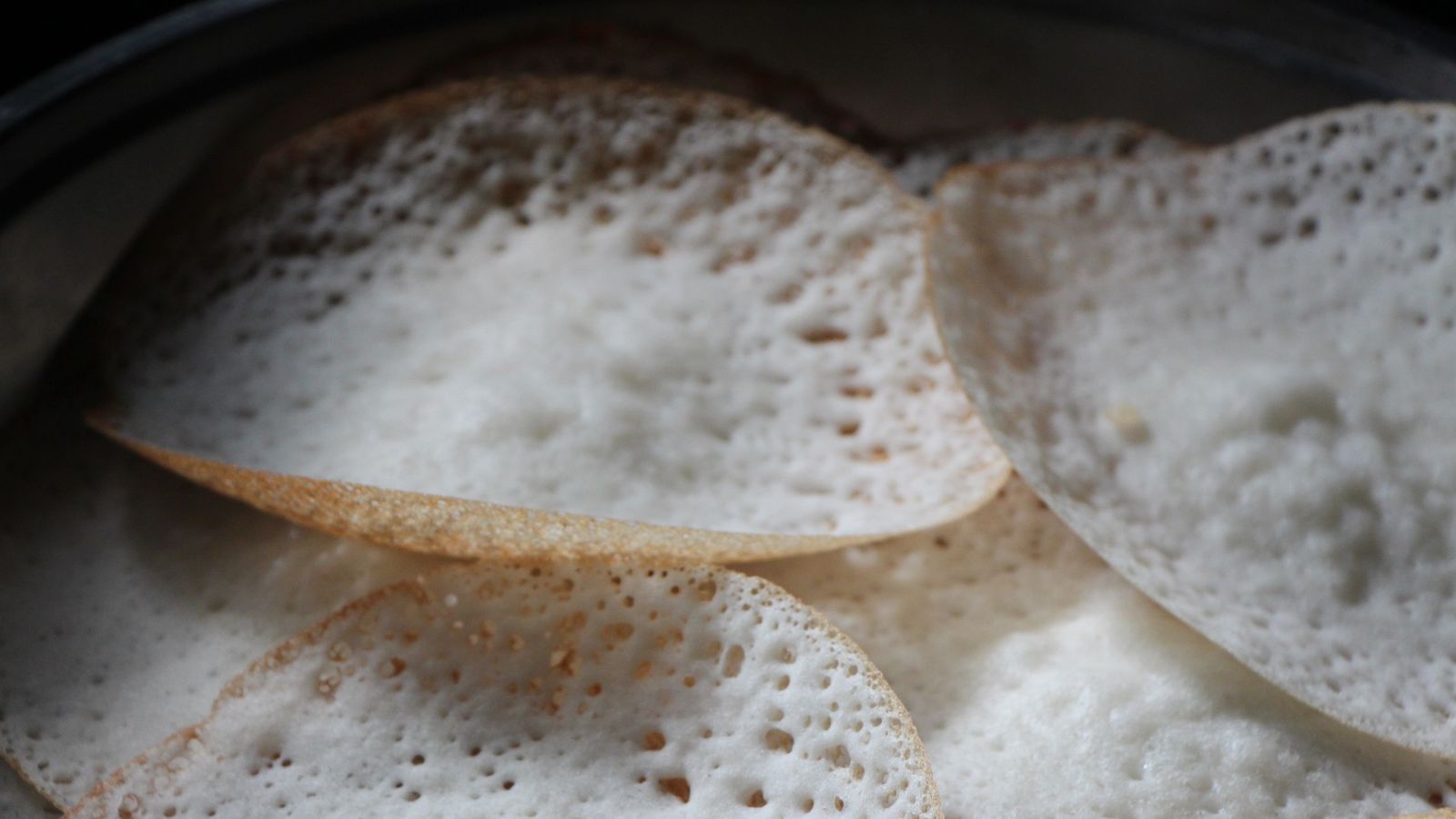
Photo: Shobha Elizabeth John, CC BY-SA 4.0 (cropped), via Wikimedia Commons

A Syrian Christian lunch table in Kottayam, mid-morning light through a kitchen window.
The meal is not a boat ride; it is stew, appam and a community table that has held for centuries.
What arrives on the plate
Appam is a soft rice-and-coconut pancake with a lacy edge and a thicker centre. Beside it comes stew: chicken or vegetables simmered in thin coconut milk with pepper, cinnamon, clove and green chilli, mild enough for a child and fragrant enough for the whole room. On many tables there is also fish moilee, beef ularthiyathu (slow-fried with coconut chips), meen vevichathu in a red chilli-tamarind gravy, or a simple egg roast. The breads vary: appam, soft vattayappam, or puttu steamed in a bamboo or metal cylinder. Nothing here needs a houseboat; the story is the kitchen.
How the table is used
Syrian Christian homes in and around Kottayam still treat Sunday lunch and feast days as the week’s centre. Guests sit together; dishes are passed, not plated in silence. Bakeries and small hotels in the town serve the same grammar to travellers: stew with appam for breakfast or early lunch, fish curry with rice later. Order stew first if the chilli heat of other Kerala plates is new. Ask for the stew mild; cooks will usually agree. Tea follows, often with a piece of plum cake if it is the Christmas season, though the everyday table does not wait for December.
Why this kitchen sits in Kottayam
Central Kerala’s Christian communities, often called Syrian Christians for their old liturgical links to West Asian Christianity, have lived along the inland waterways and market towns for many centuries. Kottayam became a centre of churches, colleges and printing; the food moved with parish life, weddings and homecomings from the Gulf. Coconut, black pepper and toddy-shop yeast for appam batter are local. The cooking absorbed Portuguese vinegar and Dutch baking habits without becoming a museum plate. A visitor who only knows Kerala from Alappuzha boats misses this: a town table where English, Malayalam and the church calendar share one lunch hour.
How to find it
Kottayam sits on the main rail and road line between Kochi and Thiruvananthapuram, about 75 km south-east of Ernakulam by road. The nearest large airport is Cochin International. Stay in Kottayam town or nearby Kumarakom if the backwaters are already on the trip, but eat the Christian meal in town bakeries, family-run hotels or a booked home meal rather than on a cruise boat. Mid-morning to early afternoon is when stew and appam are freshest. For state logistics, use the Kerala guide; keep this day about the kitchen.
Stew, moilee and heat
Chicken stew for this table is coconut milk, whole spices and very little red chilli. Fish moilee follows the same mild idea. Meen vevichathu and beef fry are the hotter, darker plates; order them as sides if the group is mixed. Appam batter needs time to ferment; hotels that serve appam only at breakfast or lunch are often fresher than all-day tourist buffets.
Vegetarian guests usually receive vegetable stew, egg roast and thoran (stir-fried vegetables with coconut). Say clearly if beef or fish should stay off the table; hosts and hotels will adjust.
Town meal, not boat meal
Kumarakom’s resorts sit on Vembanad and often advertise ‘Syrian Christian’ menus for guests who never enter Kottayam town. Those plates can be good; they are still hotel food. For parish-town rhythm, eat in Kottayam bakeries and family hotels near the railway station and KK Road area, or book a home meal through a trusted local contact.
Christmas and Easter swell the baking — plum cakes, rose cookies — but stew and appam are year-round. The Kerala guide covers routes; keep this stop about the kitchen.
What to order
- Appam with stew: the core pair; chicken stew is the usual first order.
- Fish moilee: coconut-milk fish, gentle heat, good with appam or rice.
- Beef ularthiyathu: dry fry with coconut; rich, best shared.
- Meen vevichathu: sharper red fish curry for those who want chilli.
- Vattayappam or puttu: if appam has run out, both carry the same coconut-rice idea.
By two the stew pot is nearly empty, and the table smells only of coconut milk and black pepper.
Plan your visit
| Where to eat it | Kottayam town bakeries and family-run hotels; booked home meals where offered. Resort menus at Kumarakom are a fallback, not the same as a town table. |
|---|---|
| When it is served | Appam and stew are strongest from breakfast through early lunch. Heavier fry and fish curries run through afternoon and dinner. |
| Price guide | A simple appam-and-stew breakfast in a local hotel is usually inexpensive by tourist-Kerala standards; confirm prices on the board. Home meals vary by arrangement. |
| Try it with | Lightly sweetened tea after; avoid ordering a heavy biryani in the same hour if the stew is the point. |
| How to reach | Rail to Kottayam on the coastal line; about 75 km by road from Ernakulam. Cochin International Airport is the usual flight gate. |
| How long to spend | A long breakfast or lunch hour, or an overnight if combining churches and a later backwaters drive. |
Questions people ask
What is Syrian Christian stew?
A coconut-milk stew with whole spices and mild chilli, usually with chicken or vegetables, eaten with appam. It is gentler than many Kerala red fish curries.
Is this the same as a Kerala houseboat meal?
No. Houseboats serve tourist menus on the backwaters. This story is about the inland Christian town table in and around Kottayam.
Can vegetarians eat at a Syrian Christian table?
Yes. Vegetable stew, thoran, egg dishes and appam are common. Say in advance if you skip egg or any meat.
When should travellers go to Kottayam for this food?
Any dry-season day works. Mid-morning suits appam best. Christmas week adds bakery specials but also crowds.
Read next
Written by Muthu, editor of Aura of India. Sources: Kerala Tourism: Appam and Chicken Stew, Kerala Tourism: District of Kottayam. Last verified: 22 October 2026.
Your turn: Was your first Syrian Christian meal in a home, a town hotel or a resort — and which plate did you order twice?
Comments
Post a Comment
Comments are always welcome, that will help us to motivate ourselves and improve our services. Thanks!!