Gujarati Thali in Ahmedabad: How It Is Served
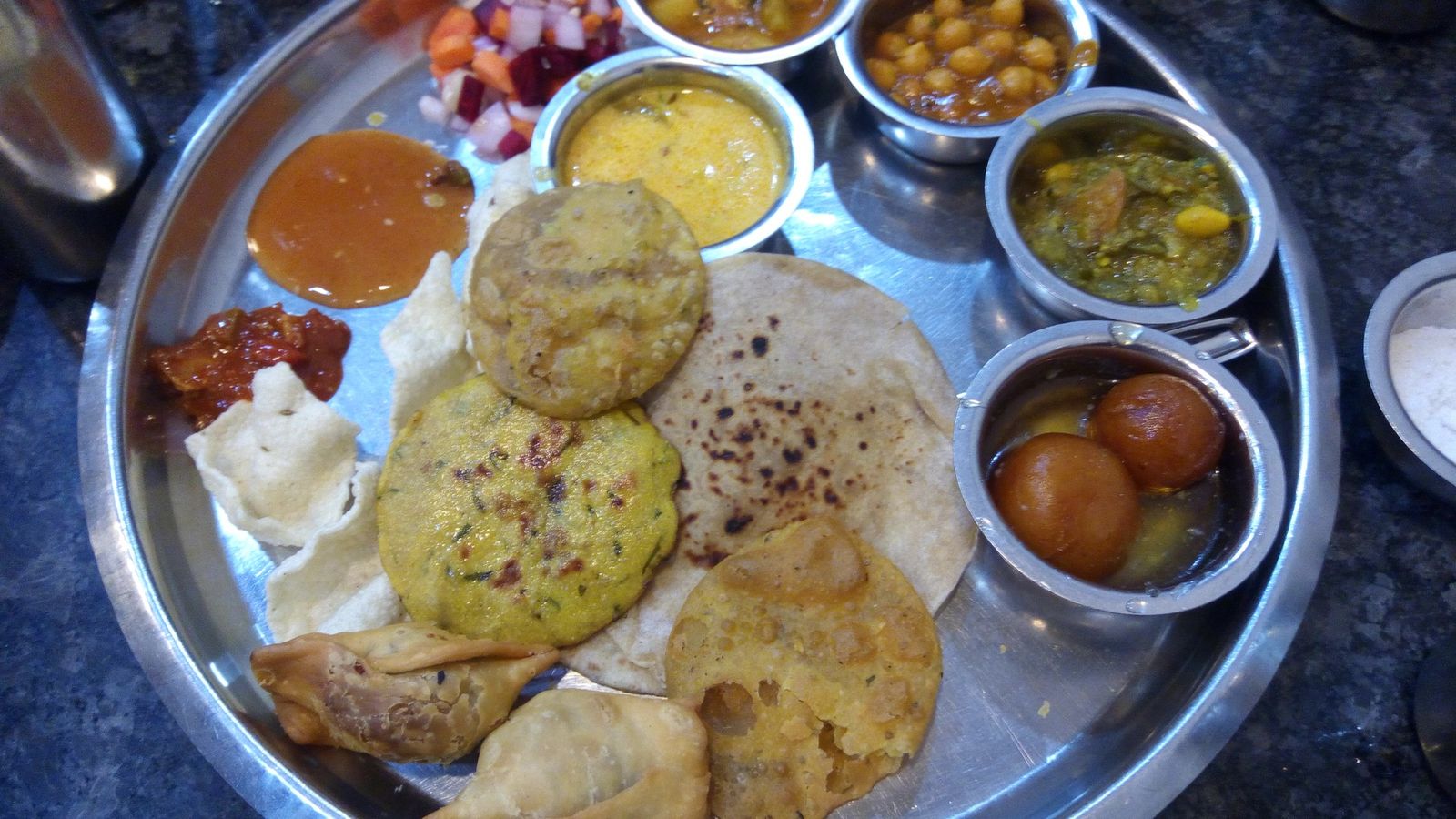
Photo: Vis M, CC BY-SA 4.0 (cropped), via Wikimedia Commons

A Gujarati thali laid on a steel plate in an Ahmedabad lunch room.
A Gujarati thali is not one dish; it is a sequence the kitchen keeps refilling until you stop it.
What arrives first
The plate is usually steel, sometimes a tray, with a banana leaf in some older rooms. Small bowls ring the centre: one or two vegetables, a wet shaak, dal or kadhi, a sweet, pickle, salad and a papad. Rotli or phulka land hot; rice and khichdi follow. Farsan — the snack course — may sit at the edge: a piece of dhokla or khandvi as part of the meal, not as the whole story. Chaas, thin spiced buttermilk, comes in a glass and is refilled with the rest.
How you order and eat
Many places offer a fixed thali at lunch; you do not build a menu item by item. Say whether you want unlimited refills, and signal when a bowl should stop. Sweet and savoury sit together on purpose: a spoon of shrikhand or jaggery next to kadhi is normal. Eat with the right hand; tear rotli, dab into shaak, keep rice for the wetter bowls. Pace matters — the kitchen will keep coming if you clear space.
Prices vary by room, from simple neighbourhood thalis to hotel spreads. Ask whether tax and service are included. Vegetarian is the default in most Gujarati thali houses; if you need Jain cooking without root vegetables, say so when you sit. Dinner thalis exist, but lunch is when the form is most common and the turnover freshest. A good room keeps rotli arriving hot and does not rush the chaas; if either slips, the rest of the plate rarely saves the meal.
Why the form lasts
The thali packages a full Gujarati meal into one sitting: grain, pulse, vegetable, dairy, fat and a little sugar. It suits traders’ and office workers’ midday break as much as family outings. Ahmedabad’s reputation for the style rests on consistency and refill culture, not on a single secret recipe. Street farsan and a glass of chaas are a different outing; the thali is the seated, multi-bowl lunch.
Where to look in the city
Thali rooms cluster in Ashram Road, CG Road, Law Garden and older neighbourhoods near the old city. Hotel restaurants serve a polished version; smaller Gujarati hotels serve a plainer one. Weekday lunch is easier than Sunday noon. Pair the meal with a morning in the pols or a walk at Sabarmati if you want the city around it, but keep this post for the table itself.
Unlimited, and how to stop it
On an unlimited thali the server watches empty bowls. Leave a little in a bowl, or say bas, when you have had enough of that item. Rotli often arrives one or two at a time so they stay soft; rice may be poured into the centre once you are ready.
Sweet is part of the round, not only a dessert at the end. A small portion of dulci or shrikhand early on is normal. This is the seated meal form — distinct from a farsan-shop stop for dhokla and chaas alone.
Jain and everyday variants
Many kitchens will cook without onion and garlic, or without root vegetables, if you ask for Jain. Spice levels are usually moderate; ask for extra chilli on the side rather than assuming heat.
Neighbourhood Gujarati hotels keep the everyday version; larger dining rooms polish the same sequence. For the wider state table, see Gujarat.
What to expect on the plate
- Rotli and rice: soft wheat flatbreads, plus plain rice or khichdi.
- Dal or kadhi: lentil broth or yoghurt-based curry, often both across the week.
- Shaak: dry and wet vegetable preparations, changed daily.
- Farsan and sweet: a snack piece and a small sweet in the same round.
- Chaas and pickle: buttermilk to drink; pickle and chutney on the side.
When the last rotli cools and the chaas glass stays empty, the meal has done its work.
Plan your visit
| Where to eat it | Gujarati thali restaurants and hotels around Ashram Road, CG Road, Law Garden and older neighbourhoods; lunch is the main sitting. |
|---|---|
| Price guide | Varies widely by room. Ask whether the rate is unlimited and whether tax is included before you sit. |
| When it is served | Primarily lunch; some places offer dinner thalis. Weekday noon is steadier than Sunday rush. |
| Try it with | Chaas on the side, and finish only when you mean to stop the refills. |
| How long to spend | Forty-five minutes to an hour for a full unlimited sitting. |
Questions people ask
What is a Gujarati thali?
A set meal on one plate or tray: rotli, rice, dal or kadhi, vegetables, farsan, sweet, pickle and usually chaas, often with unlimited refills in dedicated thali rooms.
Is a Gujarati thali always vegetarian?
In Ahmedabad thali houses it almost always is. Ask if you need Jain cooking without root vegetables.
How is this different from eating dhokla and chaas?
Dhokla and chaas are a snack-and-drink pair from farsan shops. A thali is a full seated meal with many bowls and, often, free refills.
When should you go for thali in Ahmedabad?
Lunchtime on a weekday is the classic sitting. Arrive a little before peak noon if you want a seat without waiting.
Read next
Written by Muthu, editor of Aura of India. Sources: Gujarat Tourism: Gujarati Thali, Gujarat Tourism: Gujarati Cuisines. Last verified: 22 October 2026.
Your turn: Which bowl did you ask them to stop refilling first — the sweet, the kadhi, or the rotli?
Comments
Post a Comment
Comments are always welcome, that will help us to motivate ourselves and improve our services. Thanks!!