Haridwar Evening Aarti: Steps, Shoes and Timing
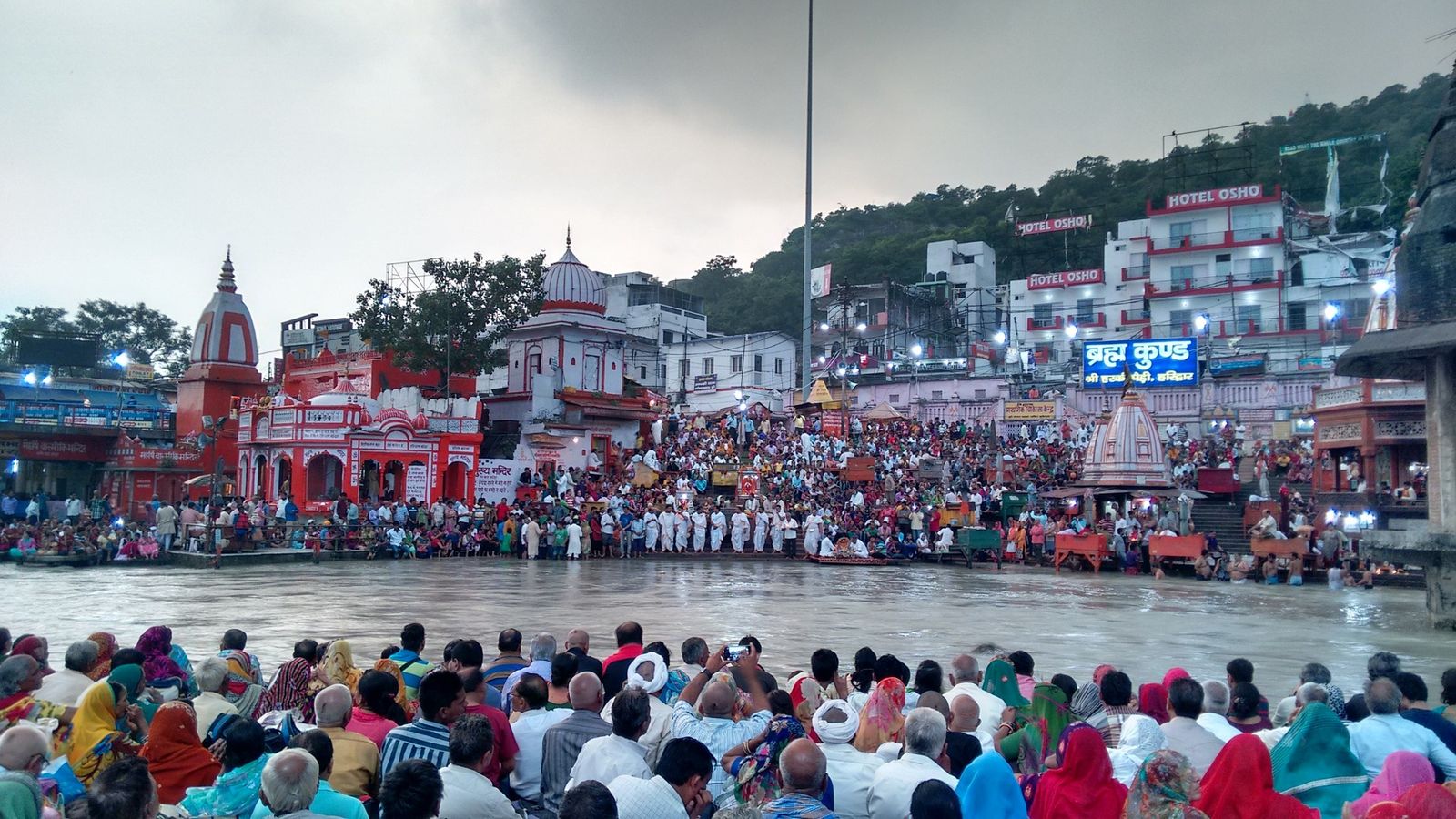
Photo: Kanu 887, CC BY-SA 4.0 (cropped), via Wikimedia Commons

Har Ki Pauri, Haridwar, as the evening aarti lamps are lit and the steps fill row by row.
The aarti is free and daily. The skill is knowing where to stand before the bells begin.
The steps before sunset
Har Ki Pauri is Haridwar’s main ghat on the Ganga. Shri Ganga Sabha has organised the Ganga aarti here since the early twentieth century: Mangala aarti at sunrise and Shringar aarti at sunset. The Ministry of Tourism’s Utsav listing places the evening window around 6 to 7 pm, but the start moves with the sun — earlier in November, later in midsummer. On a November evening, plan for a start near half past five to six, and confirm the board at the ghat. The ceremony lasts under an hour. The river, the clock tower and the facing steps on Malviya Dweep frame the scene. This is a ghat night, not a Char Dham mountain day.
Where to stand, and the shoes
Cars stop short of the ghat; the last ten to fifteen minutes are on foot through market lanes. Shoe racks and informal keepers operate near the steps — use them, or carry a bag you trust. Brahma Kund and the central steps fill first; arrive forty-five to seventy-five minutes early on weekends and festival days. The island steps across the water give a wider view with slightly more room. Once the aarti starts, movement stops. Keep children away from the wet edge. Photography is common; do not block priests or push for a front row late. Modest clothes help; shoulders and knees covered are a simple rule of respect.
Why people pack the ghat
Haridwar sits where the Ganga leaves the hills for the plain. A dip at Har Ki Pauri and a place at the evening lamps are enough pilgrimage for many. The aarti turns a daily river into a shared pause: conches, lamps, smoke and the crowd answering together. Travellers come because the ritual is public and free, and because the town is a rail and road hub for Uttarakhand. Stay for the aarti itself; leave the multi-day Char Dham circuit to a different plan and a different season.
Timing the evening
Haridwar Junction is about two kilometres away; Dehradun’s Jolly Grant airport is the usual flight gateway. Stay near the ghat clock if you want a short walk, or in quieter colonies a short auto ride out. Eat before you sit — the steps are for the rite, not dinner. After the lamps, the market lanes reopen and the crowd drains slowly. For Rishikesh’s walking banks the same week, keep a separate afternoon; for the state, see the Uttarakhand guide.
Island steps or main ghat
The central Brahma Kund steps put you closest to the lamps and the densest crowd. The facing steps on Malviya Dweep, across the water by the footbridges, trade closeness for a wider view and often a little more room. Pick one and stay; mid-aarti movement is poor manners and poor safety.
Utsav (Ministry of Tourism) notes the aarti is organised by Shri Ganga Sabha twice daily, with roots in the early twentieth century under Pandit Madan Mohan Malaviya’s association with the ghat tradition.
After the bells
When the rite ends, reclaim shoes, keep to the lit lanes, and expect autos to surge. A quiet cup of tea away from the ghat is easier than fighting the first crush.
Rishikesh’s walking banks are a separate afternoon; Char Dham registration and hill roads are a different journey. For the state, see Uttarakhand.
Aarti checklist
- Arrive early: forty-five minutes minimum; more on weekends.
- Confirm time: sunset shifts; check the ghat notice that day.
- Shoes: leave them safely; do not abandon them in a random pile if you can help it.
- Stand or sit: choose island steps for space, main ghat for closeness — not both by moving mid-rite.
- Bags and phones: zipped and close; the crowd is dense.
When the last lamp floats past and the bells thin out, the steps empty the way a theatre does — slowly, talking, already planning tomorrow’s dip.
Plan your visit
| Evening aarti | At sunset daily; Utsav lists a 6–7 pm window. In November expect an earlier start (often around 5:30–6:15 pm). Confirm the ghat board that day. |
|---|---|
| Morning aarti | At sunrise — quieter, fewer travellers. |
| Entry | Free. No ticket for ordinary viewing. |
| When to arrive | 45–75 minutes before the evening start on ordinary days; earlier on weekends and festivals. |
| How to reach | Haridwar Junction about 2 km; last stretch on foot through market lanes. Nearest major airport: Dehradun (Jolly Grant), about 70 km. |
| Shoes and dress | Remove shoes for the steps; use a keeper or bag. Cover shoulders and knees. |
| How long to spend | About two hours including arrival buffer and the rite. |
Questions people ask
What time is the Haridwar evening Ganga aarti?
It follows sunset. Tourism listings often show a 6–7 pm window; in November it usually starts earlier. Check the notice at Har Ki Pauri on the day.
Where is the best place to sit?
Central steps near Brahma Kund for closeness if you arrive very early; Malviya Dweep facing steps for a wider view with often more space.
Is there a ticket?
No. Ordinary viewing of the Ganga aarti at Har Ki Pauri is free.
Is this the same as Char Dham?
No. Har Ki Pauri is a plains ghat ritual in Haridwar. The Char Dham are the four Himalayan temple towns — a separate, longer pilgrimage.
Read next
Written by Muthu, editor of Aura of India. Sources: Utsav (Ministry of Tourism): Haridwar Ganga Aarti, Incredible India / Uttarakhand tourism context for Haridwar, District Haridwar tourism pages (ghat orientation). Last verified: 22 October 2026.
Your turn: Did you watch from the main Har Ki Pauri steps or from the island side, and how early did you claim a place?
Comments
Post a Comment
Comments are always welcome, that will help us to motivate ourselves and improve our services. Thanks!!