Garba in Gujarat for Navratri 2026: Where and How to Join
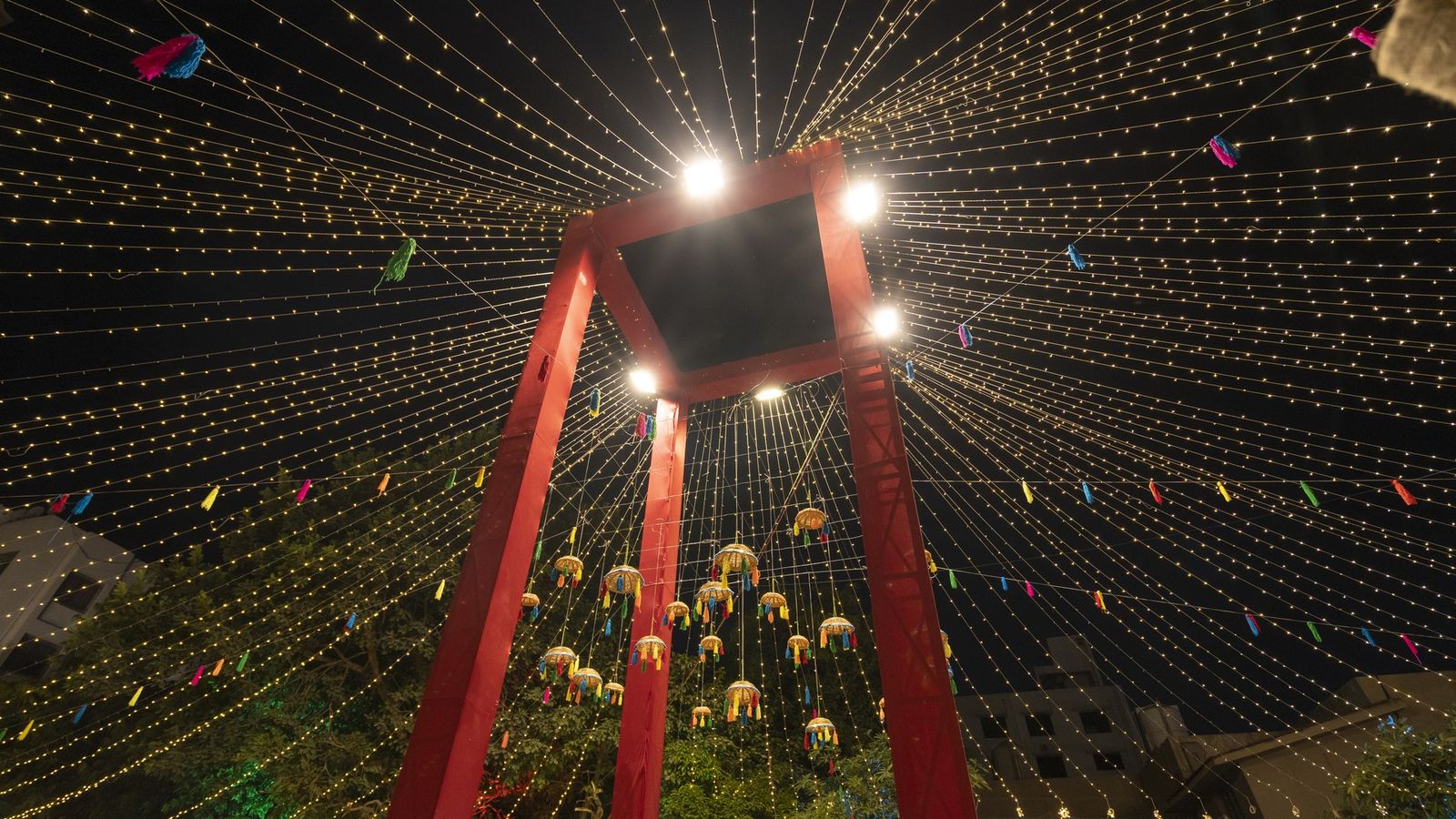
Photo: Nitinbaldha, CC BY-SA 4.0 (cropped), via Wikimedia Commons

A garba ground in Gujarat, an hour before the dancing starts.
The circle is ready long before the dancers are.
Lights over an empty floor
At eight in the evening the ground is almost empty. Strings of lights run from a tall frame in the middle to the edges, like the spokes of a wheel. A small shrine to the goddess stands at the centre, with a lamp burning in front of it. The sound system is being tested, one drumbeat at a time. Volunteers sweep the floor. Food stalls at the gate are frying the first batch of the night.
How the dance works
Garba is danced in rings around that central lamp. The name comes from garbha deep, a lamp set inside a clay pot pierced with holes, which some families still carry. Dancers move together, clapping and turning, and the circle widens as more people join. The first steps are simple: the be taali, two claps, then the tran taali, three. Later in the night comes dandiya raas, danced in pairs with short painted sticks. Women wear chaniya choli, wide mirrored skirts. Men wear the kediyu, a short pleated jacket.
Why it matters
Garba is danced for Durga through the nine nights of Navratri. It is worship, a social event and an exercise class at once. In 2023 UNESCO added the garba of Gujarat to its list of the Intangible Cultural Heritage of Humanity. In 2026 the nights run from 11 to 19 October. Regional calendars can shift a date by a day.
Where to go
Vadodara and Ahmedabad hold the largest garba, on open grounds that take tens of thousands of dancers. Entry to the big grounds is by pass, sold online or at the gate. For something smaller, look for sheri garba, the street garba danced in the old neighbourhoods and housing societies, where anyone polite is usually welcome. Most dancing runs from about nine until midnight, and later on the last nights.
How a garba night unfolds
The night opens with an aarti to the goddess at the shrine in the centre. Then the singers and drummers start slowly, and the first circles form. As UNESCO describes it, dancers move counter-clockwise around a lit earthen lamp or an image of the goddess Amba, singing and clapping together, from slow steps to a fast whirl.
Later, the music changes for dandiya raas. Dancers face a partner in two lines, strike their sticks together on the beat, and move along to the next partner. Keep your sticks low and watch the person opposite; the pattern shows itself after a few turns.
Big grounds or the street
The large grounds of Vadodara and Ahmedabad have stages, live singers and security at the gate. Passes, often for the whole season, sell out for the last nights. Sheri garba, in old neighbourhoods and housing society compounds, is smaller and slower, and an easier place to learn. In Ahmedabad’s old pols the circles form in the lanes themselves.
Navratri ends with Dussehra on 20 October 2026; see the Dussehra field. For the same nine nights elsewhere in India, see the first morning of Navratri.
Before you go
- Join at the outer edge of the circle, and copy the person in front of you.
- Wear flat shoes you can dance in, or none, if others are barefoot.
- Keep the inner rings for the fast, experienced dancers.
- Ask before filming people. Many would rather be dancing than watched.
By ten the ground is full. From the gate you can no longer see the lamp at the centre, only the circles moving around it.
Plan your visit
| 2026 dates | Navratri runs from 11 to 19 October 2026, and Dussehra follows on 20 October. Regional calendars can shift a date by a day. |
|---|---|
| Where to see it | Vadodara and Ahmedabad for the large ticketed grounds; sheri garba in old neighbourhoods and housing societies for something smaller. Dancing usually runs late into the night. |
| Passes | The big grounds sell passes by the night or for the season. Prices and hours vary by organiser; check before you go. |
| What to wear and bring | A chaniya choli or kediyu if you have one, or loose cotton clothes; flat shoes; a small bag, water and cash for the food stalls. Expect a security check at the big grounds. |
| Getting there and around | Fly or take the train to Vadodara or Ahmedabad. Use autos or app cabs, and plan the ride home: demand is high after midnight. |
Questions people ask
When is Navratri in 2026?
Navratri runs from 11 to 19 October 2026, with Dussehra on 20 October. Regional calendars can shift a date by a day, so check locally.
Can visitors join a garba circle?
Yes. Join at the outer edge and copy the person in front of you. The big grounds need a pass; some society garbas are for residents and their guests, so ask first.
What is the difference between garba and dandiya raas?
Garba is danced in circles around a central lamp, with clapping and turning. Dandiya raas is danced in pairs with short painted sticks, usually later in the night.
What should I wear to garba?
Women often wear a chaniya choli, a wide, mirrored skirt with a blouse and scarf; men often wear a kediyu, a short flared jacket. Loose, light clothes and flat shoes work well for visitors.
Is garba on UNESCO’s heritage list?
Yes. Garba of Gujarat was added to UNESCO’s Representative List of the Intangible Cultural Heritage of Humanity on 6 December 2023, India’s fifteenth entry on the list.
Read next
Written by Muthu, editor of Aura of India. Sources: UNESCO Intangible Cultural Heritage: Garba of Gujarat, Press Information Bureau: Garba of Gujarat inscribed by UNESCO (December 2023). Last verified: 13 October 2026.
Your turn: Have you danced garba in Gujarat? Was it on a big ground or in a street circle, and who showed you the steps?
Comments
Post a Comment
Comments are always welcome, that will help us to motivate ourselves and improve our services. Thanks!!